Ed Jandy’s Memories of Early Life in Chicago
Edward Jandesek/Jandy: 1899-1980 (Maternal Grandfather)
Many of our ancestors chose to settle in rural areas, often
turning to farming for a career. But a few ancestor families chose to settle in
urban areas. The Jandesek family immigrated to the United States in the 1880s and
settled in Chicago. Years later, son Edward Jandesek wrote in his memoir about what
he remembered of his childhood in the city.
Ed recalled that the family settled in a neighborhood called
Old Pilsen. He said the neighborhood was predominantly comprised of Czech,
Polish, German and Irish immigrants, mostly Catholics. His father, Emil, worked
in a lumber mill as a millhand.
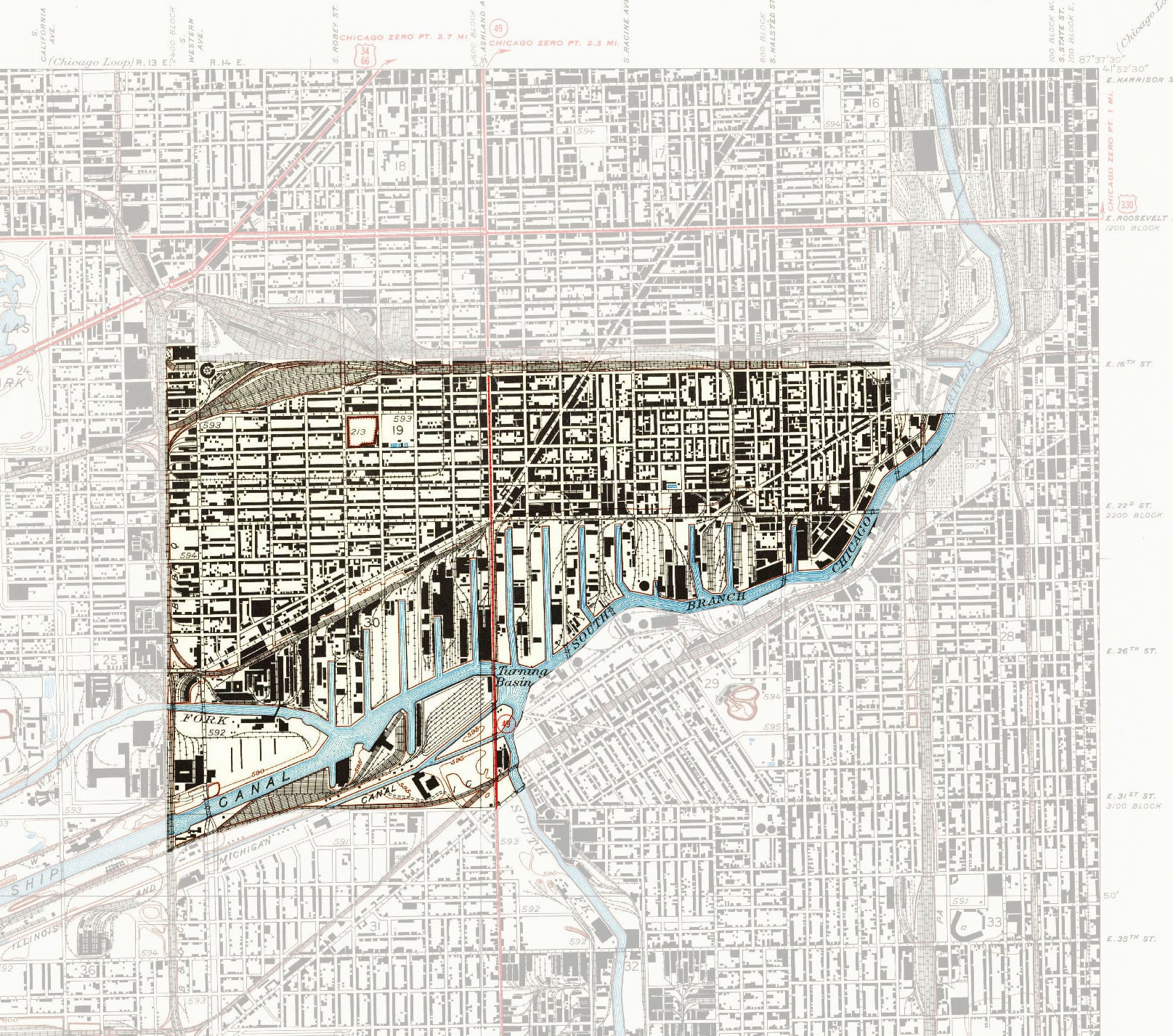
.jpg) |
| The Pilsen neighborhood in southwest side of Chicago |
Here are some passages describing the Jandesek’s
neighborhood and lives:
“Life in this neighborhood: strong family ties, most men
skilled or unskilled workers; some owned stores and taverns; the latter
sometimes occupied all four corners of street crossings. Beer was favorite
national drink of Poles, Bohemians, and Irish.
Women of most families, and ours, worked as clerks,
tailor maids, or office helpers. Brother Emil as lumber hand, George as skilled
typesetter. Family unity, following European custom rather strong among all
these ethnic 3 groups. Cleanliness in home and around it, a strong trait among
Bohemians; streets clean.
One block north of our house, at Throup and Sixteenth
Streets, railroad tracks of Chicago, Northwestern. Burlington, and Northern and
a freight yard where cars were sorted for long trips. We boys included this
area in our playgrounds; we hitched freight car rides, collected coal and wood
for home stove fuel, watched trains fly by.

Photo of street where the Jandeseks lived. Circa 1920.
The streets and empty lots were all play areas for roller
skating, tag, baseball, hide and go seek, even making winter fires on holidays.
City-managed playgrounds one-half mile away: Chicago River 11/2 miles to south,
where we swam as boys in its canals and dived off high lumber piles, often into
oily water. A number of boys drowned here. We all swam naked.
Inter-neighborhood gang fights over “territorial rights;” none too serious.
Our school was only two blocks away from our house;
parochial- schools near also. Most kids went through 8th grade; dropouts before
age 14 were frequent due to poverty in home. Few aspired to go to high school
and very, very few to college. I then never entertained idea of high school and
dropped out at end of 8th grade to go to work like most boys. In my peer groups
(boys and girls) I always seemed to have numerous friends, some capacity for
leadership, and was confident of some of these.”
Chicago was home to a large number of Czechs by the late
1800s into the 1900s. According to an article about Pilsen on the Chicago
Curbed website, “the rapidly growing metropolis’ Czech population… ranked third
in the world—behind only Prague and Vienna.” (Cit. 3)
 |
| Postcard of Blue Island and 18th, near where the Jandeseks lived. Photo Circa 1915, with title in Czech at the top reading "Czech businesses in Chicago". |
I suspect that Emil Jandesek worked at the Pilsen Yards, a huge lumber yard near the train tracks. According to the History of Pilsen article cited below, following the Chicago Fire, “rapid reconstruction throughout Chicago accelerated the growth of several industries, including lumber. The Pilsen Yards, at today’s 22nd Street and Blue Island, became the largest lumber distribution center in the world.” (Cit. 2)
There are two possibilities for the school Ed and his
siblings attended. Since they lived at Throop and 18th, two blocks
south at Throop and 20th was the Komensky School, built at the end
of the 19th century. The building still stands today.
 |
| Map showing location of Komensky and Jinka schools, with location of Jandesek apartment in the middle. |
The other possibility was the Jinka School, also built in
the late 1890s, which stood at Loomis and 17th, one block north and
one block west of the Jandesek apartment. They were large, multi-story brick
buildings.

 |
| Komensky School at top, Jinka School at bottom. |
Ed would have followed his family members into blue collar
work if not for the influence of a community center or “settlement house”
called Howell House. Chicago was the home to several settlement missions, which
served various immigrant communities. Howell House and Bethlehem Center were
located in Pilsen.
“Bethlehem Center and Howell House were church-related
neighborhood houses serving the Pilsen area on the Near West Side. They
provided religious, social services, and personal welfare assistance to an
immigrant community composed predominantly of Bohemians, Poles, and Czechs.”
(Cit. 4)

Photo of Howell House on the cover of a 1905 scrapbook.
“The Women's Presbyterial Society established Howell Neighborhood House for Home Missions, otherwise known as the "Bohemian Settlement House" in 1905. The mission's first initiative in the "Little Pilsen" neighborhood was a kindergarten in a small building on the corner of Nineteenth Place and May Street. "To stand on the corner of Blue Island Avenue and 18th Street [in those days]," Gertrude Ray later wrote, "was to stand in the heart of a Czech city with a population second only to Prague."

18th and Blue Island in 1909
"The house expanded rapidly and by 1914, the board of
management had created, among others, Boys and Girls Clubs, a Sunday school, a
library, and an English Night School. C.D.B. Howell, for whom the settlement
house was later renamed in 1919, taught Sunday school and brought in other
teachers from the neighborhood in these formative years. Additionally, Howell
led a fund-raising drive in 1913 that raised money for construction of a larger
settlement building at 1831 South Center Street (now Racine).”(Cit. 4)

Howell House seen over the Pilsen rooftops. Circa 1915.
Ed described the effect of Howell House on his life in his
memoir:
“Somehow, between 16 and 18, through a friend, drifted
into Howell Neighborhood House, 1/2 mile from our home, attended nights more
and more regularly. Personnel of House: men leaders who were attending Y.M.C.A.
colleges, the University of Chicago, or church seminaries. Emphasized clean
speech, clean habits, clean sports; these a motto. There was a gymnasium. I
never took to its sports. There were various clubs tor social affairs,
discussion, and debating. Also Church services Sunday, Presbyterian, which I regularly
attended, as well as a mid week club.

 |
| A knitting class for girls and a basket-weaving class for boys at Howell House, circa |
Ed went on to write:
“I know of no other institution or leaders that made a
greater impact on my personality development than Howell House. Here some of us
picked up high aspirations and ideals that shaped our entire lives one way or
another, even though we came to realize this in subsequent years. For various
reasons, a few of us boys, the objects of special attention and solicitude of
House staff; the Head, Miss Ray, Dr. Rowell, the minister, later a professor of
English at University of California, and Rev. Olson, his successor. When I was
about 19 years old I was selected to be an elder at Howell Neighborhood House
Presbyterian Church, for reasons I ill understood then. Also, it was about this
time the staff began to think about our finishing in high school and then going
to college. Nothing could seem wilder than this at that stage of our lives,
mine especially; but the ideal was sown in us and it was steadily nurtured and
took.”

Civics class for Bohemians (like Ed and his family). Preparing the men to for naturalization. 1913.
Ed faced a difficult choice at such a young age. His father
had died, and Ed and his older brother George had been supporting their mother,
Emily. He wrote:
“I was the youngest of nine in our family; none of my
brothers and sisters went beyond the 6th grade; each earned about $12 to $20
per week. World War I just ended short time before. My sister Rose, youngest of
girls, married John Eppers after War; brother George returned; he was gassed in
front lines in France, recovered, and planned to marry. This meant Eddie (me!)
would soon have to support his mother at $15 per week.”
Ed would have had to forego his college dreams if his
brother George hadn’t stepped up. He offered to have their mother live with him
and his new wife, freeing Ed to quit his job and attend college. Ed traded his
urban life for a more rural one at Blackburn College.
Ed’s memoir offered fascinating glimpses into the lives of
immigrant families in large urban areas like Chicago. Ed also showed the amazing impact of “settlement
houses” in helping these families adjust to American life and build productive
futures.
Sources:
1.
https://www.wttw.com/sites/default/files/pilsen_map_1929.jpg
2.
“History of Pilsen”. Jessica Pupovac. WTTW
Television. https://www.wttw.com/my-neighborhood/pilsen/history
3.
https://chicago.curbed.com/2019/6/14/18677823/pilsen-historic-district-czech-sokols-preservation
4.
Bethlehem Howell Neighborhood Center collection,
1894-1969. Seven Settlement Houses-Database of Photos (University of Illinois
at Chicago), University of Illinois at Chicago. Library. Special Collections
and University Archiveshttps://explore.chicagocollections.org/ead/uic/25/wk50/