Showing posts with label Illinois. Show all posts

Saturday, September 27, 2025

Immigrant Life in Chicago: 52 Ancestors 2025 Prompt “Urban”


Ed Jandy’s Memories of Early Life in Chicago

Edward Jandesek/Jandy: 1899-1980 (Maternal Grandfather)


Many of our ancestors chose to settle in rural areas, often turning to farming for a career. But a few ancestor families chose to settle in urban areas. The Jandesek family immigrated to the United States in the 1880s and settled in Chicago. Years later, son Edward Jandesek wrote in his memoir about what he remembered of his childhood in the city.

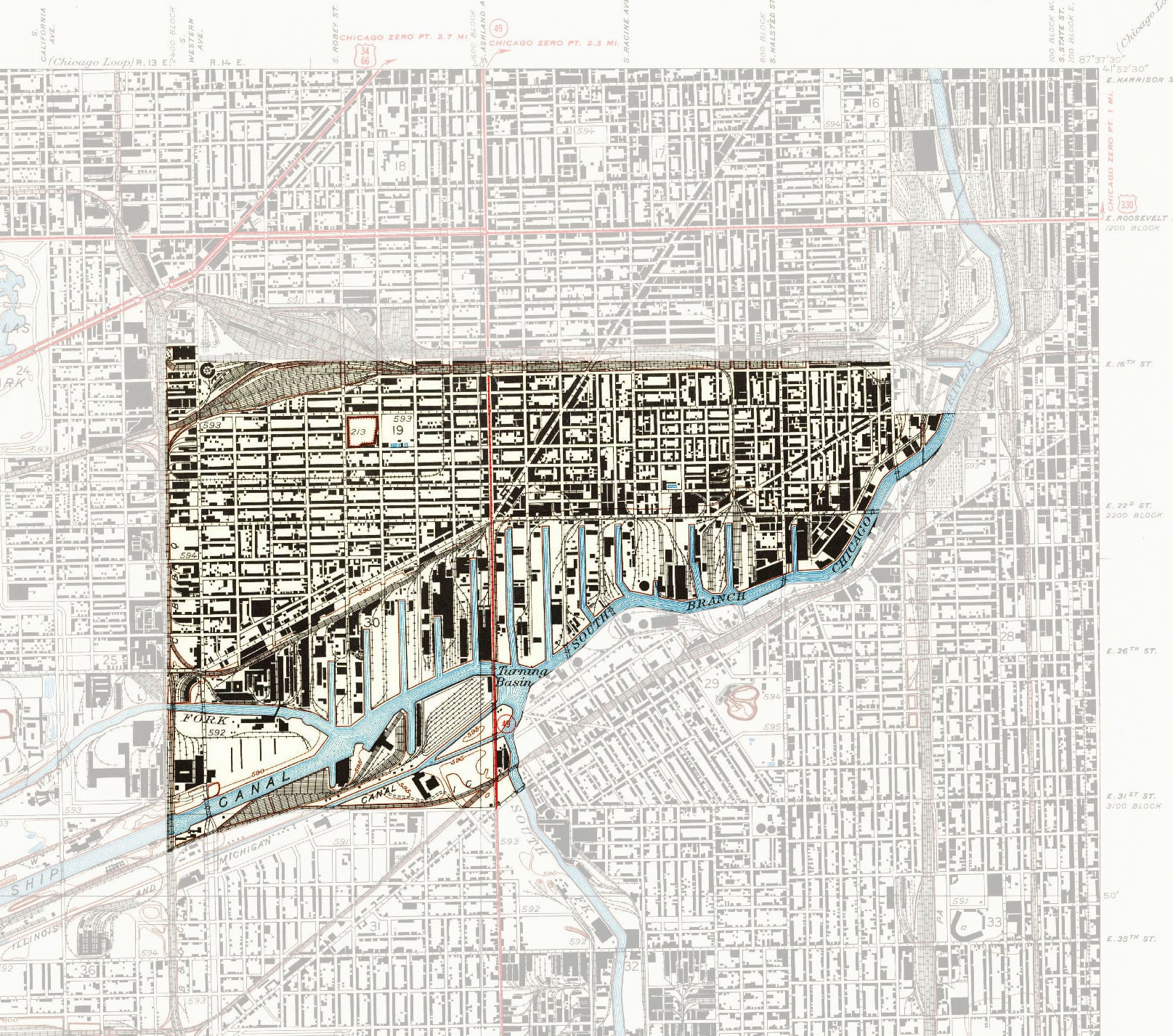
Ed recalled that the family settled in a neighborhood called Old Pilsen. He said the neighborhood was predominantly comprised of Czech, Polish, German and Irish immigrants, mostly Catholics. His father, Emil, worked in a lumber mill as a millhand.

The Pilsen neighborhood in southwest side of Chicago


Here are some passages describing the Jandesek’s neighborhood and lives:

“Life in this neighborhood: strong family ties, most men skilled or unskilled workers; some owned stores and taverns; the latter sometimes occupied all four corners of street crossings. Beer was favorite national drink of Poles, Bohemians, and Irish.

Women of most families, and ours, worked as clerks, tailor maids, or office helpers. Brother Emil as lumber hand, George as skilled typesetter. Family unity, following European custom rather strong among all these ethnic 3 groups. Cleanliness in home and around it, a strong trait among Bohemians; streets clean.

One block north of our house, at Throup and Sixteenth Streets, railroad tracks of Chicago, Northwestern. Burlington, and Northern and a freight yard where cars were sorted for long trips. We boys included this area in our playgrounds; we hitched freight car rides, collected coal and wood for home stove fuel, watched trains fly by.

Photo of street where the Jandeseks lived. Circa 1920.

The streets and empty lots were all play areas for roller skating, tag, baseball, hide and go seek, even making winter fires on holidays. City-managed playgrounds one-half mile away: Chicago River 11/2 miles to south, where we swam as boys in its canals and dived off high lumber piles, often into oily water. A number of boys drowned here. We all swam naked. Inter-neighborhood gang fights over “territorial rights;” none too serious.

Our school was only two blocks away from our house; parochial- schools near also. Most kids went through 8th grade; dropouts before age 14 were frequent due to poverty in home. Few aspired to go to high school and very, very few to college. I then never entertained idea of high school and dropped out at end of 8th grade to go to work like most boys. In my peer groups (boys and girls) I always seemed to have numerous friends, some capacity for leadership, and was confident of some of these.”

Chicago was home to a large number of Czechs by the late 1800s into the 1900s. According to an article about Pilsen on the Chicago Curbed website, “the rapidly growing metropolis’ Czech population… ranked third in the world—behind only Prague and Vienna.” (Cit. 3)

Postcard of Blue Island and 18th, near where the Jandeseks lived. Photo Circa 1915, with title in Czech at the top reading "Czech businesses in Chicago".

I suspect that Emil Jandesek worked at the Pilsen Yards, a huge lumber yard near the train tracks.  According to the History of Pilsen article cited below,  following the Chicago Fire, “rapid reconstruction throughout Chicago accelerated the growth of several industries, including lumber. The Pilsen Yards, at today’s 22nd Street and Blue Island, became the largest lumber distribution center in the world.” (Cit. 2)

There are two possibilities for the school Ed and his siblings attended. Since they lived at Throop and 18th, two blocks south at Throop and 20th was the Komensky School, built at the end of the 19th century. The building still stands today.

Map showing location of Komensky and Jinka schools, with location of Jandesek apartment in the middle.

The other possibility was the Jinka School, also built in the late 1890s, which stood at Loomis and 17th, one block north and one block west of the Jandesek apartment. They were large, multi-story brick buildings.

Komensky School at top, Jinka School at bottom.

Ed would have followed his family members into blue collar work if not for the influence of a community center or “settlement house” called Howell House. Chicago was the home to several settlement missions, which served various immigrant communities. Howell House and Bethlehem Center were located in Pilsen.

“Bethlehem Center and Howell House were church-related neighborhood houses serving the Pilsen area on the Near West Side. They provided religious, social services, and personal welfare assistance to an immigrant community composed predominantly of Bohemians, Poles, and Czechs.” (Cit. 4)

Photo of Howell House on the cover of a 1905 scrapbook.

“The Women's Presbyterial Society established Howell Neighborhood House for Home Missions, otherwise known as the "Bohemian Settlement House" in 1905. The mission's first initiative in the "Little Pilsen" neighborhood was a kindergarten in a small building on the corner of Nineteenth Place and May Street. "To stand on the corner of Blue Island Avenue and 18th Street [in those days]," Gertrude Ray later wrote, "was to stand in the heart of a Czech city with a population second only to Prague." 

18th and Blue Island in 1909

"The house expanded rapidly and by 1914, the board of management had created, among others, Boys and Girls Clubs, a Sunday school, a library, and an English Night School. C.D.B. Howell, for whom the settlement house was later renamed in 1919, taught Sunday school and brought in other teachers from the neighborhood in these formative years. Additionally, Howell led a fund-raising drive in 1913 that raised money for construction of a larger settlement building at 1831 South Center Street (now Racine).”(Cit. 4)

Howell House seen over the Pilsen rooftops. Circa 1915.

Ed described the effect of Howell House on his life in his memoir:

“Somehow, between 16 and 18, through a friend, drifted into Howell Neighborhood House, 1/2 mile from our home, attended nights more and more regularly. Personnel of House: men leaders who were attending Y.M.C.A. colleges, the University of Chicago, or church seminaries. Emphasized clean speech, clean habits, clean sports; these a motto. There was a gymnasium. I never took to its sports. There were various clubs tor social affairs, discussion, and debating. Also Church services Sunday, Presbyterian, which I regularly attended, as well as a mid week club.

A knitting class for girls and a basket-weaving class for boys at Howell House, circa
 1915.

Ed went on to write:

“I know of no other institution or leaders that made a greater impact on my personality development than Howell House. Here some of us picked up high aspirations and ideals that shaped our entire lives one way or another, even though we came to realize this in subsequent years. For various reasons, a few of us boys, the objects of special attention and solicitude of House staff; the Head, Miss Ray, Dr. Rowell, the minister, later a professor of English at University of California, and Rev. Olson, his successor. When I was about 19 years old I was selected to be an elder at Howell Neighborhood House Presbyterian Church, for reasons I ill understood then. Also, it was about this time the staff began to think about our finishing in high school and then going to college. Nothing could seem wilder than this at that stage of our lives, mine especially; but the ideal was sown in us and it was steadily nurtured and took.”

Civics class for Bohemians (like Ed and his family). Preparing the men to for naturalization. 1913.

Ed faced a difficult choice at such a young age. His father had died, and Ed and his older brother George had been supporting their mother, Emily. He wrote:

“I was the youngest of nine in our family; none of my brothers and sisters went beyond the 6th grade; each earned about $12 to $20 per week. World War I just ended short time before. My sister Rose, youngest of girls, married John Eppers after War; brother George returned; he was gassed in front lines in France, recovered, and planned to marry. This meant Eddie (me!) would soon have to support his mother at $15 per week.”

Ed would have had to forego his college dreams if his brother George hadn’t stepped up. He offered to have their mother live with him and his new wife, freeing Ed to quit his job and attend college. Ed traded his urban life for a more rural one at Blackburn College.

Ed’s memoir offered fascinating glimpses into the lives of immigrant families in large urban areas like Chicago.  Ed also showed the amazing impact of “settlement houses” in helping these families adjust to American life and build productive futures.

Sources:

1.       https://www.wttw.com/sites/default/files/pilsen_map_1929.jpg

2.       “History of Pilsen”. Jessica Pupovac. WTTW Television. https://www.wttw.com/my-neighborhood/pilsen/history

3.       https://chicago.curbed.com/2019/6/14/18677823/pilsen-historic-district-czech-sokols-preservation

4.       Bethlehem Howell Neighborhood Center collection, 1894-1969. Seven Settlement Houses-Database of Photos (University of Illinois at Chicago), University of Illinois at Chicago. Library. Special Collections and University Archiveshttps://explore.chicagocollections.org/ead/uic/25/wk50/


Saturday, August 10, 2024

A Club You Never Want to Join—the Victim’s Club: 52 Ancestors 2024 Prompt “Member of the Club”


Another Victim of Financial Fraud: Miles Jandejsek Was on Swindler’s List

Miles Jandejsek: 1884-1978 (Maternal Granduncle)


Miles Jandejsek was a member of a club that no one willingly joins: a brotherhood of victims of financial fraud. Fraudsters and crooks are sadly all too common in the financial field, from the infamous Ponzi of the Ponzi scheme to Bernie Madoff, to the crypto-fraudster Sam Bankman-Fried to the more common small-scale crooks and cheats. All these schemes leave a trail of humiliated victims crippled by financial losses, people whose lives are never the same. Miles Jandejsek placed his trust in a neighborhood friend who betrayed him and wiped out a large chunk of Miles’ retirement funds.

Miles Jandejsek was the third of Emanuel and Emily Tomsche Jandejsek’s eight children. He was born August 31, 1884 in Ceska Trebova, Czechoslovakia. The Jandejsek family emigrated to the United States in 1888 when Miles was four years old. They settled in Chicago where Emanuel found work as a carpenter.

Finances were difficult for immigrant families, so Miles left school after eighth grade to start earning wages. He appears on the 1900 census at age 15, working as a day laborer. He remained a blue-collar worker, employed by Western Electric Co. as a machinist until retirement.

Miles married another Czech immigrant, Louise Slaby, on April 5, 1913. Louise was 18 years old, while Miles was 28. They moved first to Cicero, Illinois, and then to nearby Brookfield.  They never had children. They acquired a summer home on Geneva Lake in Wisconsin, which they sold following Miles’ retirement.

Sale ad for Miles Jandesek's vacation home, 1948.

Miles and Louise eventually moved to Bradenton, Florida where my husband remembers visiting them. Miles, he recalled, would solicitously enquire of his great-nephews and niece, “Would you like a milk and some cookie?” This was a little reminder that English had not been Miles first language.

While living in Brookfield, Miles became acquainted with a Chicago man named Miles Fort who owned and operated a mortgage and insurance business. Fort was trying to build his own retirement nest egg by investing in the stock market. Unfortunately, he wasn’t a very good investor and lost most of his own money. He decided to use other people’s money to try to recoup his losses. He persuaded friends to invest money with him, claiming he was lending it out as mortgages, for which his investors would earn the mortgage interest. He falsified the mortgage documents, usually altering real mortgages he had written previously on various properties.


At first, he paid his victims their “interest” out of his own funds while he used their cash to play the stock market. Apparently Miles heard about these mortgage “investments” from others, and wrote to Fort from Florida, asking to invest money with him. Miles ended up giving Fort $27,500.

Fort eventually abandoned the stock market to try his hand at grain markets, and once again lost money. He then claimed to have gotten “’inside information’ and then invested heavily in egg futures. Instead of going up, as he expected, the price of eggs went down. ‘They truly cleaned me out,’ he related sadly.” (From news article cited below)

Fort’s scheme eventually fell apart when he no longer had enough money to pay his victims their monthly “interest” payments. He turned himself in to the state’s attorney in Chicago.

According to a Chicago Tribune article, Fort had defrauded thirteen individuals out of nearly $300,000. The article stated that Fort “obtained amounts ranging from $4,000 to $51,355 from his 13 victims, all of whom were friends or business clients of long standing. In each case…the losses represented the life savings of the persons.”

Excerpt of Chicago Tribune article on swindle

Fort was charged with forgery and held under $4000 bond in September of 1958.

My husband doesn’t remember anyone in the family discussing Miles’ financial loss. He suspects no one knew. Miles was probably embarrassed to have been so trusting and naïve and would have been reluctant to confess he had been swindled out of a large sum.

Miles and Louise continued to live in Bradenton, probably making do with Social Security and whatever additional funds they had saved over the years. Miles died November 26, 1978 at age 94, and was buried in Bradenton. Louise lived another twelve years, dying at age 95 on August 2, 1990. She had apparently moved back to Illinois before her death, because her death record was filed in Cook County, Illinois.


Retirees and the elderly are often the targets of financial fraudsters. Miles Jandejsek was just another name on a “swindler’s list”. He became a member of the victims’ club of regretful investors in yet another fraudulent scheme.

Sources:

"Realty Man Swindles 13 in $300,000 Fraud", Chicago Tribune, Chicago, Illinois. Sept 5, 1958. Accessed on Newspapers.com. 

Miles Jandejsek Obituary. Bradenton Herald. Bradenton Florida. Nov. 27, 1978. Accessed on Newspapers.com.

Photo of Headstone from Findagrave. Photo by Donna McPherson. https://www.findagrave.com/memorial/122807635/miles-jandesek?


Sunday, August 4, 2024

First Photo of Granduncle Found on His Headstone: 52 Ancestors 2024 Prompt “Tombstone”

Headstone Provides Only Photo of Granduncle Emil Jandejsek

Emil William Jandejsek: 1882-1928 (Maternal Granduncle)


Sometimes family photos pop up from the strangest sources. That’s what happened as I was researching my husband’s granduncle, Emil Jandejsek. I found the Findagrave entry for Emil and his second wife Mary or Marie, and the entry included a photo of the Jandejsek headstone. Mounted on the stone with screws were photos of Emil and Marie—the only photos of them I have ever seen! A very happy discovery!

Emil Jandejsek tombstone at National Bohemian Cemetery in Chicago

Emil was the older brother of Edward Clarence Jandejsek, also known as Ed Jandy. Ed was my husband’s grandfather. Emil was the second oldest of Emanuel Jandejsek and Emily Tomsche’s eight surviving children. He was born in Trebova, Czechoslovakia on December 18, 1882. When Emil was quite young, the family emigrated to the United States, arrving in 1887 or 1888. The Jandejseks settled in Chicago, Illinois, an area that had a large number of Czech immigrants, providing a built-in support system.

Trebova, Czechoslovakia, the town where Emil was born

Emil had to take on responsibility at a young age. His parents needed his help to support the family. According to Ed Jandy’s memoirs, “…most kids went through 8th grade…Few aspired to go to high school, and very very few to college.” Emil followed that pattern. Ed remembered that Emil first worked as a lumber hand. By the 1900 census, Emil was working as a silver plater at a metal plating factory; he was only seventeen. His younger brother Miles, only 15, was also out of school, working as a day laborer.

It is unclear when Emil moved out of his parents’ apartment to separate housing. His father died May 6, 1905. Emil married the daughter of another Czech immigrant family, a 23-year-old named Minnie Baxa, two months later on July 15, 1905. The young couple had a stillborn child the following year, and then had a daughter, Agnes, born May 27, 1908.

Emil and Minnie had a third child, a little girl, on March 10, 1910. Tragically, both the infant and Minnie died the next day. By the time of the 1910 census, Emil and little Agnes had moved back in with his widowed mother and his five youngest siblings. They all lived in an apartment on West 18th Place near the railroad tracks in the Pilsen area west of the Chicago Loop. The building, which realty companies say is about 2600 square feet, was divided into four apartments, so the eight family members must have been crammed in, sharing beds and bedrooms.

Front of 18th Place apartment building

Aerial view of 18th Place apartment building, also showing Throup St. where Emil's parents previously lived.

Emil was probably eager to be on his own once more, which motivated him to marry quickly. On November 21, 1910, just eight months after Minnie’s death, Emil married nineteen-year-old Mary Roth; he was twenty-eight. They moved to a building on South Center Avenue where their daughter Olga was born September 1, 1911.

When Emil completed his World War I draft registration card, he was still working in the metal plating business as a metal buffer. He, his wife, and two daughters were living in a two-story brick building at 2520 South Troy on the southwest side of Chicago not far from the suburb of Cicero. I have been unable to find the family on the 1920 census, but believe they were still living in the same area.

At some point in the late 1920s, Emil’s marriage disintegrated. On March 4, 1928, Emil died when he fell asleep while smoking his pipe. According to the news article below, the pipe set the bed on fire. The newspaper reported that “firemen from a local station found Jandejsek in an unconscious condition, as a result of the thick smoke in his bed room. They worked valiantly over him with the pulmotor but their efforts proved futile.”


The article went on to note that Emil was separated from his wife, who lived about five blocks away. Emil was only 45 years old.

Despite their separation, Mary Roth Jandejsek did not remarry after his death. She died September 20, 1931 at the age of only forty. I am not sure of the cause of her death.

Emil’s daughters Agnes and Olga each eventually married. Agnes married Eugene Diem, and they had a daughter, Lavergne. Agnes divorced Eugene, and at the time of the 1940 census, she had moved in with her half-sister Olga and was working as a librarian. Olga was a telephone operator. Olga married Francis Vladish in 1944 at age 33. The couple had no children.


Emil and Mary were buried together at the Bohemian National Cemetery in Chicago. The stone included the photos of the couple that I have added to their profiles on Ancestry. I am so grateful for this special tombstone, and for the wonderful Findagrave volunteers who made it possible for me to find Emil’s portrait.


Sources:

"Falls Asleep, Bed Burns, Man Suffocates." Suburban Leader, Cicero, Illinois. March 8, 1928.

Photos of Emil Jandejsek headstone courtesy of Findagrave and photographer Grave Recorder. https://www.findagrave.com/memorial/137031952/emil-william-jandejsek

Photo of Ceska Trebova, from Wikimedia Commons. Photographer Marek Stránský, File permission by Nostramanus. https://upload.wikimedia.org/wikipedia/commons/d/d4/Ceska-Trebova-Zeleznice-Nadrazi-1.jpg

Photos of Jandejsek homes from online listings of various realty companies.

Memoir of Edward Clarence Jandy. Family records.

A Name That Captured My Imagination: 52 Ancestors Prompt “Free Space”

  A Man Named Newborn Faughn Newborn Faughn: 1900-1983 – Not Related   Interesting names always catch my eye, but some names are so sp...