Showing posts with label 52 Ancestors 2025. Show all posts

Wednesday, December 31, 2025

Mysterious Disappearance of College Freshman: 52 Ancestors 2025 Prompt “Disappeared”


Willis Smith Flees University of Kentucky in 1908

Willis Eugene Smith: 1888-1973 (Maternal Grand-Uncle)

On the evening of September 22, 1908, Willis Eugene Smith, a freshman at the State University of Kentucky, disappeared from his room and failed to return or contact anyone. His family was frantic, the university administration was anxious, and the police began investigating. Where had he gone? What had happened to him? The rumors and speculation grew by the week, egged on by Willis’ brother Ernest, who was convinced his brother met with foul play. Then, three months later, Willis returned as mysteriously as he had left. His own explanations were nearly as wild as the rumors had been.

Willis E. Smith was born January 22, 1888 to parents Margaret Benton Smith and Rev. Willis Smith. He was the eighth of their eleven children. He attended local schools in Owensboro, and was tutored by his older brother, Albert Elias Smith, to prepare him to attend the university.


He enrolled at the University of Kentucky in Lexington—then referred to as Kentucky State University—in the fall of 1908. The following news item describes his going-away-party in Owensboro, emphasizing the respect the community had for college educations and for young Willis. He was twenty years old.


It appears that many university students lived in private accommodations in Lexington rather than in school-built dormitories. Willis’ older brother Ernest, then thirty, was a sophomore at the university, and was boarding in a house owned by a Mrs. Beauchamp. Willis became another of her boarders. She was the president of the local chapter of the Women’s Christian Termperence Union, so ran a respectable establishment.

According to Ernest, Willis seemed to be enjoying his first weeks of college. Ernest saw no sign that he was upset or struggling the evening he disappeared. He said that Willis “had been talking about a freshman caucus that night…[and left] ‘to have some fun’.” Ernest noted that Willis was wearing older clothes and shoes, and that he left his watch and chain on the table with his books “as if he were afraid he would get them lost or broken.” Ernest noted that Willis took nothing else with him—only pocket change at the most. Willis had $50 of savings—a sizable sum in 1908-- that he had left in Ernest’s care. Ernest felt that if Willis had intended to run off, he would have made sure to take that money with him.


Willis never returned to Mrs. Beauchamp’s. An increasingly concerned Ernest contacted his Kentucky siblings to see if Willis was at any of their homes. He contacted university officials, and he reported Willis’ disappearance to the Lexington police. The case was covered thoroughly in the press. Despite the publicity, no one came forward to say they had seen or spoken to Willis. Willis didn’t reach out to family members. There were no reports of vagrants or bodies or injured men in surrounding areas. Where had Willis gone?

On September 29, the eldest Smith brother, Frampton, arrived in Lexington. He and Ernest spent a considerable time talking to the police detectives to no avail. The next week, Ernest told the press that his father was “a highly educated man, and it has been the greatest ambition of all of his sons to secure an education…” He also said that Willis was “much pleased with college life and his prospects, …and expressed no dissatisfaction with any feature of his surroundings.” Landlady Beauchamp gave “the strongest testimony of the boy’s good habits [and] high character…” It seems as if the family feared the university and police would try to blame Willis’ disappearance on his inability to succeed at college or his falling victim to drugs or alcohol.

Willis’ father, Rev. Willis Smith, was contacted in New Mexico, where he was homesteading and founding churches with his second wife and Willis’ younger siblings. He was as puzzled and worried as his other sons.

By October, the interest in the mystery was at a fever pitch. The Louisville Courier-Journal even published a picture of Rev. Smith and family at their New Mexico homestead, noting that they were “grief-stricken…and unable to offer any solution…” 


Another article called on the Kentucky Governor to offer a reward for information. Apparently, there were rumors that Willis had fallen afoul of upperclassmen who were hazing freshmen, and that he had been accidently killed, which whipped up anti-student sentiment in Lexington. University officials were growing increasingly nervous.


Hope was stirred in November 1908 when the sheriff in Russellville, Kentucky reported that a young man had come to their community who matched Willis’ general description. The man told the sheriff his name was “Harry Smith”, and that he had left the university some weeks before. Ernest was dubious that the man was Willis, and he was correct. Five days later, the Smith family hired a Pinkerton detective to look into Willis’ disappearance. The news article stated, “The members of the Smith family are convinced that the mystery has been by no means thoroughly investigated by either the state college officials or the grand jury…”

By December, Ernest was frustrated and despairing. He told the press, “I am settled in the opinion that my brother was killed---accidentally killed…Although I have been forced to abandon hope of again seeing him alive, I entertain the hope of finding his body. There has not a day passed that I have not done something in the search…I regret anything which couples the name of the University with this distressing affair. I have always contended that if the theory that fellow students had accidentally killed Willis were proved, no stigma should reflect on the institution. If students did it, only a few, acting entirely independently of the mass, and seeking fun instead of hurt to him, were involved.”

Ernest also told the reporter that his father thought Willis might have enlisted in the Army, but Army records were checked and he was not found.

The Smith family probably spent a miserable Christmas mourning Willis, but just days later he suddenly appeared at his sister’s house in Lexington telling a wild tale. He claimed he was attacked by four men who chloroformed him and took him by freight car to northern Wisconsin where he was held captive in a cave. His captors hoped for a reward for his return. He claimed to have escaped and returned home as soon as he could.


This story was met with immediate ridicule. Observers noted that he was very sun-tanned—hardly the complexion of a man who spent 3 months in a cave. In addition, his hands were calloused from heavy labor, despite his claims that his captors didn’t make him do any work.

When Ernest was able to finally speak with Willis in person, he forced Willis to confess the truth: that he had fled the university, traveling on freight cars to northern Wisconsin where he obtained work in a logging camp. After a couple months there, he went south to Bloomington, Illinois and worked in a restaurant. “Time and again…he endeavored to write home, but he never could get up the courage.”

Why did Willis run away? His excuse also sounds like a total fabrication. He claimed that a fraternity at the University wanted to initiate him, and he didn’t want to join. They insisted that he must join or leave the school. He felt threatened and chose to leave.

I suspect there was a lot more going on in this young man’s life. Perhaps he was struggling in his classes. Perhaps he didn’t really want to go to college, but was pushed into it by his father and older brothers. Perhaps he just panicked, unable to face the future his family expected of him. Perhaps he had mental health issues.

The press and public opinion was scathing. Ernest hustled Willis off to their hometown of Owensboro, making the following statement to the Lexington Leader:

“My brother is as sound in mind as I am, and there is nothing the matter with him now. I am going to take him back to Owensboro tonight and find hm something to do there. I am not going to bring him back to Lexington at this time, if he ever comes at all, because I do not think it would be wise just now. He will not go to college, I am sure of that, and it would do no good to take him back there. I am going to find him some work to do at Owensboro and leave him there. I will return to Lexington tomorrow.”

And that is exactly what Ernest did. He took Willis home and moved him into their married sister’s house, while Ernest returned to the university and completed his degree and then started medical school.

Willis appears on the 1910 census in the household of William Hubbard, his sister Nannie’s husband. He is unemployed at that point. Just three years later, Willis married a young Owensboro woman, Sybil Erwin, on October 2, 1913. He was twenty-five and Sybil was just eighteen.

By the time World War I broke out, Willis and Sybil were living in Dayton, Ohio. He was thirty years old, and was working as a cement finisher. But two short years later, he and Sybil had a baby daughter, Dorothy June Smith, and they had moved to Allen County, Ohio to the town of Auglaize. He had changed professions, and he was working as a Methodist minister. I assume that somewhere along the way, Willis managed to complete college or at least attend seminary. I have been unable to find a record of what institution he attended after his abortive semester at the University of Kentucky.


After his panicked disappearance, Willis E. Smith put his life together, and became a respected member of the community and the Methodist Church. Rev. Smith had a long, productive career as a Methodist minister, serving many years in parishes in Massachusetts and New Hampshire. Perhaps, like many young people, he needed to get out into the world before he could realize what he wanted and needed to do with his life long-term.


Sources:

Mr. Willis Smith to enter college. Owensboro Messenger Inquirer. Owensboro, KY. Aug, 1908. Newspapers.com.

“Brothers Look for Missing Freshman”.  Lexington Herald.  Lexington, KY. Sep. 29, 1908. Newspapers.com.

“Governor Willson Asked to Offer a Reward for Smith.” Lexington Herald.  Lexington, KY. Oct. 20, 1908. Newspapers.com.

“Smith Family Give Up Hope”. Louisville Courier. Louisville KY. Oct 5, 1908. Newspapers.com.

“Pinkerton Employed in Disappearance of Willis Smith”. Owensboro Twice-a-Week Messenger. Owensboro, KY. Nov. 7, 1908. Newspapers.com.

“Letters Point to Sewer Ditch as His Grave” Lexington Leader. Lexington, KY. Dec 28, 1908. Newspapers.com.

“Willis Smith Turns Up at Sister’s”. Lexington Leader. Lexington, KY. Dec 31, 1908. Newspapers.com.

“Missing College Student Turns Up at Owensboro”. Louisville Courier. Louisville KY. Dec. 31, 1908. Newspapers.com.

“Comments on Willis E Smith.” Lexington Herald.  Lexington, KY. Jan 2, 1909. Newspapers.com.

“Why Smith Left Home”. Lexington Leader. Lexington, KY. Jan 3, 1909. Newspapers.com.

Sunday, December 28, 2025

Small But Memorable: 52 Ancestors 2025 Prompt “Memorable”

 A Weird Occupation and a Weird Cause of Death  

John Ford Wilson: 1854-1920 (Husband of Paternal 2nd Great-grandaunt)
Susan Smith Goode: 1835-1918 (Maternal First Cousin 4x Removed)


Sometimes I run across delightful small discoveries that aren’t quite worthy of a full blog post, but that are so weird or charming or funny--or even horrible-- that I hate to consign them to a mere “note” on an Ancestry file, never to be read again. Here are two of those small but memorable discoveries.

First, while examining the death record of my husband’s 2nd Great-Aunt Bethia Sutherland Wilson, I noted a peculiar notation under the name of her late husband. The entry read as follows:

“Widow of John Ford Wilson. Abattoir Supervisor.”


What a career! What exactly was John supervising? The proper way to kill whatever animals were being slaughtered? Why abattoir and not slaughterhouse? I pulled up the 1881 Scotland Census, and it shows John’s occupation as “Superintendent of Slaughter house.”

I wonder what his workday involved. He left an estate valued at 2500 pounds in 1920, a bit higher than the average estate for the period, so the position must have paid a decent wage. This was a fascinating and timely discovery to make right before Halloween!

Second, death certificates can sometimes provide bizarre and shocking information. I was looking at Ancestry hints for a Smith cousin, Susan Smith Goode, and found that someone had posted a copy of her death certificate. I always read certificates when I find them, as they can provide important information about parents, occupations, and health issues. This one was grim reading:

“Cause of Death: Internal injuries from being crushed by street car. Duration: About 2 hours. Contributory: Deafness.”


So a deaf 87 year old woman, unable to hear the approach of a street car, walked into the road in front it and was mowed down. She suffered for two hours before dying. The poor woman.

I suspected that this type of accident would have been covered by the local newspaper. I was correct, finding the following article. 


Susan had been living with her nephew, and was carried to his home after the accident. She never regained consciousness, but at least she was with family when she died on May 3, 1918.

While these two discoveries were small and involved collateral relatives rather than direct ancestors, they were still strikingly memorable. I’m glad this prompt provided an opportunity for me to write about John and Susan.

Sources:

Death Record for Bethia Sutherland Wilson. Posted on Ancestry.com.

Death Record for John Ford Wilson. Posted on Ancestry.com.

Probate Summary for John Ford Wilson. Scotland, National Probate Index (Calendar of Confirmations and Inventories), 1876-1936. Ancestry.com.

“Another Aged Woman Killed by Street Car”. Owensboro Messenger. Owensboro KY. May 3, 1918. https://www.newspapers.com/article/the-owensboro-messenger-another-aged-wom/187671390/

Thursday, December 18, 2025

John Aird’s Hand-crafted Model Boat: 52 Ancestors 2025 Prompt “Family Heirloom”


The Jupiter: A Model of a Real-Life 1920s Great Lakes Freighter

John Aird: 1919-2005 (Father)


Following the 2016 death of my mother-in-law, Laurel Aird, we brought home some family treasures, including a model of a Great Lakes freighter my father-in-law, John Aird, had built as a child in the 1920s. We found the model, along with two other more crude models, in the Aird attic. Despite the model’s awkwardly large shape—it is 32 inches long, 4 inches wide, and 6 inches tall—we couldn’t bear to throw it out. We felt our children and eventual grandchildren should have this marvelous piece of family history. Therefore, we brought it with us as a piece of carry-on luggage when we flew home to California. It wouldn’t fit in the overhead bins, so the flight attendants stowed it in a special cabinet in the rear of the plane. Fortunately, the model survived its flight, and now lives atop a bookcase in our home.


When we read John Aird’s memoir, we found a passage describing the creation of the model and how much he cared for it. He had grown up in Detroit and as a child he vacationed each summer in Port Huron. He became fascinated with the Great Lakes freighters that plied Lake Huron and Lake Erie, and built the models to resemble actual freighters. He would sail them along the Port Huron shore in the summer.

Here is the section from John’s memoir:

“…the next year I found a one-and-a-half by four board about three feet long and proceeded to make myself a Great Lakes freighter, which I named Jupiter, after a small Interlake Steamship Company freighter. This time I rounded the stern, painted the hull red, a standard freighter color, the cabins which with black doors and windows, attached two rather thick masts fore and aft with screws (so they could be removed for transporting), and put a monogram of my own initials in red on a white band on its black funnel, another authentic touch. The Jupiter performed admirably. It made very satisfactory bow waves and a second set of waves from its stern and could even carry deck loads of stones and seaweed, though sand tended to wash off. In subsequent years I added a second straight-deck freighter, the Arcturus (named for another Interlake freighter), larger and with a more carefully fashioned hull, and a still more realistically moulded package freighter, the Scorpio, modelled after the great Lakes Transit Company package freighter Daniel Willard, and, like it, panted white and green. The three boats looked quite impressive when anchored a little offshore on a calm day.”


John did a fine job of building the model. The photo below shows the real Jupiter. The model has the same shape. Even the model’s proportions are similar—the real Jupiter was 346 feet long and 48 feet wide, while John’s model was 32x4 inches. The Jupiter was built in 1901 and was owned by Interlake Steamship Company from 1913 through 1936.


John’s memoir continued:

“They apparently impressed other kids in the neighborhood at Port Huron. One night when I had left the two ore freighters on the railing of the cottage porch, two boys crept up and stole them. They were halfway down the block with them when, by the merest chance, my parents, returning from an evening walk, saw the boys hurrying furtively across a yard near a street corner. My father recognized the boats as their high gloss enamel reflected the light of the nearby streetlight, and he yelled at the kids to ‘put them down’ which they did. After that I made a point of taking my boats indoors when I finished playing with them.”

“In Adelphi one summer when Steve was still small, I got out the old Jupiter (I had kept all three boats) for him to play with in the ponds of the George Washington Cemetery behind our Lackawanna Street house. The boat had not been in the water in more than 20 years, and the forward cabins absorbed moisture, expanded, and cracked around their nails. I had never gotten over my emotional attachment to the boat and set about to remodel it, reshaping the hull fore and aft, replacing the cabins and the funnel, adding hatches amidships and a coal hatch atop the after cabin, and repainting it. I have kept it still and still derive a sense of pleasure when I look at it.”


One of the sections John repaired as an adult.

Reading these passages makes us even more grateful that we decided to keep the model and pass it down to John’s descendants. It is a marvelous, very personal heirloom, a reminder to our daughter and son of the grandfather they loved, and a glimpse into the little boy he once was.   

Sources:

BGSU Libraries. Historical Collections of the Great Lakes. “Jupiter”. Photo and specs of the freighter Jupiter. https://greatlakes.bgsu.edu/item/436097

Memoirs of John Shields Aird, pages 91-92.


Saturday, November 29, 2025

Blue-Grass Musician Cousin: 52 Ancestors 2025 Prompt “Musical”

Musical Magic on Guitar and Mandolin

Lincoln Sutherland Crockett (Paternal Second Cousin)


Most of my blog posts focus on ancestors from the past, but every once in a while I run across a living relative who is so interesting that I do a brief post on them. In those cases, I make sure to never disclose any private information, as that is simply rude and irresponsible. I only convey information that they themselves have put out into the world of social media.

When I saw the prompt “Musical”, I immediately thought of Lincoln Crockett. While adding him to the tree years ago, I found a newspaper article about a past folk music performance he gave. Curious, I googled him and discovered YouTube videos of some of his music. I really enjoyed it. My favorite piece was “Sawdust Settler”, a solo piece for mandolin and voice. It was lovely. I have included the link to the YouTube video of that piece below.

Gibson Mandolin Orchestra. Wikimedia Commons Photo by Gregg Miner.


Lincoln is the son of Margaret Sutherland Shields and Stephen Crockett, and the grandson of Great-Uncle Archie Shields and Ruth Patterson Shields. Lincoln lives and performs in the Portland, Oregon area. He also works as an energy healer.

I am including a portion from a bio Lincoln posted (see citation below) that helps to describe his music:

“Lincoln Crockett is the real deal, a talented performer singing standout originals on mandolin & guitar, all while playing leads, rhythms and chords all at the same time. He holds audiences’ attention with the expansiveness in his voice and his ability to move a mountain of music through his instruments. Crockett has a style all his own he sometimes calls “progfolk.”  He twists jazz, bluegrass, prog-rock and folk into an affecting set of wry soul-searching with uplifting spiritual flavor specific to no genre. The combined effect has garnered Crockett attention from within the music community in the Pacific Northwest, the reputation of being a “musician's musician” and devoted audience support.”

He is a wonderful musician, and I encourage everyone to check out his music online.

Sources:

YouTube page for Lincoln Crockett. https://www.youtube.com/@SpiritAmerican

Recording of “Sawdust Settler”. https://www.youtube.com/watch?v=08JzpC7HuDs

Recording of “Nothing Makes Me Feel Good”. https://www.youtube.com/watch?v=vTNHnS6hlfs

Lincoln Sutherland Crockett Bio: “One Artist, Many Passions.” https://griefwatch.com/pages/lincoln-crockett?srsltid=AfmBOooE5o1uPB5zbTkK6nKhMnTxKIUHqyuqUDkW3RQHq39w569WGj92

Mandolin photo. https://commons.wikimedia.org/wiki/File:Gibson-mandolin-orchestra.jpg. Gregg Miner, CC BY-SA 3.0 <http://creativecommons.org/licenses/by-sa/3.0/>, via Wikimedia Commons

Laurel’s Banana Bread: 52 Ancestors 2025 Prompt “Family Recipe”

Crumbling Recipe Card is a Sweet Reminder

Laurel Emily Jandy: 1926-2016 (Mother)


One of our favorite family recipes is a banana bread recipe Bruce’s mom Laurel gave me. Not only is it a great and easy recipe, but the recipe card is written in Laurel’s hand. Just seeing that handwriting brings back fond memories.

The recipe card has seen hard use in the thirty-five years I’ve had it. There are grease stains, scorch marks, and  fingerprints that have left brown marks. Also, paper moths or silverfish have been nibbling on the note card. It is almost unreadable in its current form. Luckily, I transcribed it long ago. I keep the old, beaten-up card for sentimental reasons. The transcription can be found further below.


The recipe is titled “Hawaiian Banana Bread”. There is nothing particularly Hawaiian about the recipe—no pineapple or coconut, for example. It has the traditional banana bread ingredients of flour, sugar, baking soda, bananas, eggs and shortening, but the instructions are a little different than a typical banana bread recipe.  First, the liquid ingredients—eggs, butter or margarine, and ripe or over-ripe bananas—are to be turned into an emulsion in a blender. This makes the batter very smooth. And second, the batter is a little thinner and is poured into an 8x8 inch cake pan for baking instead of a bread pan. The end result is a super-moist, cake-like banana bread.


I seem to remember that Laurel called it Hawaiian Banana Bread because she got the recipe from someone in Hawaii while she and John were visiting there around 1990. But I may not be recalling that correctly.

Transcription of Laurel's recipe card

I occasionally add chopped nuts, or mini chocolate chips to the batter. This recipe is our favorite way to use up over-ripe bananas. It’s a sweet treat—both in flavor and as a reminder of a sweet lady.

Thursday, October 9, 2025

Doctor, Missionary, Traveler: 52 Ancestors 2025 Prompt “Travel”


A True Journey-man: Life of a Medical Missionary

Dr. Lucius Ernest Smith: 1878-1955 (Maternal Granduncle)


Lucius Ernest Smith was a fearless traveler from a young age. He was barely out of his teens when he crossed the Appalachian Mountains in February of 1898, driving a six-horse team back to Kentucky from Asheville, North Carolina. He had only one of his much younger brothers along for company, and he was still dealing with his mother’s death from tuberculosis. After that trip, he was up for the challenges of homesteading in the Oklahoma Territory, working as a doctor in Puerto Rico, serving as a medical missionary in Africa, and traveling around the United States as a church speaker.

Lucius, known to his siblings as Ernest and in his professional life as L.E., was the third son born to Rev. Willis Smith and his first wife, Margaret Underwood Benton. He was born in Owensboro, Kentucky on October 6, 1878. L.E. was a hard worker from childhood, recalling in a news article that he hauled logs in the Green River/Ohio River area of Kentucky for several years, starting at age ten!

Green River area near its mouth at the Ohio River. Near where L.E. hauled logs. Still a heavily wooded area.

L.E.’s mother died on his twentieth birthday. To add to the trauma of his mother’s death from tuberculosis, L.E. was also diagnosed as having tuberculosis later that year. According to his obituary, he was told he had only a year to live. Obviously, his doctor was in error. The obituary went on to explain that “the doctor apparently did not know…that young Smith had come in early contact with the disease but had already overcome it without illness.”

However, the diagnosis probably led L.E. to delay planning for his future. He failed to follow his brothers to college, and he didn’t marry for many years. Instead, he chose to follow his father and some siblings to the Oklahoma Territory where his father was serving as a missionary. L.E. attempted to homestead in Guymon, Oklahoma at age 23, but had no success, telling a newspaper, “I guess I helped start the Dust Bowl.”

He gave up by 1907, moving back to Kentucky to help his brother, Rev. Albert Elias Smith, rebuild the Hindman Settlement School in Knott County, which had burned down. The school served poor rural children living in the Kentucky mountains, and Albert became its principal.

Working with the mountain families apparently inspired L.E. to become a doctor. He entered Kentucky State University around age thirty, graduating in 1911 at thirty-three. He continued his travels even then. He didn’t attend his graduation ceremony; he received his diploma while working in the Kansas wheatfields. The photo below shows him leaving Kansas, presumably headed for medical school.


He attended medical school at Johns Hopkins University in Baltimore, Maryland, and spent his summers serving as the camp doctor at the YMCA camp in Becket, Massachusetts. He received his medical degree in 1915 at age 37. Rather than returning to Kentucky to practice medicine, he did his residency in Puerto Rico.

L.E. in Puerto Rico during his medical residency. Lorene Jandy photo.

In June 1916, he accepted a position as a medical missionary with the Presbyterian Church, traveling to West Africa during World War I. He was sent to the Benito Station in Spanish Guinea, a Presbyterian mission along the Benito River in what is now Equatorial Guinea. The Benito area is now known as Mbini.


L.E. remained at the mission until 1920, when he returned to Kentucky to marry a woman he had been corresponding with over the years, Beulah Lipps. They probably met in college. Before they married, she was a teacher in Lexington. Following their marriage, they returned to the Benito mission for another three years. Beulah developed a heart condition that forced them to return to the United States.


Lucius Ernest Smith, from Lorene Jandy's photos.

L.E. recalled his years in Africa to a Courier Journal reporter in 1951, stating that “he had records on 77,000 persons in Africa he had treated. He insisted that each patient do something for the services given him, if nothing more than cut weeds, wait on another patient, or contribute a monkey as a pet.”

His travels continued even after he returned from Africa. He brought back a “large collection of weird African curios and beautiful hand-colored lantern slides visualizing his strange experiences…as a medical missionary.” He used these in talks he would present around the country on behalf of the Presbyterian Church’s Foreign Mission department. He was a traveling speaker for over five years.

In 1931, L.E. took a position with the State of Kentucky as the executive secretary of the Kentucky Tuberculosis Association, holding the position for twenty years. His own experience with the disease made him a passionate advocate for prevention and treatment. He traveled all over the state as part of his job. His obituary included this description of his work:

“Dr. Smith worked unceasingly for chest X-ray programs for Kentuckians, often against early opposition from doctors who thought their province was being invaded. He was instrumental in getting new T.B. hospitals for Kentucky and in developing local T.B. associations.

He was known in practically every town in the state, where over the years he lectured and showed movies on tuberculosis. Many Kentuckians saw their first movies, before their communities had electricity, when Dr. Smith took a portable generator into remote areas and showed T.B. films.”


The obituary went on to note that the incidence of TB in Kentucky dropped from 94 per 100,000 residents to 33 per 100,000 during his tenure. His replacement as executive secretary called him “the most Christian man I ever met.”

L.E. died of heart disease on August 30, 1955, at the age of seventy-six. He and Beulah never had children, but he touched tens of thousands of lives during his career and travels. He lived his faith through service to others.  

Sources:

https://researchworks.oclc.org/archivegrid/archiveComponent/16835766

Guide to the L.E. Smith Papers. Smith, L. E. (Lucius Ernest), 1878-1955. Call No. RG 216. Inclusive Dates 1898-1959. Presbyterian Historical Society, 425 Lombard Street, Philadelphia, PA 19147-1516 USA. https://pcusa.org/historical-society/collections/research-tools/guides-archival-collections/rg-216

“Official of TB Group for 20 Years Retiring: Dr. L. E. Smith’s career Rugged”. The Courier Journal. Louisville, Kentucky. April 28, 1951. https://www.newspapers.com/image/110408202/?match=1&terms=l%20e%20smith

Photo of Painting of Dr. L.E.Smith. Courier Journal. Louisville, Kentucky. Apr. 24, 1953. https://www.newspapers.com/image/108460370/?match=1&terms=l%20e%20smith

“Dr. L.E.Smith, leader in fight to control Tuberculosis, Dies at 76.” . Courier Journal. Louisville, Kentucky. Aug. 31, 1955. https://www.newspapers.com/image/107954902/?match=1&terms=l%20e%20smith


Saturday, September 27, 2025

Immigrant Life in Chicago: 52 Ancestors 2025 Prompt “Urban”


Ed Jandy’s Memories of Early Life in Chicago

Edward Jandesek/Jandy: 1899-1980 (Maternal Grandfather)


Many of our ancestors chose to settle in rural areas, often turning to farming for a career. But a few ancestor families chose to settle in urban areas. The Jandesek family immigrated to the United States in the 1880s and settled in Chicago. Years later, son Edward Jandesek wrote in his memoir about what he remembered of his childhood in the city.

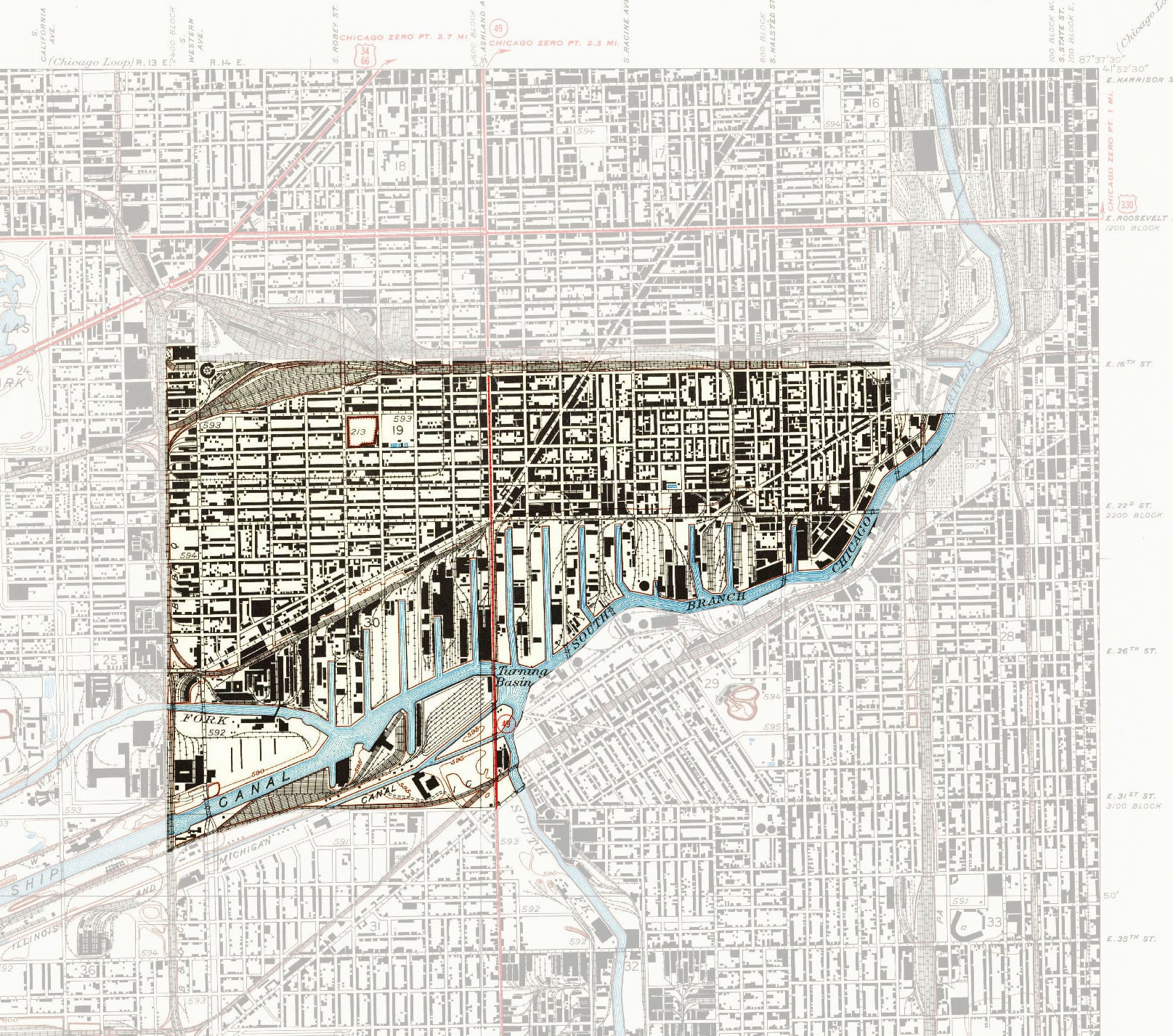
Ed recalled that the family settled in a neighborhood called Old Pilsen. He said the neighborhood was predominantly comprised of Czech, Polish, German and Irish immigrants, mostly Catholics. His father, Emil, worked in a lumber mill as a millhand.

The Pilsen neighborhood in southwest side of Chicago


Here are some passages describing the Jandesek’s neighborhood and lives:

“Life in this neighborhood: strong family ties, most men skilled or unskilled workers; some owned stores and taverns; the latter sometimes occupied all four corners of street crossings. Beer was favorite national drink of Poles, Bohemians, and Irish.

Women of most families, and ours, worked as clerks, tailor maids, or office helpers. Brother Emil as lumber hand, George as skilled typesetter. Family unity, following European custom rather strong among all these ethnic 3 groups. Cleanliness in home and around it, a strong trait among Bohemians; streets clean.

One block north of our house, at Throup and Sixteenth Streets, railroad tracks of Chicago, Northwestern. Burlington, and Northern and a freight yard where cars were sorted for long trips. We boys included this area in our playgrounds; we hitched freight car rides, collected coal and wood for home stove fuel, watched trains fly by.

Photo of street where the Jandeseks lived. Circa 1920.

The streets and empty lots were all play areas for roller skating, tag, baseball, hide and go seek, even making winter fires on holidays. City-managed playgrounds one-half mile away: Chicago River 11/2 miles to south, where we swam as boys in its canals and dived off high lumber piles, often into oily water. A number of boys drowned here. We all swam naked. Inter-neighborhood gang fights over “territorial rights;” none too serious.

Our school was only two blocks away from our house; parochial- schools near also. Most kids went through 8th grade; dropouts before age 14 were frequent due to poverty in home. Few aspired to go to high school and very, very few to college. I then never entertained idea of high school and dropped out at end of 8th grade to go to work like most boys. In my peer groups (boys and girls) I always seemed to have numerous friends, some capacity for leadership, and was confident of some of these.”

Chicago was home to a large number of Czechs by the late 1800s into the 1900s. According to an article about Pilsen on the Chicago Curbed website, “the rapidly growing metropolis’ Czech population… ranked third in the world—behind only Prague and Vienna.” (Cit. 3)

Postcard of Blue Island and 18th, near where the Jandeseks lived. Photo Circa 1915, with title in Czech at the top reading "Czech businesses in Chicago".

I suspect that Emil Jandesek worked at the Pilsen Yards, a huge lumber yard near the train tracks.  According to the History of Pilsen article cited below,  following the Chicago Fire, “rapid reconstruction throughout Chicago accelerated the growth of several industries, including lumber. The Pilsen Yards, at today’s 22nd Street and Blue Island, became the largest lumber distribution center in the world.” (Cit. 2)

There are two possibilities for the school Ed and his siblings attended. Since they lived at Throop and 18th, two blocks south at Throop and 20th was the Komensky School, built at the end of the 19th century. The building still stands today.

Map showing location of Komensky and Jinka schools, with location of Jandesek apartment in the middle.

The other possibility was the Jinka School, also built in the late 1890s, which stood at Loomis and 17th, one block north and one block west of the Jandesek apartment. They were large, multi-story brick buildings.

Komensky School at top, Jinka School at bottom.

Ed would have followed his family members into blue collar work if not for the influence of a community center or “settlement house” called Howell House. Chicago was the home to several settlement missions, which served various immigrant communities. Howell House and Bethlehem Center were located in Pilsen.

“Bethlehem Center and Howell House were church-related neighborhood houses serving the Pilsen area on the Near West Side. They provided religious, social services, and personal welfare assistance to an immigrant community composed predominantly of Bohemians, Poles, and Czechs.” (Cit. 4)

Photo of Howell House on the cover of a 1905 scrapbook.

“The Women's Presbyterial Society established Howell Neighborhood House for Home Missions, otherwise known as the "Bohemian Settlement House" in 1905. The mission's first initiative in the "Little Pilsen" neighborhood was a kindergarten in a small building on the corner of Nineteenth Place and May Street. "To stand on the corner of Blue Island Avenue and 18th Street [in those days]," Gertrude Ray later wrote, "was to stand in the heart of a Czech city with a population second only to Prague." 

18th and Blue Island in 1909

"The house expanded rapidly and by 1914, the board of management had created, among others, Boys and Girls Clubs, a Sunday school, a library, and an English Night School. C.D.B. Howell, for whom the settlement house was later renamed in 1919, taught Sunday school and brought in other teachers from the neighborhood in these formative years. Additionally, Howell led a fund-raising drive in 1913 that raised money for construction of a larger settlement building at 1831 South Center Street (now Racine).”(Cit. 4)

Howell House seen over the Pilsen rooftops. Circa 1915.

Ed described the effect of Howell House on his life in his memoir:

“Somehow, between 16 and 18, through a friend, drifted into Howell Neighborhood House, 1/2 mile from our home, attended nights more and more regularly. Personnel of House: men leaders who were attending Y.M.C.A. colleges, the University of Chicago, or church seminaries. Emphasized clean speech, clean habits, clean sports; these a motto. There was a gymnasium. I never took to its sports. There were various clubs tor social affairs, discussion, and debating. Also Church services Sunday, Presbyterian, which I regularly attended, as well as a mid week club.

A knitting class for girls and a basket-weaving class for boys at Howell House, circa
 1915.

Ed went on to write:

“I know of no other institution or leaders that made a greater impact on my personality development than Howell House. Here some of us picked up high aspirations and ideals that shaped our entire lives one way or another, even though we came to realize this in subsequent years. For various reasons, a few of us boys, the objects of special attention and solicitude of House staff; the Head, Miss Ray, Dr. Rowell, the minister, later a professor of English at University of California, and Rev. Olson, his successor. When I was about 19 years old I was selected to be an elder at Howell Neighborhood House Presbyterian Church, for reasons I ill understood then. Also, it was about this time the staff began to think about our finishing in high school and then going to college. Nothing could seem wilder than this at that stage of our lives, mine especially; but the ideal was sown in us and it was steadily nurtured and took.”

Civics class for Bohemians (like Ed and his family). Preparing the men to for naturalization. 1913.

Ed faced a difficult choice at such a young age. His father had died, and Ed and his older brother George had been supporting their mother, Emily. He wrote:

“I was the youngest of nine in our family; none of my brothers and sisters went beyond the 6th grade; each earned about $12 to $20 per week. World War I just ended short time before. My sister Rose, youngest of girls, married John Eppers after War; brother George returned; he was gassed in front lines in France, recovered, and planned to marry. This meant Eddie (me!) would soon have to support his mother at $15 per week.”

Ed would have had to forego his college dreams if his brother George hadn’t stepped up. He offered to have their mother live with him and his new wife, freeing Ed to quit his job and attend college. Ed traded his urban life for a more rural one at Blackburn College.

Ed’s memoir offered fascinating glimpses into the lives of immigrant families in large urban areas like Chicago.  Ed also showed the amazing impact of “settlement houses” in helping these families adjust to American life and build productive futures.

Sources:

1.       https://www.wttw.com/sites/default/files/pilsen_map_1929.jpg

2.       “History of Pilsen”. Jessica Pupovac. WTTW Television. https://www.wttw.com/my-neighborhood/pilsen/history

3.       https://chicago.curbed.com/2019/6/14/18677823/pilsen-historic-district-czech-sokols-preservation

4.       Bethlehem Howell Neighborhood Center collection, 1894-1969. Seven Settlement Houses-Database of Photos (University of Illinois at Chicago), University of Illinois at Chicago. Library. Special Collections and University Archiveshttps://explore.chicagocollections.org/ead/uic/25/wk50/


A Name That Captured My Imagination: 52 Ancestors Prompt “Free Space”

  A Man Named Newborn Faughn Newborn Faughn: 1900-1983 – Not Related   Interesting names always catch my eye, but some names are so sp...