Saturday, September 27, 2025

Immigrant Life in Chicago: 52 Ancestors 2025 Prompt “Urban”


Ed Jandy’s Memories of Early Life in Chicago

Edward Jandesek/Jandy: 1899-1980 (Maternal Grandfather)


Many of our ancestors chose to settle in rural areas, often turning to farming for a career. But a few ancestor families chose to settle in urban areas. The Jandesek family immigrated to the United States in the 1880s and settled in Chicago. Years later, son Edward Jandesek wrote in his memoir about what he remembered of his childhood in the city.

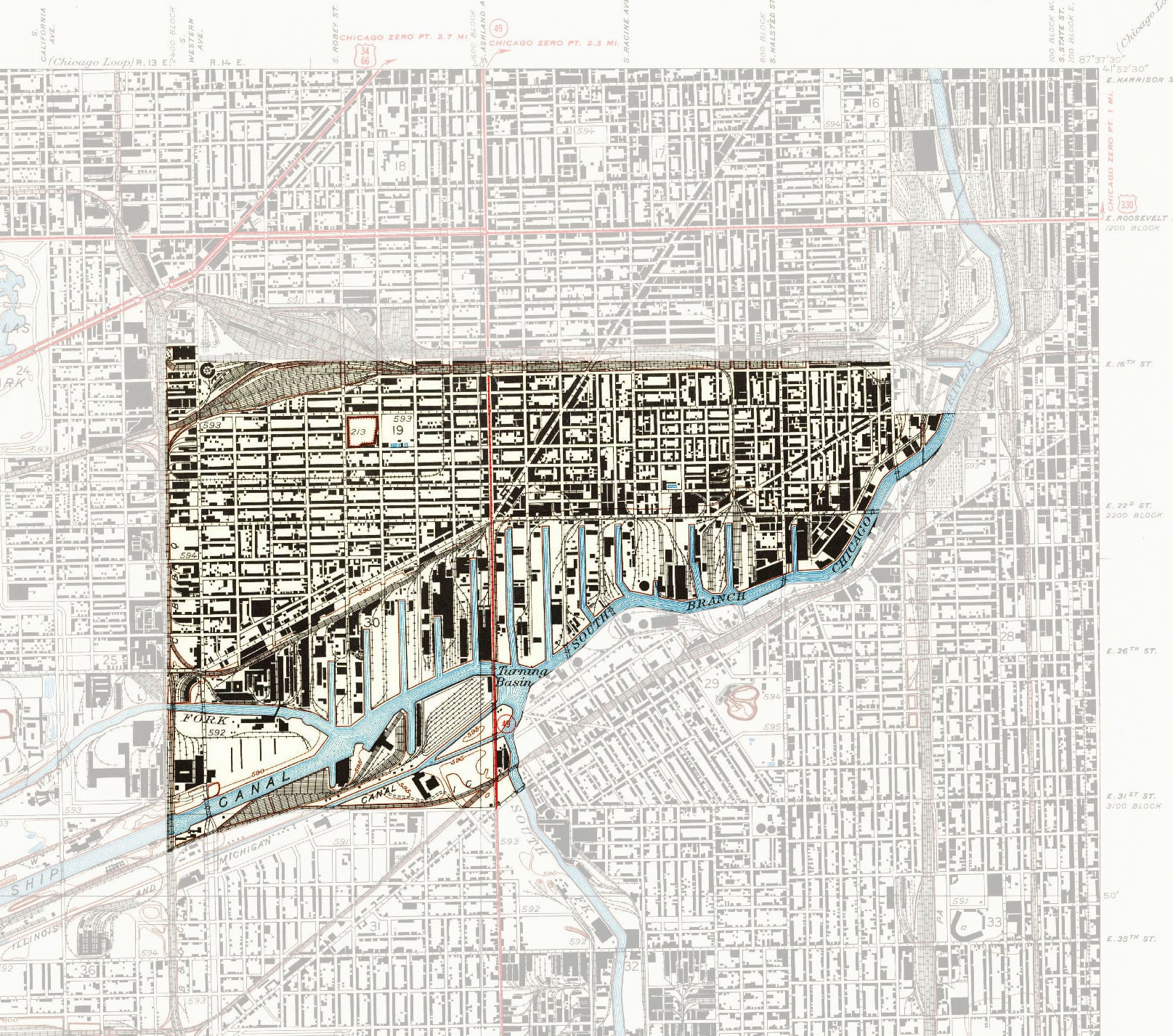
Ed recalled that the family settled in a neighborhood called Old Pilsen. He said the neighborhood was predominantly comprised of Czech, Polish, German and Irish immigrants, mostly Catholics. His father, Emil, worked in a lumber mill as a millhand.

The Pilsen neighborhood in southwest side of Chicago


Here are some passages describing the Jandesek’s neighborhood and lives:

“Life in this neighborhood: strong family ties, most men skilled or unskilled workers; some owned stores and taverns; the latter sometimes occupied all four corners of street crossings. Beer was favorite national drink of Poles, Bohemians, and Irish.

Women of most families, and ours, worked as clerks, tailor maids, or office helpers. Brother Emil as lumber hand, George as skilled typesetter. Family unity, following European custom rather strong among all these ethnic 3 groups. Cleanliness in home and around it, a strong trait among Bohemians; streets clean.

One block north of our house, at Throup and Sixteenth Streets, railroad tracks of Chicago, Northwestern. Burlington, and Northern and a freight yard where cars were sorted for long trips. We boys included this area in our playgrounds; we hitched freight car rides, collected coal and wood for home stove fuel, watched trains fly by.

Photo of street where the Jandeseks lived. Circa 1920.

The streets and empty lots were all play areas for roller skating, tag, baseball, hide and go seek, even making winter fires on holidays. City-managed playgrounds one-half mile away: Chicago River 11/2 miles to south, where we swam as boys in its canals and dived off high lumber piles, often into oily water. A number of boys drowned here. We all swam naked. Inter-neighborhood gang fights over “territorial rights;” none too serious.

Our school was only two blocks away from our house; parochial- schools near also. Most kids went through 8th grade; dropouts before age 14 were frequent due to poverty in home. Few aspired to go to high school and very, very few to college. I then never entertained idea of high school and dropped out at end of 8th grade to go to work like most boys. In my peer groups (boys and girls) I always seemed to have numerous friends, some capacity for leadership, and was confident of some of these.”

Chicago was home to a large number of Czechs by the late 1800s into the 1900s. According to an article about Pilsen on the Chicago Curbed website, “the rapidly growing metropolis’ Czech population… ranked third in the world—behind only Prague and Vienna.” (Cit. 3)

Postcard of Blue Island and 18th, near where the Jandeseks lived. Photo Circa 1915, with title in Czech at the top reading "Czech businesses in Chicago".

I suspect that Emil Jandesek worked at the Pilsen Yards, a huge lumber yard near the train tracks.  According to the History of Pilsen article cited below,  following the Chicago Fire, “rapid reconstruction throughout Chicago accelerated the growth of several industries, including lumber. The Pilsen Yards, at today’s 22nd Street and Blue Island, became the largest lumber distribution center in the world.” (Cit. 2)

There are two possibilities for the school Ed and his siblings attended. Since they lived at Throop and 18th, two blocks south at Throop and 20th was the Komensky School, built at the end of the 19th century. The building still stands today.

Map showing location of Komensky and Jinka schools, with location of Jandesek apartment in the middle.

The other possibility was the Jinka School, also built in the late 1890s, which stood at Loomis and 17th, one block north and one block west of the Jandesek apartment. They were large, multi-story brick buildings.

Komensky School at top, Jinka School at bottom.

Ed would have followed his family members into blue collar work if not for the influence of a community center or “settlement house” called Howell House. Chicago was the home to several settlement missions, which served various immigrant communities. Howell House and Bethlehem Center were located in Pilsen.

“Bethlehem Center and Howell House were church-related neighborhood houses serving the Pilsen area on the Near West Side. They provided religious, social services, and personal welfare assistance to an immigrant community composed predominantly of Bohemians, Poles, and Czechs.” (Cit. 4)

Photo of Howell House on the cover of a 1905 scrapbook.

“The Women's Presbyterial Society established Howell Neighborhood House for Home Missions, otherwise known as the "Bohemian Settlement House" in 1905. The mission's first initiative in the "Little Pilsen" neighborhood was a kindergarten in a small building on the corner of Nineteenth Place and May Street. "To stand on the corner of Blue Island Avenue and 18th Street [in those days]," Gertrude Ray later wrote, "was to stand in the heart of a Czech city with a population second only to Prague." 

18th and Blue Island in 1909

"The house expanded rapidly and by 1914, the board of management had created, among others, Boys and Girls Clubs, a Sunday school, a library, and an English Night School. C.D.B. Howell, for whom the settlement house was later renamed in 1919, taught Sunday school and brought in other teachers from the neighborhood in these formative years. Additionally, Howell led a fund-raising drive in 1913 that raised money for construction of a larger settlement building at 1831 South Center Street (now Racine).”(Cit. 4)

Howell House seen over the Pilsen rooftops. Circa 1915.

Ed described the effect of Howell House on his life in his memoir:

“Somehow, between 16 and 18, through a friend, drifted into Howell Neighborhood House, 1/2 mile from our home, attended nights more and more regularly. Personnel of House: men leaders who were attending Y.M.C.A. colleges, the University of Chicago, or church seminaries. Emphasized clean speech, clean habits, clean sports; these a motto. There was a gymnasium. I never took to its sports. There were various clubs tor social affairs, discussion, and debating. Also Church services Sunday, Presbyterian, which I regularly attended, as well as a mid week club.

A knitting class for girls and a basket-weaving class for boys at Howell House, circa
 1915.

Ed went on to write:

“I know of no other institution or leaders that made a greater impact on my personality development than Howell House. Here some of us picked up high aspirations and ideals that shaped our entire lives one way or another, even though we came to realize this in subsequent years. For various reasons, a few of us boys, the objects of special attention and solicitude of House staff; the Head, Miss Ray, Dr. Rowell, the minister, later a professor of English at University of California, and Rev. Olson, his successor. When I was about 19 years old I was selected to be an elder at Howell Neighborhood House Presbyterian Church, for reasons I ill understood then. Also, it was about this time the staff began to think about our finishing in high school and then going to college. Nothing could seem wilder than this at that stage of our lives, mine especially; but the ideal was sown in us and it was steadily nurtured and took.”

Civics class for Bohemians (like Ed and his family). Preparing the men to for naturalization. 1913.

Ed faced a difficult choice at such a young age. His father had died, and Ed and his older brother George had been supporting their mother, Emily. He wrote:

“I was the youngest of nine in our family; none of my brothers and sisters went beyond the 6th grade; each earned about $12 to $20 per week. World War I just ended short time before. My sister Rose, youngest of girls, married John Eppers after War; brother George returned; he was gassed in front lines in France, recovered, and planned to marry. This meant Eddie (me!) would soon have to support his mother at $15 per week.”

Ed would have had to forego his college dreams if his brother George hadn’t stepped up. He offered to have their mother live with him and his new wife, freeing Ed to quit his job and attend college. Ed traded his urban life for a more rural one at Blackburn College.

Ed’s memoir offered fascinating glimpses into the lives of immigrant families in large urban areas like Chicago.  Ed also showed the amazing impact of “settlement houses” in helping these families adjust to American life and build productive futures.

Sources:

1.       https://www.wttw.com/sites/default/files/pilsen_map_1929.jpg

2.       “History of Pilsen”. Jessica Pupovac. WTTW Television. https://www.wttw.com/my-neighborhood/pilsen/history

3.       https://chicago.curbed.com/2019/6/14/18677823/pilsen-historic-district-czech-sokols-preservation

4.       Bethlehem Howell Neighborhood Center collection, 1894-1969. Seven Settlement Houses-Database of Photos (University of Illinois at Chicago), University of Illinois at Chicago. Library. Special Collections and University Archiveshttps://explore.chicagocollections.org/ead/uic/25/wk50/


Thursday, September 25, 2025

Animals as Assets: 52 Ancestors 2025 Prompt “Animals”

William Weir’s Will and Livestock as Significant Assets


William Weir: 1751-1787 (Maternal Fourth Great-Grandfather)
Samuel Miller Weir: 1769-1830 (Maternal Third Great-Grandfather)


I am always fascinated with wills and probate records when I discover them. They can provide amazing and important details about the lives of ancestors and the things that were important to them. Animals are often mentioned in wills, especially in seventeenth- and eighteenth-century wills. In that era, animals were significant assets—not just in terms of their financial value, but also in terms of their being a means of survival as they were sources of food and labor. The distribution of these assets was critically important to heirs. The will of William Weir includes reference to a variety of animals, which were distributed among his children and his widow, including the animals given to my husband’s third-great-grandfather, Samuel Miller Weir.

William Weir was an Irish immigrant who settled in the area of Fishing Creek in Chester County, South Carolina. He fought in the Revolutionary War, and he and his wife, Susannah Miller Weir, had three sons and seven daughters over two decades. It is believed that William Weir was born in 1751, which meant that his first son, William, was born when he was only sixteen. It also would mean that William was only thirty-six years old at his death. (Note: I have found no verification of his birthdate, so I suspect he may actually have been older.) He died in 1787.

Plat map of Fishing Creek SC circa 1800, with Weir properties marked in red

William’s will opens with him stating that he was “Very Sick and Weak in Body but of Perfect Mind and Memory”, so obviously he had some serious illness and was aware he was unlikely to recover. Despite the severity of his condition, he set out a very precise, detailed distribution of his assets.

The significant sections read as follows:

“First I do give to My Well Beloved Son William Weer one Bay Mare and two Cows Which he is in Possession of.

Next I do give to My Well Beloved Daughter Elizabeth Weer her Bead & furniture With three head of cows Which is in My Son William's Care with her Saddel.

Next I do give My Well Beloved Son Samuel Weer three hundred acres of Land Which is lying & being on the Waters of Tager River & the Dunn horse and out of the above Lands he is to pay the Sum of twenty pounds into the hands of the Executors of this present Will.

Next I do give to My Well beloved Wife Susena her bed and furniture With an Equal part of the following property which is to be Equally Divided between My Said Wife and My Son James and My Daughters Susana, Augnas, Margaret, Janet, and Ann Which is to consist of the Plantation Where I Now Live with the Live Stock of horses, Cows, Hogs & Household furniture With My Plantation tools and What Moneys May be Due me and the twenty pounds Which is to be paid by My Son Samuel and all the above is to be Equaly Divided Amongest the persons above Directed after they pay all My Debts out of the whole Sum…”

As we can see, he provides each of his heirs with animals. His eldest son William receives a “Bay Mare” and two cows. Daughter Elizabeth receives “three head of cows” and a saddle, so presumably she already had a horse. My husband’s ancestor, Samuel Weir, received a “Dunn horse” along with three hundred acres of land.

Transcription of William Weir will...

The remaining assets were to be divided amongst William’s wife Susanna and the younger children—James, Susanna, Agnes, Margaret, Janet and Ann. The assets included “the Live Stock of horses, Cows, Hogs…”

So from this will, we can deduce that William Weir had a plantation comprising buildings, land, crops and livestock. The livestock included several horses, a herd of cattle, and hogs. He made sure that all his heirs received some of the livestock, helping to set them up to survive in South Carolina. The cattle would have provided milk, and the cattle and hogs provided meat. Horses were work animals, critical for pulling farm equipment to enable planting and harvesting of crops as well as providing a means of transportation. In addition, any or all the livestock could be sold to get money if necessary. William and others of his generation saw animals as essential means to build security and wealth in a new nation.


Sources:

South Carolina Will Transcripts, 1782-1868; Author: Wates, Wylma Anne; Probate Place: Chester, South Carolina. Ancestry.com.

https://www.rootsandrecall.com/chester/buildings/greater-fishing-creek-heritage-plat-map/

Saturday, July 19, 2025

A Mother Faces Desperate Times: 52 Ancestors 2025 Prompt “Off to Work”


Maude Smith Douthitt Enters Work World Following Divorce and Non-Payment of Child Support

Maude Underwood Smith: 1881-1967 (Maternal Grandaunt)
 

I was recently reading my grandmother-in-law Lorene Smith Jandy’s memoir, and found an interesting passage on her half-sister Maude:

“The fifth child and second daughter was Maude Underwood. She married Walter Douthitt

in the Owensboro vicinity and he too became an alcoholic. They had three children--Grace,

Madge, and James Bryant…. A friend notified my father that with Walter's drinking, Maud and the children were near starvation and that she must get a divorce. My father strongly disapproved of divorce but consented in order to save their family.”

Maude and Lorene’s father was Rev. Willis Smith, a devout minister and missionary, so he was a fierce proponent of the sanctity of marriage. If he lent his support to Maude seeking a divorce, her situation must have been dire. I decided to do more research on Maude’s life. I discovered that she became a working mother in an era when that was much more difficult than now.


Maude Smith Douthitt in 1915

Maude Underwood Smith was born in June 1881. I do not have the exact date of her birth as I have been unable to find a birth record. Most of the census records list her birth year as between 1883 and 1885—I suspect she was shaving a few years off her age as many people do. I relied upon the 1900 census when she was only nine years old, and which asked for the month and year of each household member’s birth. Since her parents provided the information, I feel it is the most likely to be accurate.

Maude’s mother was Rev. Smith’s first wife, Margaret “Molly” Underwood Benton. Underwood was the maiden name of Margaret’s mother, and was used as Maude’s middle name as well. Maude was the fifth of Willis and Molly’s eleven children.

Maude grew up in the Owensboro area of Kentucky. Her mother died when she was seventeen, and Rev. Smith remarried a year later in 1899. Just a few months later, Maude married a local man, James Walter Douthitt, on March 17, 1900, with her father performing the ceremony in the family home. She was eighteen years old, and her husband was twenty-one. The newspaper write-up of their wedding made their union sound promising, stating:

“Mr. Douthitt is a teacher who has achieved success in the common schools of Daviess County, is a young man of most excellent character, and popular wherever known. The bride is pretty and accomplished, and has many friends in Owensboro and Daviess County.”

Rev. Smith moved to the Oklahoma Territory later in 1900, taking many of Maude’s siblings with him. The newlyweds moved in with James’ parents on a farm in Daviess County, and,  according to the 1900 census records, James gave up teaching for farming.

Maude and James had two daughters in the first two years of their marriage. Madge Lorene was born January 8, 1901, and Grace Bernadene was born February 26, 1902. They added a son, James Bryan, to the family on October 1, 1908.

By this point, the marriage may have already been breaking down. I cannot find the family on the 1910 census. Lorene, Maude’s sister, recalled that Maude and James had moved to Indiana, but I have found no evidence of this.

In March 1912, Maude filed for divorce. Divorce was big news in that era due to its rarity, so the case was covered by the local newspapers. The Owensboro Messenger wrote:

“It is stated that the parties were married in Daviess County, March 10, 1900, and have lived together until recently, when because of the intemperate habits of the defendant the plaintiff was forced to abandon him; That for a long time he had failed and refused to provide clothing and food for their three children and herself. Plaintiff states that the defendant is a young man, aged thirty-three, able-bodied and well-educated and amply able to provide for his family. She prays for temporary alimony during the pendency of the suit in the sum of $25 per month, and suitable provisions after final decree.”

Maude must have felt so desperate and humiliated to be forced to air her problems before the entire community. How had she been providing for her children in the previous months? Had she been forced to beg for food from her in-laws and her siblings who still lived in the area?


The judge did grant temporary alimony as the divorce case dragged on, but Maude was forced to return to court to beg that the order be enforced, as Walter was failing to make the ordered payments.

The divorce was finalized on September 13, 1912. The newspaper reported that Maude was “awarded the custody of her three infant children. It was also adjudged that Douthitt was guilty of contempt of court by not complying with the orders of the court in paying temporary alimony heretofore adjudged against him. Judge Birkhead ordered his immediate arrest with instructions that he be placed in the Daviess County jail and there kept until he has paid Mrs. Douthitt the sum of $15 per month from April 1, 1912…Mrs. Douthitt was also given judgment for $500 permanent alimony.”

It is unclear whether Walter Douthitt ever met his obligations to his wife or children. Maude next appears in the newspaper attempting to rent the downstairs rooms of her house in Owensboro to boarders for the sum of $4.00 per week.


This attempt to support her children was apparently unsuccessful. A 1915 news article on the Smith family having a family reunion stated that Maude and her children were living in the Appalachian foothill community of Paintsville with her brother Eldred. They left Paintsville shortly after the reunion. Lorene Smith Jandy’s memoir reported that:

“My brothers Eldred and Charlie, both still single, took Maud and her three children under their care and returned to Melrose, New Mexico, to try again to make it. Like so many others, our family had had to leave their homestead there because of prolonged drought. The homes could not be sold and all had to be deserted. Apparently this second attempt to farm in Melrose also fizzled, and Maud had to keep moving, eventually ending up in Denver, where she and the children found more security.”

Lorene is referring to the period her father was living in the New Mexico Territory. At least three of his sons, Eldred, Charlie and Ernest, attempted to homestead there sometime before 1910. Eldred and Charlie returned with Maude and children around 1915. When their brother Frampton died suddenly in 1916, his obituary notes that Maude, Eldred and Charlie traveled from their homes in Melrose, New Mexico.

 Postcard of Melrose, New Mexico from about 1910

Maude’s son Jim Douthitt recalled his time in New Mexico in a letter to Lorene Smith Jandy. The drought had returned, and their homestead attempts were overtaken by duststorms:

“"I surely do remember our stay at Melrose, including fences completely buried in sand blown against tumbleweeds, rattlesnakes and jackrabbits! In Clovis we lived over a movie [house], and I remember a picture of Charlie Chaplin and under it 'Ishkabibble, I should worry.'

 From Jim’s account, it appears that Maude and children had moved from Melrose to the larger town of Clovis. There were probably few opportunities for employment for Maude in Clovis, so she moved again, heading 450 miles north to Denver, Colorado. The 1920 census shows them living in Denver. Maude, 37, is employed as a “forelady” in a candy store, while her daughters Madge and Grace, 19 and 17, were working as stenographers.

Vintage candy tin from early years of Brecht's in Denver where Maude worked

James, who was eleven in 1920, recalled, “[I]n Denver mother worked for a candy factory, Brecht's at first, then much later at Stauffer's. Then she worked at their (the Stauffer family’s) home, taking care of their daughter and 2 nieces. When I went to seminary in 1930, she moved with them to Chicago, and then to Kansas City.” The 1930 census corresponds to Jim’s memory, showing Maude living in a rooming house in Denver and working as a housekeeper.

While she may have worked for the Stauffer family out of state around 1930, by 1933 Maude had returned to Colorado, where she married the owner of a painting business, Luther A. Keigley. Maude was 51, as was Luther. After years of struggle and manual labor, Maude was able to return to keeping her own home and supporting her husband.

Maude’s daughter Grace moved to California in the 1920s where she worked as a secretary. Perhaps that influenced Maude and Luther to relocate there as well. They first settled in Red Bluff along the Sacramento River in northern California, appearing on the 1940 census; Luther stated he was a merchant with his own business.

Vintage postcard of Lake Elsinore, about 1950.

A few years later, the Keigleys retired, moving to Lake Elsinore, California. They appear in the society columns in their local paper, hosting Maude’s daughter, Grace, and her son James, now a minister, and his wife and children. They also visited Maude’s brother and his wife in San Bernardino County.

Sadly, Luther had little time to enjoy retirement. He died June 22, 1946. However, Maude continued to live in Lake Elsinore, enjoying visits from her children and relatives until her death at age 86. She died in the city of Orange, on the coastal side of the mountains (Lake Elsinore is on the opposite side of the Santa Ana range).


Maude’s life shows how women in the early 1900s could be left in serious financial straits if they were widowed or divorced. Maude went to work to support her children, moving from place to place and job to job until her children were grown. While she probably could have relied upon the support of some of her siblings to survive, she chose to go out on her own and achieve independence. She kept her family together, and raised her children to be successful, self-supporting adults. Maude’s work ethic and dedication on the job were obvious from her achieving the position of “forelady” at the candy manufacturer, and her employers’ subsequent decision to employ her as their housekeeper and nanny. Maude earned the security she found in her second marriage and retirement.


Sources:

“Maude Douthitt Granted Absolute Divorce”. Owensboro Messenger Inquirer. Owensboro, KY. Sep. 13, 1912. Accessed on Newspapers.com.

“Divorce Is Asked.” Owensboro Messenger. Owensboro, KY. Mar. 21, 1912. Accessed on Newspapers.com.

“Maude Douthitt Granted Alimony.”  Owensboro Messenger Inquirer. Owensboro, KY. Sep. 13, 1912. Accessed on Newspapers.com.

James Frampton Smith Obituary. Owensboro Messenger. Owensboro, KY. Jan. 25, 1916. Accessed on Newspapers.com.

Room Rental advertisement. Owensboro Messenger Inquirer. Owensboro, KY. Nov. 19, 1913. Accessed on Newspapers.com.

“Big Reunion”. Owensboro Messenger Inquirer. Owensboro, KY. Jun. 18, 1915. Accessed on Newspapers.com.

Dr. Willis Smith entertains Keigleys. San Bernardino County Sun. San Bernardino, CA. Jun. 23, 1946. Accessed on Newspapers.com.

“Children Visit Mrs. Keigley.” Lake Elsinore Sun Tribune. Lake Elsinore, CA. May 15, 1952. Accessed on Newspapers.com.

Family photos and memoir of Lorene Smith Jandy.

Monday, June 30, 2025

L.E.Smith in the Archives: 52 Ancestors 2025 Prompt “In the Library”


Lucius Ernest Smith’s Papers and Photographs: Held in the Presbyterian Church Historical Society’s Archives

Dr. Lucius Ernest Smith: 1878-1955 (Maternal Granduncle)

I was thrilled to discover that Lucius Ernest Smith’s papers, including family photos and correspondence, have been preserved in the archives of the Presbyterian Church’s Historical Society in Philadelphia. I now have a reason to visit Philadelphia!

So who was Lucius, and why were his papers important enough to be preserved by the Presbyterian Church?


Lucius, known to his siblings as Ernest, was Rev. Willis Smith’s third son. He was born in Owensboro, Kentucky on October 6, 1878. In an earlier blog post, I wrote about his adventure driving a six-horse team back to Kentucky from Ashville, North Carolina after his mother’s death from tuberculosis. He crossed the Appalachians in February--a fool-hardy but brave endeavor.

He followed his father and some siblings to the Oklahoma Territory where Willis served as a missionary. Ernest apparently tried to homestead in Oklahoma, but ended up returning to Kentucky to assist his brother, who was a teaching missionary in the mountains. He completed college at age thirty-three and then entered Johns Hopkins Medical School, graduating as an MD at age thirty-seven.

He served as a medical missionary in Africa for six years under the auspices of the Presbyterian Church, He served as a lecturer and fundraiser for the church for a few years after he returned to the United States from Spanish Guinea (now known as Equatorial Guinea).

Due to his service to the church, the Presbyterian Historical Society was a logical place to donate his papers and records. There are seven boxes of materials, and the collection includes some of his diaries. Ernest kept a diary during his wagon journey from North Carolina. I would love to discover whether that particular diary is in one of those boxes.

The materials held in the Presbyterian archives would all be fascinating, and would provide amazing details about Ernest’s incredible life. I will write a more comprehensive biographical sketch about Ernest in a future blog post.

Sources:  

https://researchworks.oclc.org/archivegrid/archiveComponent/16835766

Guide to the L.E. Smith Papers. Smith, L. E. (Lucius Ernest), 1878-1955. Call No. RG 216. Inclusive Dates 1898-1959. Presbyterian Historical Society, 425 Lombard Street, Philadelphia, PA 19147-1516 USA. https://pcusa.org/historical-society/collections/research-tools/guides-archival-collections/rg-216


Sunday, June 29, 2025

Edward Jandy’s Academic Articles on JSTOR: 52 Ancestors 2025 Prompt “At the Library”


Research, Reviews and Citations: Learning about Dr. Jandy’s Research from Library Sources

Dr. Edward Jandy: 1899-1980 (Maternal Grandfather)


I have already written one post about Edward Jandy’s PhD dissertation and book on the life and work of sociologist Charles Horton Cooley. However, Dr. Jandy continued to research and publish during his long career as a professor at Wayne State University in Michigan. I decided it was time to look for some of his publications in online library resources. I hoped to get a clearer picture of his research interests.

Dr. Edward Jandy

Some of Dr. Jandy’s earliest research had to do with inner city drug addiction in Detroit, and its connection to crime. Dr. Jandy and a psychologist at the Detroit House of Correction, designed the study, interviewed criminals and wrote up their conclusions in a paper titled “Narcotic Addiction as a Factor in Petty Larceny in Detroit”. It was published November, 1937 by the Detroit Bureau of Governmental Research. The paper found a strong correlation between addiction and crime, and recommended treatment for the addiction as a way to lower the rate of recidivism.

By the 1940s, Dr. Jandy was hosting a weekly radio program in Detroit on “Post-War Problems”. He served as moderator of various panels of experts, according to the News And Notes Section of The American Journal of Sociology, 1943.

Dr. Jandy was appointed the Director of Welfare for the United Nations Relief and Rehabilitation Administration Mission to Ethiopia in 1946, and he returned to the country in 1950 as an attache and Public Affairs Officer to the American Embassy in Addis Adabe, serving until 1953. Some of his articles deal with his experiences in Ethiopia and his assessment of the country and its people. In addition I have found reference to a book he wrote entitled Changing Land Tenure Practice and Land Taxation in Ethiopia, published in 1963.


Most of Dr. Jandy’s other publications were book reviews of various books, including a couple of general sociology textbooks. The subject matter of the other books included opiate addiction, maximum security prisons, and juvenile crime, showing that he continued his study of the causes of criminal behavior.

I hope to read Dr. Jandy’s memoir to learn more about his research interests and teaching career.

Sources:

Jandy, Edward C. “Ethiopia Today: A Review of Its Changes and Problems.” The Annals of the American Academy of Political and Social Science, vol. 306, 1956, pp. 106–16. JSTOR, http://www.jstor.org/stable/1030740. Accessed 18 June 2025.

Jandy, Edward C. and Floch, Maurice. “Narcotic Addiction as a Factor in Petty Larceny in Detroit”. November, 1937. Detroit Bureau of Governmental Research. School of Public Affairs and Social Work of Wayne University, Report No. 9.

Jandy, Edward C., Review of Opiate Addiction. Social Science, Vol. 24, No. 2 (April 1949), pp. 124-125.

Jandy, Edward C. Review of  The Society for Captives: A Study of A Maximum Security Prison. Social Science, Vol. 34, No. 4 (OCTOBER, 1959), pp. 253-254.

Jandy, Edward C. Review of  Delinquency, The Juvenile Offender in America Today. Social Science, Vol. 32, No. 3 (JUNE, 1957), pp. 190-191.

Jandy, Edward C. Review of Sociology: Analysis of a Decade. Social Science, Vol. 34, No. 1 (JANUARY, 1959), pp. 55-56.

Sunday, June 22, 2025

A Scottish Poet in the Family Tree? 52 Ancestors 2025 Prompt “Artistic”


Was Poet Robert Pollok the Brother of Third-Great-Grandfather John Pollok?

John Pollok: 1789-1851 (Paternal Third-Great-Grandfather)
Robert Pollok: 1798-1827 (Possible Third-Great-Uncle)
John Pollok: 1756-1831 (Possible Fourth-Great-Grandfather)


My in-laws, John and Laurel Aird, visited John’s Aunt Ruth MacNiven on Montserrat years ago, and Laurel took detailed notes as Ruth told them what she knew about her and John’s family history. I transcribed Laurel’s notes several years ago, and one notation caught my eye. Ruth claimed that her grandmother Jane Mary Pollok was the great-niece of Scottish poet Robert Pollok. When I saw the prompt for this week was “Artistic”, I decided to investigate this claim. Could I find any evidence backing up Ruth MacNiven’s assertion? It would be fascinating to have an acclaimed poet in the family tree.

First, I did some research on poet Robert Pollok. He was born October 19, 1798 in North Moorhouse or Muirhouse, Renfrewshire, Scotland. According to the Encyclopedia Brittanica, he was the son of a “small farmer” and was “trained as a cabinet-maker and afterwards worked on his father’s farm…” His entry on Findagrave states that he was “the son of John Pollok, tenant of the farm at North Muirhouse, and his wife Margaret (nee Dickie) of Fenwick parish.”

Poet Robert Pollok

According to that bio, he first worked for his brother-in-law David Young as a carpenter. “Not satisfied with ’mechanical employment’, he moved once again to live with his uncle, David Dickie, at Fenwick…” While there, he trained with a parish teacher, preparing himself to study at a university. Robert attended the University of Glasglow and earned a Master of Arts degree. He then entered divinity school and, after five years of study, was licensed to preach in the United Secession Church of Scotland in 1827. Earlier that year, his ten-volume, blank-verse poem, “The Course of Time”, was published by the Blackwood publishing company. The poem “describes the mortal and immortal destiny of man” and is considered the Calvinist response to Milton’s Paradise Lost.

By the time of the poem’s publication, Pollok was severely ill with tuberculosis. With the financial assistance of friends, he prepared to travel to Italy, accompanied by one of his sisters, in the hope that a warmer climate would improve his health. He died before he could set sail from England. The Rosaline Masson biographical essay noted that:

“Almost immediately after his death, [The Course of Time] became extensively read throughout the British empire, especially among the numerous and respectable classes of dissenters. It has, accordingly, passed through a considerable number of editions, and now appears likely to keep its place among the standard poems in our language.”

Title page from 1847 printing of The Course of Time on Internet Archive.

An 1847 American printing of The Course of Time is available on Internet Archive. I am printing a short passage from Book Three of the nearly 200-page poem:

Of all the trees that in Earth’s vineyard grew,

And with their clusters tempted man to pull

And eat, -- one tree, one tree alone, the true

Celestial manna bore, which filled the soul—

The tree of Holiness—of heavenly seed;

A native of the skies; though stunted much,

And dwarfed, by Time’s cold, damp, ungenial soil,

And chilling winds, yet yielding fruit so pure,

So nourishing and sweet, as, on his way,

Refreshed the pilgrim; and begot desire

Unquenchable to climb the arduous path

To where her sister plants, in their own clime,

Around the fount, and by the stream of life,

Blooming beneath the Sun that never sets,

Bear fruit of perfect relish, fully ripe.


A monument to the poet stands in Newton Mearns. It was erected around 1900.


So how does Robert Pollok’s biography match up with that of Jane Mary Pollok’s grandfather? Jane’s grandfather, John Pollok, who I shall refer to as John Pollok 2, may have also been born in Eaglesham, Renfrewshire on April 26, 1789 to a father named John Pollok (John Pollok 1). This information comes from the wikitree on FamilySearch. The wikitree shows that John Pollok 1 was father to several children, John Pollok 2 being the oldest child, and Robert Pollak the poet being the youngest surviving child, which matches the information in the poet’s brief biographies on various websites. The tree on FamilySearch included two daughters, Margaret and Janet, so one of them could have been the sister that planned to accompany Robert to Italy. However, the FamilySearch tree has a serious problem: there are no sources for the information. None.

As for Ancestry, I was able to find a birth record for John Pollak 1. He was born December 17, 1756 in Mearns, Renfrewshire and baptized December 31, 1756, according to church records from Mearns. His parents were John and Jean Gilmour Pollok. I also located his Church of Scotland marriage record, which shows he married Margaret Dickie on May 9 1780 in Fenwick, Ayrshire. That location is only forty miles or so from Mearns, so it seems likely it is the same man. He appears to have died in 1831. A photo of his gravestone, referencing Eaglesham, is below.


John Pollok 1 headstone in Renfrewshire.

The first real Scotland census occurred in 1841, after his death, so without that type of information it is difficult to verify how many children John Pollok 1 and Margaret Dickie Pollok had. Since they married in 1780, John Pollok 2’s 1789 birthdate matches up well. However, I have been unable to find parish birth records for either John Pollok 2 or Robert Pollok, or any of the other supposed children of John Pollok 1 listed on FamilySearch.


So what can we conclude about Ruth MacNiven’s story about poet Robet Pollok being an ancestor? Ruth’s grandmother, Jane Pollok Shields, the source of the family tale, would have heard about her great-uncle Robert from her father, John Pollok 3, born in 1813. John Pollok 3 would have been fourteen years old when poet Robert Pollok died. He would have met his uncle and been intimate with other family members of the poet. Jane herself was born only forty years after the poet’s death, so she would also have known his contemporaries and family members. Assuming Jane was truthful, I find her story credible.


Jane Mary Pollok Shields

However, until I have some actual documentation to verify that Robert Pollok and John Pollok 2 were brothers, I will continue to note that the relationship is merely an unverified hypothesis. As my research skills with respect to Scotland's records improve, I hope to be able to provide a definitive answer in the future.


Sources:

1911 Encyclopaedia Britannica, Vol. 22. Pollok, Robert. https://en.wikisource.org/wiki/1911_Encyclop%C3%A6dia_Britannica/Pollok,_Robert

Significant Scots. Pollok and Ayton. By Rosaline Masson for the Famous Scots Series (1898) (pdf). https://www.electricscotland.com/history/other/pollok_robert.htm

East Renfrewshire Culture & Leisure. Robert Pollak. https://www.ercultureandleisure.org/libraries/heritage/portal-to-the-past/people/art-literature/robert-pollok/

Robert Pollok. Findagrave Entry. https://www.findagrave.com/memorial/228792895/robert-pollok?_

The Course of Time. Robert Pollok. Edward Kearny, pub. New York, NY. 1847. https://archive.org/details/courseoftimepoem00pol/page/n7/mode/2up


Tuesday, June 17, 2025

Death of Rev. Smith Leads to Reunion Five Years Later: 52 Ancestors 2025 Prompt “Reunion”


Rev. Smith’s Family and Church Family Gather in His Honor in 1933

Willis D. Smith: 1853-1928 (Maternal Great-Grandfather)


I ran across an interesting news article from the August 2, 1933, issue of the Owensboro Messenger newspaper, describing a large reunion held at the Pleasant Ridge Presbyterian Church near Owensboro, Kentucky honoring Rev. Willis Smith and his family. Rev. Smith had died five years earlier, so it was a surprising discovery. The event was not a traditional family reunion; it was more of a community celebration of Rev. Smith’s life and his legacy as a minister of the church.  

Willis Smith had died on March 21, 1928 at the age of seventy-five. According to the article, he was the second pastor of the Pleasant Ridge church, which was built in 1875, while the congregation was established in 1850. The first pastor served nearly thirty years, so Rev. Smith took over around 1880. The article states he served as pastor for twenty-three years, which would mean he left the church around 1900. He had recently married Cora Leachman, and he chose to move his family to the Oklahoma Territory and eventually New Mexico to serve as a missionary and church founder. His final child, Cora’s only child, Lorene Edith Smith, was born in Oklahoma Territory in 1903.


The Smiths eventually returned to Kentucky, and Willis served other churches there as pastor. However, his family still had strong ties to Pleasant Ridge Presbyterian Church, and the congregation obviously had great respect and fondness for Rev. Smith, leading to the 1933 gathering.

On July 30, 1933, some four hundred people gathered at the Pleasant Ridge Church to remember Rev. Smith and to visit with the members of his family who attended. 

Rev. Willis Smith and second wife Cora Leachman Smith

In addition to Willis’ widow, Cora Smith, several Smith children and grandchildren were in attendance, including:

Rev. Willis Smith Jr., wife and daughter, all of New Hampshire.

Dr. Lucius E. Smith and wife of Louisville

Othilde Smith, widow of Albert E. Smith, and the entire family of their daughter Frances Smith Baldwin.

Lorene Smith Jandy, husband Ed Jandy, and daughter Laurel.

In addition, there were many Smith family cousins in attendance, including Moseley relatives, Benton family relations, and Leachman family members. The remaining attendees were families that had attended the church while Rev. Willis Smith was the minister.

The event lasted all day on Sunday, July 30. A church service began at 11 a.m., with Rev. Willis Smith Jr. preaching (even though he was a minister for the Congregational Church). The service included a baptism for the baby daughter of a local family.

Dinner followed the service; I expect it was a potluck sort of affair with plenty of wonderful dishes. This feast was followed by an afternoon church service, with the sermon delivered by another of Willis Smith’s sons, former missionary Dr. Lucius E. Smith. Music was provided by more family members: a solo by Mrs. Frances Baldwin, Rev. Smith’s granddaughter, and a duet by his daughter-in-law Mrs. Albert Smith and her granddaughter Frances Baldwin.

The event sounds like it was a marvelous combination of a family reunion and a church anniversary picnic. I’m sure Willis Smith’s family was delighted to return to a place and people that had been so important in their early lives.

The Pleasant Ridge Cumberland Presbyterian Church in 1955.


The church was used less and less over the years. Most congregants chose to attend another Presbyterian church in Owensboro. The building was vandalized several times. It no longer seems to exist, so it was probably decommissioned and may have been razed.

Sources:

“Family Reunion of Smiths Held”. Owensboro Messenger-Inquirer. Owensboro, Kentucky. August 2, 1933.

“Church Which Founded First Sabbath School May Reopen.” Owensboro Messenger-Inquirer. Owensboro, Kentucky. Sept. 11, 1955.

Hard-Working Till the End: 52 Ancestors 2026 Prompt “An Unexpected Strength”

  Hold on to Your Hats! Margaret Smith Martin: Thirty Years as a Milliner Margaret Elizebeth Smith Martin: 1846-1912 (Maternal Great-Grand...