Saturday, April 24, 2021

Plantation Uprising: 52 Ancestors 2021 Prompt “Crime and Punishment” Part I

Fictionalized Account of a Real Uprising on the Alliance Plantation
Ruth Shields MacNiven


Ruth MacNiven composed a series of “letters” as a school project in 1922 that recounted a supposed 1912 trip to Suriname. The “letters” were published in the Norwester, the annual for her high school, Detroit’s NorthWestern High School. Ruth wrote in the first person, addressing them to a possibly fictitious friend “Jane”, and signed the letters Ruth. However, she was not old enough to have been in Suriname on her own when the events—an insurrection among the indentured laborers—occurred in 1912. She told John and Laurel that her older sister had actually been there during the incident, so she probably based the letters on what Margaret Shields told the family upon her return to Detroit.

            I found these “letters” on a Dutch language website about the Alliance plantation. I am not sure how the Dutch historians discovered them. The only way I found the copy of the 1922 Norwester was through the url on their website. The letters were presented as the high school’s “First Prize Story”, so it seems Ruth presented them as fiction at school. The Dutch author noted problems with the date of the story and Ruth’s age.  Here is a translation of the researcher’s commentary on the material:

“Http://www.archive.org/details/norwesterof1922nort

“A story from 1922 on some events that took place in 1912 in Alliance; the story is written in the form of 4 letters. It is not clear whether it is fiction or the truth – Ruth Shields must have been young for about 17 years when she wrote it, and the events on which they wrote had taken place when she was 7. “


Ruth's senior photo from the 1922 Norwesters Yearbook


            No matter whether the account is based completely on facts, is partial fiction, or is complete fiction, it is a fascinating portrait of life at Alliance. It draws attention to the simmering tensions that existed on the sugar plantations. History shows the workers were frequently mistreated and dissatisfied with their lot; the Dutch plantation records and contemporary newspaper accounts refer to frequent uprisings.


The indentured workers were imported from distant lands, under desperate circumstances. Most were illiterate and signed contracts they could neither read nor understand, and as a result were often misled about the type of work, conditions and term of “employment” they would face on these plantations.  Many had no idea what country or part of the world they were being sent to—they were often told the ship voyage would only be just a few days when in reality it was months in length. Indenture contracts may have only specified terms of five years or so, but it was often difficult for workers to return to their homelands after their contracts were finished, due to lack of funds, fears of what they would face in their homelands, or due to marriages to people outside their culture.

            The plantation owners had little respect for their imported workers. These workers were completely dependent on their employers for food and shelter, both of which were inadequate. Most plantations housed the indentured workers in the old slave quarters, which were little more than shacks. The work was brutal. The workers suffered through intense heat and humidity doing back-breaking labor.  They were plagued with insect bites and vermin. Many sickened and died. I bought a wonderful book called Coolie Woman: The Odyssey of Indenture by Gaiutra Bahadur which describes the miserable conditions indentured women endured in colonial Guiana and Suriname. The power differential between the indentured, who were seen as barely one step above slaves, and their “masters” meant that most white colonials expected and demanded sexual favors of the women.

We know, due to discoveries that Steve Aird made through DNA matches and contacts that resulted from those matches, that Archie Shields was sleeping with one of his Javanese female plantation workers and impregnated her. While it is unpleasant to think of Archie as a sexual abuser, given what we understand in the #MeToo era about relationships between powerful men and powerless women, we know that such a relationship could never truly be called consensual. Even if the woman appeared to welcome Archie’s attentions, she probably feared saying no to him, given his power over her livelihood and future.

            As Steve has documented, the Javanese woman, Asih, was 23 when she gave birth to Archie’s son Julian Hadi Soewarno Shields in 1926. At that time, Archie was 62 years old and had been married for 19 years. His oldest daughter Margaret was only six years younger than Asih. I doubt Asih would have chosen a man old enough to be her grandfather as a lover if she had had any real say in the matter. One has to wonder if any other men in the family took advantage of any more indentured women during the decades they managed plantations in Guiana and Suriname.  They were living in a very different time and culture where such behavior was the norm, so of course we can’t judge them by modern standards.

            Ruth’s composition about Alliance in 1912 offers insight into the complicated relationship between the indentured workers and the Shields family, and the potential for violence between the different nationalities of workers. Ruth was an excellent writer—it’s hard to believe she was only in high school when she wrote these fictionalized letters.

Here is Ruth’s 1922 composition:

Tajah Time by Ruth D. Shields

Plantation Alliance, Dutch Guiana. October 1, 1912.

Janey dear:

The lazy atmosphere of this place has already gotten into my blood and must serve as a sufficient excuse for my not writing you sooner.

Surinam, or Dutch Guiana as it is called on the map, is like to no other place in the world. It is apart — isolated. As a friend of ours says, "It is the last place God made and He isn't finished with it yet." As one approaches it from the ocean, the first hint of land is the change in color of the water from blue to muddy brown. Suddenly palm trees appear and then houses under the palms, then a low seawall extends along the coast as far as the eye can see.

Paramaribo, where we land, is a quaint, old-world Dutch settlement. Its wide unpaved streets are lined with priceless mahogany trees, a hundred years old. It is the seat of government of the colony, and has a very imposing Government House.

Plantation Alliance is up the Commewyne River from the town. We take the little river steamer, Johannah, and proceed up with the tide. The Commewyne is a muddy, silent river, the home of alligators, peri, eels and sometimes sharks, flowing on and on between densely overgrown banks, past deserted, tumble-down, abandoned plantations, to empty at last into the tropical sea.


Just as the sun is setting with all the fiery splendor of a tropical sunset, there comes a break in the everlasting hush and I behold Uncle's house, my new home, its windows blazing in the rays of the setting sun. The launch chug-chugs up to the landing; it could hardly be dignified with the name of wharf. We leave it, stretching our cramped limbs thankfully. We walk along in the cool shade of giant tamarind trees, whose branches form a leafy arch overhead.

Halfway up the path a high, white picket gate is opened for us. Past it the tamarinds give place to a seven-foot box hedge of jasmine. The road widens in front of the house to make room for a conventional tropical garden with all its walks leading to an ancient sundial in the center.


The house itself is built so high off the ground that one could ride under it on horse-back. A high flight of steps leads up to the wide gallery which surrounds the house. I was so charmed with what I saw that it was with difficulty that Auntie persuaded me to enter the house to prepare for my first night at Alliance. I love it, Jane!

Sleepily yours,

RUTH.


Alliance, November 5, 1912.

Dearest J.

Yesterday at tea a rather interesting thing happened.

I shall begin with Tjuni bringing in the tea things. Uncle had been out in the canefields all day and as usual, when he came in, he began to "talk shop."

"I've been looking for rain," he said. "The canefields are simply burning up. If it doesn't come soon, we'll have a very short crop'. There have been fires in the bush and our water supply is mighty low."

"I wouldn't worry," Aunt Louise put in, "it's bound to rain soon. I wonder if the Sheddons didn't plan on coming for tea. You remember they were coming for the week-end."

"Yes, I remembered. The houses for that new gang of workmen were finished today. I hope the agent sends us more Javans than coohes. There are more Hindoos now and it's best to keep the number about even."

"Archie, Mrs. Sheddon is having two new dresses sent out from London," began Auntie, but Uncle Arch was still rambling on. "I'll need one — no, two — new overseers," he said, "and overseers are harder to find than needles in haystacks just now."

“I wish you'd have the court rolled, Archie. We might have some tennis tomorrow after tea."

"Uncle," said I, feeling that the time had come to speak, "who are those two perfectly awful looking men coming up the drive?"

And indeed they presented a strange appearance, these two unkempt, ragged-looking scarecrows approaching' the steps. Uncle looked for a moment, frowned, and then without a word went out to meet them. I followed. Closer inspection revealed haggard, white faces, under several weeks' growth of beard, clothing tattered and torn, and bare, scratched feet. Uncle talked to them for some time in a language which I recognized to be French, but could not understand. During what seemed to me quite a lengthy conversation, the whistle of the "Johannah" sounded, and shortly after it docked. Mynheer Kroesen, the Dutch bookkeeper, with Tjuni in tow, brought up several fat bags, which I knew contained thousands of guilders, for tomorrow was pay-day. He paused at the steps to receive some directions, in Dutch, about disposing of the money. Did I imagine it, Jane, or did the shifty eyes of those wild creatures exchange significant glances?

I went back into the house and when Uncle came in, he explained to me that the men were French convicts. "Those men," he said, "have come all the way through the bush from French Guiana, sometimes walking, sometimes swimming, always on the verge of starvation."

"Why were they in Cayenne?" I questioned, thirsting for knowledge.

"Cayene is where France sends all her political and incorrigible prisoners. The prison is on Devil's Island, just off the coast. It's the most wretched place you could imagine. Not a tree on it, just rocks and sand. The sea around it is alive with sharks, so escape is almost impossible. It seems to me they deserve a chance to live after coming through all that. They want to work here and earn money to get to America."

"Are you going to let them?" I asked.

"Ordinarily, I wouldn't, but it happens that I need two overseers badly. They seemed rather decent and, from what I gather, they know something about raising cane. I'm giving them a chance."

"Well," I said, "I hope they don't raise anything worse than sugar cane."

And the incident closed. I think this letter had better do the same, so

Au revoir, Jane,

RUTH.


Alliance, December 30, 1912.

Rejoice, Jane!

This is Tajah time ! All the Hindoo women are going about decked in their finest laces and jewels. Such gorgeous hairdresses ! and earrings —


This afternoon, according to custom, the Hindoos brought the tajahs up to the house for us to see. A tajah is a sort of movable temple, erected to Mohammed and his sons, Hoosan and Hassan. It is made of bamboo, twisted into many varied fancy shapes and lined or covered with gorgeous colored paper. The largest one this year was between twenty and twenty-five feet high with a huge, red, mosque-like dome on top. There were four smaller ones. The Mohammedans fill them with rice and money and throw them into the river. After the ceremony at the river tomorrow, there will be games and a tug-of-war between the Javans and the Hindoos.

By the way, those two Frenchmen that I told you about have been training the natives for the games. One has the Javans, the other the Hindoos. There is a great deal of rivalry between the two teams. The ex-convicts have gotten along very well. Uncle is proud of them. I'll tell you about the games later.

Lovingly,

RUTH.

Alliance, January 3, 1913.

Jane ,

So much has happened since I wrote you last. Let me indulge my story-telling instinct just this once.

After the last tajah had sunk beneath the muddy, brown water and the wild yelling had ceased, the excited, brown mob moved with one accord to the compound, where the games were to be held. The Javans were already there — had been for several hours — and the gambling was fast and furious. Many had lost their jewels and money, and some their wives as well. The overseer's whistle blew and the games were off. They danced. They fenced. And they wrestled. But the climax came with the tug-of-war.

The overseer stepped out and announced: "Kemshan leading the Javans, Rugabeesin leading the coolies." The whistle shrilled. In an instant the line had stiffened, every muscle taut. For a space of several minutes, which seemed like hours to both contestants and spectators, neither side gained nor lost. The onlookers shrieked encouragement, screamed and gestured wildly. Just as the rope seemed bound to break, an almost imperceptible quiver ran down the Hindoo line.

A sharp command rang out in Javan. There was a tremendous concerted pull. Inch by inch, at first, then more swiftly, the followers of Mohammed lost ground. Suddenly, the struggle was over. The Javans had won. Victors and vanquished sprawled on the ground in a kicking, writhing mass.

The temptation was too great for the hot-blooded eastern natures. Fist met fist. Blows rained harder and harder. From the fist to the cutlass is but a short step for the excitable coolies. Quick as a flash the wicked, curved knives appeared and found their way into the protesting flesh of many an unfortunate Javan. They carry no weapon but their own fists, which, of course, are worse than nothing when pitted against cutlasses. Who can blame them for deciding that discretion was the better part of valor — and departing, those that were able, quite hastily from the field.

When my uncle reached the scene of the conflict, having been hastily summoned from the factory, the field of battle was empty, except for the groaning, bleeding forms of some who were unable to drag themselves away. The Javans had taken refuge in the canefields, the coolies were plundering the homes of the vanquished.

Great was Uncle's indignation on discovering that the two French overseers on duty at the celebration had disappeared from the scene of action shortly after they had stirred up the trouble. Imagine his wrath, when on returning home, he found the watchman bound and gagged, under the house, and all that was movable gone from his safe.

"It's a mighty lucky thing," he said to Auntie and me when we got back from town (of course I had to be in town and miss it all), "that I just happened to take the pay money right to the factory instead of keeping it overnight at the house as usual. But I can't think how they knew the money ought to be there on Friday night, as only Tjuni and Kroesen are supposed to know, and of course I trust them absolutely."

"Oh, don't you remember," I said, "Mynheer Kroesen brought the money up from the boat while they were here that first night. You spoke to him in Dutch, but they must have understood."

"I'm so glad they didn't get the money, Archie." said Auntie, "now I can order some new clothes from London." And she did!

As for the two Frenchmen — they disappeared completely.

And that's my tale. Write and thank me for this long letter.

Lovingly, RUTHIE.

Ruth D. Shields, '22.


In Part II of this blog topic, I will evaluate Ruth’s composition, looking for the truth amongst the fiction.

Sources:

https://www.insideindonesia.org/the-javanese-of-suriname

Http://www.archive.org/details/norwesterof1922nort

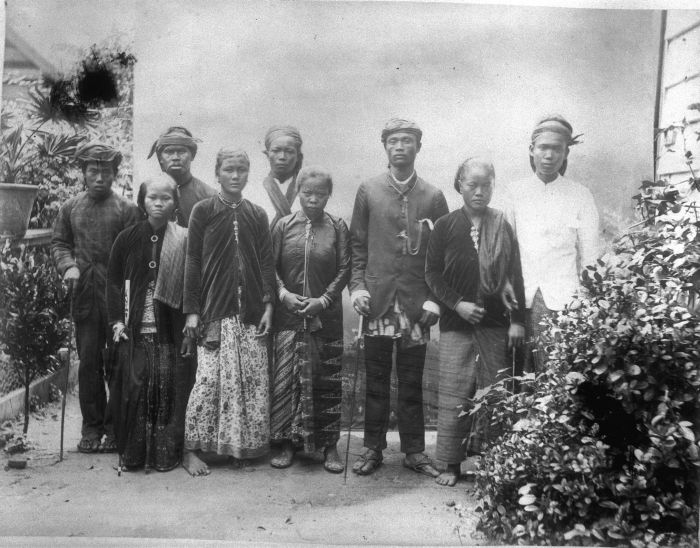
https://upload.wikimedia.org/wikipedia/commons/1/15/COLLECTIE_TROPENMUSEUM_Suriname_immigranten_afkomstig_uit_Nederlands-Indi%C3%AB_de_vrouw_rechts_draagt_een_peniti_tak_broche_TMnr_60008927.jpg


Tuesday, April 13, 2021

More Photos of the Once Grand Plantation House at Alliance

There are so many incredible photos of this amazing old building. I wanted to provide a few more detailing Alliance's sad deterioration since the Shields family sold the plantation to the Suriname government in the November, 1953. 

The plantation house in 1962, less than a decade after the Shields family sold it. It still has beauty, but the windows are showing their age and the shrubs need pruning and care.

By 1970, the gates at the top of the stairs are sagging and the paint is peeling.


Side of house 2004--heartbreaking to see deterioration

Tourists on the side of the house in 2004

2004--the metal roof is rusting and the paint is in worse shape. 


Plantation office on second floor of the Alliance house in 2004


Around 2010, from further away. 

Alliance from another angle, more recently

Aging but still shows strength and style.


Alliance Plantation House in Suriname: 52 Ancestors 2021 Prompt “Favorite Place”


Alliance Plantation House: Home to Three Generations of Sugar Planters

Thomas Shields: 1836-1905
Archibald Shields: 1864-1962
Jack McNiven and Ruth Shields McNiven: 1896-1973 and 1904-1995


Laurel and John Aird visited John’s Aunt Ruth Shields McNiven in the 1980s when she was living in Montserrat. Over the course of several evenings, Ruth told them family history and stories, including information about her father’s sugar plantation in Suriname. She talked fondly of the huge Alliance plantation house, admitting it was her favorite of all the various plantation houses she lived in.


Archie Shields and two others on the gallery of the Alliance Plantation House--believed to be Augusta Curiel photo circa 1905


 Alliance was so named because several smaller plantations were combined to form it. The plantation la up the Commewijne River from Suriname’s port city of Paramaribo. It is unclear exactly when Thomas Shields purchased the plantation. He had been affiliated with it for a while as the chief engineer of the sugar refinery on the premises. According to Ruth McNiven, he purchased it in 1889. However, a Dutch website that traces the history of the various plantations states that Alfred George Knott bought it in 1879, and sold it in 1894 or 1895 to Thomas Shields.
 Several of Thomas’ children and their spouses and families lived on and worked for the plantation over the years, including Bethia and her husband James Smith, Effie Shields’ son Jack MacNiven and his wife Ruth Shields (another of Thomas’ grandchildren), and even John Shields (John Shields Aird’s grandfather and Ruth’s father). John Shields ran the plantation lumber mill for a year or so. John Aird’s mother, May Shields, was born in Paramaribo in 1893 while her father worked at Alliance. Her birth date would seem evidence that Thomas Shields had acquired the property well before 1894.


Photo from Bethia Shields Smith grandchildren--Ancestry

Thomas’ eldest son, Archibald, was the family member most involved with Alliance.  “Archie” Shields managed the plantation for many years, first under his father’s direction, and after Thomas’ death in 1905, Archie became the company’s head. His three daughters spent most of their childhood living in the huge plantation house.


Ruth said that “bits” of the Alliance house had been brought to Suriname from Europe many years before Alliance was built, used for houses further up the Commewijne River. Plantations didn’t last long in the bush if unoccupied, so the materials were repurposed when the Alliance house was built. Ruth remembered that the railings in front were “pure Chippendale” and the paneling was Louis XVI. “Surrounds and the keyholes” (I think Ruth meant the door trim) was Spanish Provincial. She said the staircase was also special—a visiting architect was raving about its construction and style.  She also noted the paneling was mahogany, painted over.


Second floor interior 2006

            A modern description of the house by a Dutch tourist (translated from Dutch) echoes some of Ruth’s details:

“The former Alliance sugar estate lays along the Matapica Creek, and was founded in the 18th century. Nowadays, it is a citrus plantation. The great house dates back to the very beginning of the plantation, and has exquisite interior paneling in Louis XV style. It must have been a much smaller house in those days. In the 19th and 20th century it was extended. Until 1980 it was in use and in reasonable condition. After that, no maintenance whatsoever was carried out. At the moment, (2010) the house is a ruin.”


            The house was built on posts or pillars high off the ground, presumably to protect the wooden structure from water damage during the rainy seasons.


Amazing 3-D rendering of the house done by an architecture buff--shows the pillar structure and long staircase entries

 Ruth wrote a series of charming stories about the plantation as a high school student, and describes arriving at the house as follows:

“Plantation Alliance is up the Commewyne River from the town. We take the little river steamer, Johannah, and proceed up with the tide. The Commewyne is a muddy, silent river, the home of alligators, peri, eels and sometimes sharks, flowing on and on between densely overgrown banks, past deserted, tumble-down, abandoned plantations, to empty at last intothe tropical sea.

 Just as the sun is setting with all the fiery splendor of a tropical sunset, there comes a break inthe everlasting hush and I behold Uncle's .house, my new home, its windows blazing in the rays of the setting sun. 

The launch chug-chugs up to the landing; it could hardly be dignified with the name of wharf. We leave it, stretching our cramped limbs thankfully.


Alliance river landing modern day...

We walk along in the cool shade of giant tamarind trees, whose branches form a leafy arch overhead.

Halfway up the path a high, white picket gate is opened for us. Past it the tamarinds give place to a seven-foot box hedge of jasmine.


Last of the great tamarind trees--Alliance around 2010

The road widens in front of the house to make room for a conventional tropical garden with all its walks leading to an ancient sundial in the center.


Photo from Ancestry courtesy of Smith descendants

Sundial around 2010

The house itself is built so high off the ground that one could ride under it on horse-back. A high flight of steps leads up to the wide gallery which surrounds the house.”


Sundial and house during childhood of James Alan Smith and Bethea Smith--approx 1920

Although the house was quite a distance from Paramaribo, there was frequent contact with other planters and with the city. Ruth recalled that a river steamer came daily except on Sundays. It brought the mail and supplies to Alliance. Ice came out from Paramaribo by steamer two times a week. The workers packed the large blocks of ice in sawdust. Ruth and Jack had one of the first three kerosene powered refrigerators delivered to Suriname and she noted proudly that it worked for many years.

Sadly, after the Shields family sold the plantation in the 1950s, it fell into ruin. The Surinamese government took over the plantation, converting it from sugar cane production to the growing of citrus. The house was used in part for offices, but was mostly abandoned. The photos over the years show its sad degradation. Tourists now come to gawk at the ruin and take photographs. Ruth’s favorite plantation home is now nearly unrecognizable.

Sources:

https://www.surinameplantages.com/archief/a/alliance

https://nl.wikipedia.org/wiki/Alliance_(Commewijne)

de suikerplantage Alliance aan de Matapica kreek, auteur: Philip Dikland, 2003, aangevuld 2004, 2010, 2011.  http://www.kdvarchitects.com/smartcms/downloads/Alliance%20geschiedenis.pdf

https://www.facebook.com/StaatsbedrijfAlliance.sr/


Sunday, April 11, 2021

A Different Kind of Storm: 52 Ancestors 2021 Prompt “Stormy Weather”


A 2021 Volcanic Eruption Reminiscent of Montserrat’s 1995 Disaster

Ruth Shields MacNiven: 1904-1995


            On Friday, April 9, I was watching television news coverage of a huge volcanic eruption on the Caribbean island of St. Vincent. Ash was raining down, making it hard to breathe, and led to the mandatory evacuation of a large percentage of St. Vincent’s populace.


            This reminded me of the eruption on Montserrat July 18, 1995, that destroyed the capitol city of Plymouth and left much of the island uninhabitable. The island’s population dropped from 12,000 to about 5,000 today. Many of the island’s inhabitants fled to the British Isles, never to return. Monserrat is only about 250 miles from St. Vincent; the islands are among a chain of over a dozen Caribbean islands with active volcanoes.


            Montserrat was the retirement home of Jack and Ruth Shields MacNiven, John Aird’s aunt and uncle. Laurel and John Aird visited Ruth there in November 1987, and Laurel took “trip notes” about her impressions of the island and Ruth’s home. The notes are rather disjointed—they were just jottings of her thoughts rather than journal entries with complete sentences; the notes were among materials we found in Laurel’s house after her death. I have transcribed her handwritten notes as best as I could, so make allowances if there are confusing sections:

“To see Glen Mhor (R’s note: the name of Ruth’s house/estate) at the end of the afternoon! Looks in the back across Ghaut (R’s note: ghaut, pronounced gut, is what Montserrat natives called the ravines through the hills) and a valley to beautiful mountains. St. George’s Hill is across the road in front. Now made into apartments—quite changed from when the MacNivens came.

It is a lovely long house, reminding me of the photo of Alliance. However as changing as the mountains are in color and clouds, we prefer the sea view here at Witkijk (? Can’t find anywhere on map.)

Glen Mhor has an old sugar mill of its own from which about half (toward the road) has been torn down to use the rocks in other construction. Two owners since the MacNivens and many more walls and steps now, including a huge patio in back where once only earth.

Aunt Ruth’s trees:

Mahogany in back

Cassia fistula—shower of yellow blossoms. Planted one at Alliance for Grandmama’s 100th birthday.

Anthurium (pink) all and the Cassia modosa.

Flamboyant tree with mimosa-like leaves—red blooms in front and yellow in back

Avocado in back

Bohinia, white in front from Puerto Rico, and red from Africa out back. Tiny dense, dark leaves and tiny white flowers. Overpowering tropical fragrance.

Flowers in back:

Ixora, red, pink and white. Plumbago—Blue, both sides of the driveway. Oleander: deep pink in front. Clitoria: deep purple, lovely wrap-around layers with pale yellow striping, like nectar guides.

Trees:

Norfolk pine, back

Bay for Bay Rum, back

Logwood

Apple blossom acacia (cassia modosa

Blue jacaranda—mimosa-like leaf

Frangipani—pink, white in back

Cordia—small orange in back good for hummingbirds

Spathiodia—orange flowers, African Tulip tree—very prevalent in Puerto Rico after introduced there.

Papaya

Night-scented jasmine—gallery vine, and day-scented variety on corner of garage.

Has about 6 different jasmines---people mistakenly call one variety a camellia but it isn’t.

Wonderful rainbows, visible right to the ground, not only in air. Double arc seen from the air.

Took Ruth to dinner at Belham Valley Restaurant, near Vue Pointe, an appealing tropical setting. You sit down first in a lounge, with groups of comfortable chairs, for drinks if desired. Classical piano tape playing Beethoven, Chopin, and Saint Saens. Handsome tall, dark Montserratian waiter, in white shirts, black trousers—very well trained, warm, courteous. Menus brought there, orders discussed, then called when table is ready. Table was on an open gallery overlooking the back side of the another hill, with lights shining out from the widely spaced leaves, and glittering stars above, and the Caribbean out to one side. Delectable food!

Mahogany seed pods are very heavy. “Savannah medals”—what they call cowpies on Trinidad.

In to town for first and last walkabout. Went to the wool wall hanging shop. Bob Townsend the American artist who designs them, and Montserrat women do the rug hooking. Found 2 I’d have loved at $50 or $55 US each, but John said, rightly, we have more than we can put on our walls now.

Pick up Ruth’s repaired hearing aid which Ian had mailed. What an experience at the Post Office! Half an hour or more.

…these islands—very green and mountainous… Strange to know it will be well into winter when we return from this perpetual summer.”

            Ruth wrote a brief summary of her life with Jack on various plantations, and ended with the wish that she stay on Montserrat “until my bones come to rest beside my husband’s in the cemetery down by the sea.” Sadly, she never got to be buried with Jack. Ruth died in the United States on June 20, 1995, less than a month before the volcanic eruption destroyed most of the island. I would guess that the cemetery by the sea is now buried beneath ash.


Most of the locations mentioned in Laurel’s notes are gone. The view she describes from Ruth’s house of St. George’s Hill seems to suggest that Ruth’s house was in the Belham Valley area, much of which was buried. St. George’s Hill is now in the “exclusion zone” on the island—too hazardous for occupation. It is difficult to reach and apparently requires permission from the agency monitoring the volcano.

I can find no current listings for the Belham Valley Restaurant where they ate. A hotel still remains at Vue Pointe, but has only just reopened in 2016—it was closed in 2007 because the government felt the area was too dangerous. You can see from the photo of the hotel how beautiful the area was and remains, but the pyroclastic zone is nearby.


I’m glad Laurel and John were able to see the island before the devastation, and I’m glad Ruth MacNiven never had to learn that much of the island and possibly the home she loved was gone.

Note: If anyone in the family has photos from John and Laurel’s 1987 trip to Montserrat, especially any photos of Ruth and her home, let me know. I’d love to add them to this post and to our family history materials.

Sunday, April 4, 2021

Ugly Surprise While Looking at 1914 Kentucky Newspapers: Race, Terror and the Night Riders


            While researching ancestors from Kentucky, I was trying to find information on a music store located in the town of Dawson Springs. An ancestor, Lorene Smith, had purchased patriotic sheet music from World War I at the store while living in the community. I had hypothesized that the store would have advertised in the local newspaper, so I was browsing any Dawson Springs newspapers I could find from the World War I era. There were only a few issues available online, including three issues from the year 1914. While I didn’t find any mention of the music store, I found two very troubling articles that revised my preconceptions about the era in that area of Kentucky.

            The first reported that the black area of the community had been plastered with signs warning “the Negroes of the city to leave by Oct. 15” and were signed by the “Coon Hunters”. The reporter noted that this “caused great excitement among the negroes.” As if that were a surprise.

The article then stated that the “Night Riders”, AKA the Ku Klux Klan, posted their own notices denying they were the Coon Hunters. They reassured the black community that “the better element of colored people need have no fear.” However, they went on to say they had 1,000 members and were “going to clean up and make the bad element go away.” I would guess this provided no comfort to the black community.


This was horrifying! This small community had two separate groups of racist whites out terrorizing black residents at one time. And there wasn’t a single mention in the article of the police stepping in—probably because they were among the 1,000 Night Riders.

The next article, just days later, describes a racist attack on a black resident in the nearby community of Hopkinsville. Three white men were charged with being members of a Night Riders mob that attacked Beverly Reynolds. They “took him from his home a few nights ago, after shooting him through the palm of the right hand, and whipping him to leave the country.”


Instead of being charged with assault with a deadly weapon, they were only booked on “banding together to injure", and they were only arrested after Mr. Reynolds swore out a warrant against them. More proof of the racism permeating the justice system. I wonder if they ever served any time, and I worry about what happened to Mr. Reynolds after his courageous effort to bring the men to justice.

It amazes me that newspapers calmly printed evidence that the Klan was openly terrorizing the black residents of the area. There was no outrage, no promises to root out these evil men, no calls by the clergy to obey the Ten Commandments and treat black people like real Christians would. Everyone in the white community seems to have been complicit in these attacks. And Rev. Willis Smith was living there at the time, but there is no indication that he did anything to encourage peace between races or to protect black people from attacks.

I wanted to believe that Dawson Springs and the surrounding area had long since left the ugly stain of racism in the past, but as I was trying to research the Klan’s history in the area, I ran across articles stating that the second largest KKK group in the nation is headquartered in Dawson Springs. A man named Ron Edwards founded the Imperial Klans of America in the early 2000s, and built a Klan compound in Dawson Springs. He was arrested for drug dealing in 2010, not his Klan activities. Now the group has changed their name to the Nordic Order Knights of the KKK, but is still headquartered in the community. This is so depressing.

Thursday, April 1, 2021

Three Weeks in a Wagon: 52 Ancestors 2021 Prompt “Transportation”


Grueling Trip by Wagon in 1899

Lucius Ernest Smith: 1878-1944
Willis Eugene Smith: 1888-1973

In the 1890s, Bruce’s great-grandfather, Rev. Willis Smith, was living in Owensboro, Kentucky with his first wife, Margaret Underwood Benton, and their family of eleven children. Rev. Smith worked as a Presbyterian minister, and also was a major landowner in the area. Sadly, Margaret Smith contracted “consumption”, which we now call tuberculosis, and at some point in the late 1890s, she traveled to Asheville, North Carolina in the hopes that the mountain air would help her illness. The town had become renowned as a health resort. It is unclear whether any of the children accompanied her or what arrangements were made in North Carolina for her care.


Rev. Willis Smith and first wife Margaret Benton Smith. Son Ernest at right? Circa 1883?

            All that we know for certain comes from a brief newspaper article from the November 12, 1897 edition of the Owensboro Messenger-Inquirer, which states:

“Rev. Willis Smith, who has been prominently connected with real estate and other business enterprises of Owensboro for several years, will sell all his property as soon as possible and remove to Asheville, N.C., for the benefit of his wife’s health. She has been there for several months and is so much improved that Mr. Smith thinks she will recover if she remains there.”


The article was followed by several weeks of advertisements offering Rev. Smith’s  numerous properties for sale. Another article dated March 8, 1898 stated that Rev. Smith preached his final sermon at Mt. Zion Presbyterian, and he and all his family were moving the following week.

Sadly, Margaret Smith’s health improvement was illusory. She died in October, 1898, just seven months after her husband and children moved to Asheville. The newspaper noted, “She was in very bad health long prior to her death…For a while she appeared to improve, but recently she began to grow weaker, and she gradually sank until the end came.” She was buried in North Carolina.

Perhaps Asheville held too many bad memories, or perhaps the family didn’t find the community hospitable. For whatever reason, they decided to decamp back to Owensboro just months later.

There are no details about how the family traveled to Asheville in the first place, but I presume they went by rail. While there wasn’t a direct route between Owensboro and Asheville, both communities were on rail lines. Rev. Smith and most of his children probably returned to Kentucky the same way. However, two of his sons, Ernest and the Reverend’s namesake, Willis Eugene Smith, took what the local newspaper called “The Overland Route”. It was apparently an unusual enough mode of travel that the newspaper published an article when the two boys arrived by wagon in early March 1899. The article said:

“Messrs. Ernest and Willis Smith Jr., sons of Rev Willis Smith, arrived in the city Friday night from Asheville, N. C., to make this place their home. They came all the way in a wagon. It took them three weeks and two days to make the trip. Rev. Smith and the rest of his family have also returned to Owensboro to reside.”

So what made this wagon trip so newsworthy? In the first place, the distance: on modern day highways, the trip is around 425 miles. In 1899, there were no direct interstate highways through the Great Smoky and Cumberland Mountains; the trip would have been longer as a result.


Wagons in main square in Asheville N.C. in late 1880s

Secondly, they were traveling in winter, through the mountains. If the trip took three weeks and two days, and the March 5 newspaper reported their arrival, the latest date they left Asheville would have been February 10.

            In present day, following a century of global warming, the average temperatures for the Great Smoky Mountains in February are in the 30s during the day and down near 20 degrees Fahrenheit at night. Even down in the valleys and flat lands of North Carolina, Tennessee and Kentucky, the average highs only reach 50 and the lows are in the 30s. There are frequent rainstorms and the occasional snow storm. This was a miserable time of year to travel, exposed to the elements in a wooden wagon. The brothers would have had to prepare their own food as they travelled, for there are few towns in the mountain areas. They also had to provide feed and water for their horses or mules. They faced long, grueling, exhausting days. This was a dangerous undertaking.


Wagons in Cumberland Mountains 1890s

            To top it all off, Willis was only eleven years old! Ernest at least was an adult at twenty-one, but his little brother was probably more of a responsibility for him than a help. I have to question Rev. Smith’s common sense. He seems to have been rather negligent as a parent. He is fortunate both sons arrived in one piece.

            The photos of wagons maneuvering through the Cumberland Gap area in the 1890s show how rugged and difficult the journey would have been. Given that Ernest and Willis covered about 450 miles in 23 days, they averaged over nineteen miles per day. Considering the difficulties of the trip, that’s a pretty good pace. Imagine jouncing over rough roads and fording rocky streams for hours and hours while seated on a hard wooden seat! For over three weeks! Hardly luxury transportation!


Wagons crossing stream area in Kentucky 1896

Why did they make this trip? Perhaps the boys were given the task of moving the family’s household goods in the wagon as some sort of cost-saving measure. I wonder how many animals pulled the wagon? I am guessing two—that seems the usual number in photos from the era. Had Rev. Smith purchased horses or mules specifically for the boys’ journey, or had the family purchased them after arriving in Asheville in 1897?    

This was quite the trip using a rather primitive mode of transportation. I’m sure Ernest and young Willis had some amazing tales to tell by the time they reached Owensboro.  


Sources:

Owensboro Messenger-Inquirer. Editions: November 12, 1897; March 5, 1899; March 8, 1898; Oct. 1898. Newspapers.com.

Photo of mule team wagons fording stream in Cumberland Mountains, Kentucky 1896. https://www.themountaineagle.com/articles/pioneers-traveled-through-scuttle-hole-gap/

A Godly Profession: 52 Ancestors 2026 Prompt “A Family Pattern”

  Five of Willis Smith’s Sons Follow Him Into a Life of Faith and Service Willis Smith: 1853-1928 (Maternal Great-Grandfather) Albert Elia...