Thursday, April 11, 2024

Inheritance Left to Lost Son: 52 Ancestors 2024 Prompt “Lost Contact”


What Happened to Lost Son Thomas Vanlandingham?

Richard Vanlandingham: 1740?-1811 (Maternal Fourth Granduncle)
Thomas Vanlandingham: 1791-? (Maternal First Cousin 5x Removed)

While trying to track down the individuals named in the 1774 will of George Vanlandingham of Northumberland, Virginia (my husband’s fifth-great-grandfather on his mother’s side), I got sidetracked by his son Richard Vanlandingham and Richard’s own unique will.

Richard was first mentioned in his father George’s 1774 will as follows:

“To son Richard Vanlandingham 40 shillings in lieu of a mare that his grandfather Richard Brown let me hold for him.”

Of course, I wondered immediately what happened to the mare. Did the horse die? Did George sell the beast despite his father-in-law’s instructions? And is a mere forty shillings really adequate compensation for a horse?

The will also specified that six of George’s children—George Adams Vanlandingham, Mandley Brown Vanlandingham, Winney Vanlandingham, Elizabeth Vanlandingham, Thomas Vanlandingham, and Ezekiel Vanlandingham--  were to receive equal shares in his land and property once his wife and sister were dead—the wife, Mary, and sister Elizabeth had life-rights to it. This share of land was the key to my finding out what happened to son Richard.

The only problem with this instruction in the will: George had eight children. Two were left out of the list of six, although both were mentioned elsewhere in the will: Richard and Henry. Was this oversight intentional or a mere error on the part of the attorney writing up the will? It appears to have been intentional. The will went on to state that if, when the estate was divided, each of the six children received at least six pounds, that son Henry receive a portion of the remainder. Nothing for poor Richard.

Richard and Henry were George’s two eldest sons, and both had established households before their father’s death. I hypothesize that they were left out of the initial will division because they had already received some sort of settlement from their father. Either that, or George was really angry with Richard and Henry.

Richard left Virginia, moving to Rockingham, North Carolina. There are no records that show whether he left following his father’s death, or before. At some point, he married. Several trees list his wife’s name as Hattie Hartley, but I have as of yet found no verifying records. The couple had children, although their names and birth dates are as yet unconfirmed.

1811 Map of North Carolina

Richard appears on the 1790 census in Rockingham with seven people in his household: himself, three males under 16, and three females, ages unspecified. I hypothesize that this indicates Richard and his wife had three young sons and two daughters. By the 1800 census, the household included one male child under 10, one female child between 10 and 15, and one woman between the ages of 16 and 25, plus Richard and his wife, a male and female over 45. This could be explained by two sons growing up and leaving the home or dying during the intervening years, while the remaining three children were among the five included on the 1790 census.

The 1810 census finds Richard’s household further reduced. There is just Richard, a male over 45 (by this time he was probably in his sixties as his birth date is supposedly 1846.), a male child between 10 and 15, and a female between 26 and 44. My hypothesis? Richard’s wife has died—the female over 45 is now gone. So who is the younger woman? Rather than a second wife, I suspect it is either a widowed daughter or daughter-in-law and her son. Of course it could be a housekeeper along with her child. There is a remote possibility the woman is a second wife; records in Warren County, NC, a distant 144 miles from Richard’s home, show a Richard Vanlandingham marrying a woman named Jeane Rigon in 1803. However, I suspect that marriage referred to another man named Richard Vanlandingham, a member of a completely separate Vanlandingham family who resided in Warren County.

So how do I know that the Richard Vanlandingham who appears on the Rockingham censuses is the son of George Vanlandingham of Northumberland, Virginia? Richard’s will provided the evidence.

Part one of Richard's 1811 Will 

Richard made a will on October 5, 1811. The will was probated in November of that year, so we can assume Richard died shortly after making the will. He leaves all his property and estate that remains after debts are settled to “my youngest son Thomas Vanlandingham”. No mention is made of other children, male or female, although “youngest son” implies there was at least one older son still living.

Part 2 of Richard's 1811 Will

The will states that the property includes “both real and person in the State of Virginia and NorthCarolina (sic), the estate to which I laid a claim in Virginia being an interest in a tract of land lying in the County of Northumberland and is the share of which my Father George Vanlandingham late of said county and state did seized and possessed and contains about two hundred acres…”

Richard quite clearly states George Vanlandingham of Northumberland Virginia was his father, and he owns a share in lands given to him by his father. This two hundred acres seems to be a separate property from the land included in George Vanlandingham’s will, so it appears Richard had already received what his father considered Richard’s portion of his estate.

But Richard’s will held an additional and quite extraordinary bit of information. Just after Richard makes his bequest to his “youngest son Thomas” there is a notation in parentheses stating:

“(Now from information) resident of Woodford County ana State of Kentucky.”

It appears that on his deathbed, Richard wasn’t sure where to find his youngest son—he believed Thomas lived in Woodford County, Kentucky, but had no verification that the information was correct.

Imagine losing contact with your child to such an extent that you can only guess in what state and county he might be found! Of course, modern communications make this a less common occurrence than in Richard’s day. In 1811, mail was delivered by horse, and was erratic and slow. Thomas seems to have been born in 1791, so at the time of Richard’s death in 1811, he was only twenty, not the most responsible age. Perhaps he never bothered to write his poor father.

And why did Thomas move away? Was there some sort of conflict between father and son, or was Thomas just eager to make his own way in the world and decided to follow other extended family to Kentucky? (Some of Richard’s brothers moved to Kentucky). What happened to Richard’s other children—the two other sons and two daughters? Had they, like Richard had, already received a portion of Richard’s property when they reached their majority, and thus were not entitled to a further inheritance?

I wonder if Thomas ever returned to North Carolina to claim his inheritance. Did the probate court track him down? It is unclear. There are other trees on Ancestry that include a Thomas Vanlandingham who lived in Warren County, North Carolina, and they identify our Richard as his father. However, I doubt it is the same man. I found a separate Warren County will for a totally different Richard Vanlandingham with a son Thomas—I think others are conflating the two Richards and the two Thomases.

I also found no record of Thomas in Woodford County, Kentucky around the time of Richard’s death. Did Thomas stay in Woodford County, or did he move on to some other location in the state? I hope Thomas returned to North Carolina or even Northumberland, Virginia to take ownership of his father’s lands, but he may have lost contact with his father and family forever. All that I know for sure is that without further records, he remains lost to my family tree as well.

Sources:

Wills; Author: North Carolina. County Court of Pleas and Quarter Sessions (Rockingham County); Probate Place: Rockingham, North Carolina. https://www.ancestry.com/family-tree/person/tree/81812584/person/262471515291/facts

Ancestry.com. Virginia, U.S., Wills and Probate Records, 1652-1900 [database on-line]. Lehi, UT, USA: Ancestry.com Operations, Inc., 2021. Original data:Virginia County, District, and Probate Courts. https://www.ancestry.com/imageviewer/collections/62347/images/007645552_00457?pId=1636172


Monday, April 1, 2024

Missionaries in Brazil: 52 Ancestors 2024 Prompt “Worship”


From Rural Kentucky to Mission Work in Brazil: Nina Dodson Hankins Life of Faith

Nina Pearl Dodson Hankins: 1908-1997 (Maternal Second Cousin 1x Removed)


Nina Pearl Dodson and her husband, Rev. William Clyde Hankins, truly lived their faith, choosing to become missionaries in Brazil for twenty-five years. What is truly amazing about their story is how much of a leap of faith this truly was: they were independent missionaries, with no church organization supporting them, and when they left for Brazil, neither William nor Nina spoke a word of Portuguese.

So how did a young woman from rural Kentucky end up serving as a missionary in South America? Nina Pearl Dodson was born September 17, 1908, in Calhoun County, Kentucky. Her parents were Otis Dodson and Mabel McFarland. Mabel was the daughter of Nancy Catherine Leachman, the elder sister of Cora Leachman (Grandma Jandy’s mother). This made Mabel and Lorene first cousins.

Nina was the oldest of Mabel and Otis’ four children. Mabel and Otis were young parents: Mabel was only sixteen when Nina was born, and Otis was twenty. The family farmed in McLean County. Nina attended the local high school in Beech Grove, Kentucky. She then attended the Western Kentucky State Teachers College in Bowling Green, Kentucky to become a teacher.


Beech Grove School, 1926. Nina graduated from this school. 

Her sense of adventure and commitment to the underprivileged led her to take a teaching job in Oklahoma at a school of mostly Native American students. While she was home for the summer in 1929, she attended a religious revival in Beech Grove, where she met the young seminarian leading the singing that evening, William Clyde Hankins.

William was immediately smitten, and the two began corresponding. He wanted to get married, but she was reluctant. That Christmas, William left his family’s holiday celebration in Arkansas. He borrowed his brother’s car and drove 600 miles in a single day over mostly dirt roads to reach Nina in Oklahoma. They recalled the moment of their reunion years later in a news article. 

William declared, “It’s now or never.” To his delight, Nina was swept away by his declaration. She recalled, “I told my superintendent that this crazy young fellow had come to take me away.” They had to track down the local minister, who was out bird hunting, so they could get married immediately.

Rev. Hankins finished his seminary training and served as minister at several churches in the south. The couple had three children, Dorothy, born in 1930, Nona born in 1932, and Billy (William Clyde Jr.) born in 1934. Tragically, Dorothy developed leukemia and died at age three.


By 1940, the Hankins family was living in Cleburne, Texas, where William was the pastor at Field Street Baptist Church. According to an article from the Owensboro Messenger years later,

“The Hankins had long wanted to become foreign missionaries, but his wife’s ill health apparently had postponed their appointment by the Southern Baptist Foreign Missionary Board. Then, by coincidence—or divine intervention—the president of the Baptist Seminary in Rio de Janeiro spoke at a meeting in Calhoun in 1939.”

The Hankins were there, and the seminary president encouraged them to fulfill their dream.

“We were told we wouldn’t starve if we went as independent missionaries,” Rev. Hankins said.” He sought Nina’s opinion, and she replied that “The Lord is my shepherd, I shall not want.”


Within months, Rev. Hankins resigned as pastor in Cleburne, Texas, and the family packed to move to Brazil. Nona was eight years old, and Billy was five. They sailed from New Orleans aboard the steamship Delmundo (interestingly, the Delmundo was sunk by a German U-Boat two years later near Cuba), landing in Rio de Janeiro. 

The Delmundo

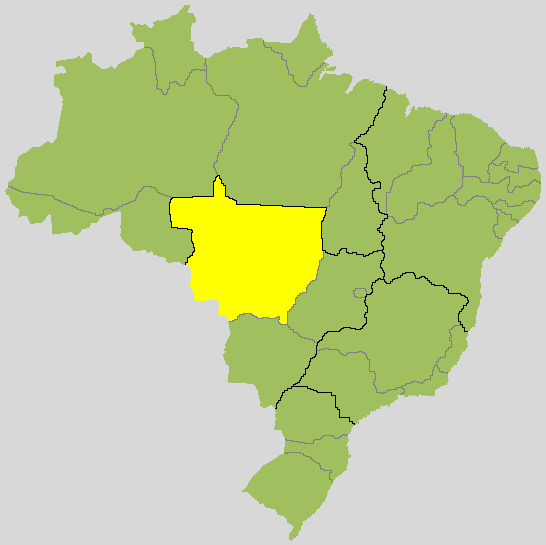
From there they traveled to Mato Grosso, a large state in west-central Brazil about three times the size of Texas. Few people live there; the land even today is mostly covered with Amazon rainforest, wetlands and plains. Hankins told a newspaper reporter that “because the area was almost inaccessible by road, it was a haven for criminals and revolutionaries.”


Rev. Hankins recalled that he arrived in Brazil with only $300 in his pocket, and a Portuguese-English dictionary. He practiced the language for three months before delivering his first sermon. His former congregation in Texas sent the family off with a “portable folding organ and a piano-accordion”, along with a pledge to pay half their living expenses.


Even so, they “became accustomed to a steady diet of fish, rice and black beans.” Despite the challenges, they established an orphanage and worked to convert the people of the area.

They remained in Brazil for twenty-five years, returning to the United States occasionally to speak at missionary events and to visit family. 


While in Brazil, they added two children to the family, son Jerry Otis Hankins, born in September, 1947, and daughter Nina Eunice Hankins, no birth date available. I am not sure if either of these children were adopted from the orphanage. Nina Eunice chose to marry and remain in Brazil. The other three children returned to the United States, settling down in Texas and Indiana.

Following their retirement from mission work in 1965, Rev. Hankins served as interim pastor back in Owensboro, Kentucky and later in Arkansas and Texas. Rev. Hankins died in 1999 and Nina died January 6, 1997 at the age of 88.


Nina and her husband did more than merely worship. They literally lived their faith, risking everything to travel to a remote area where they tried to share their beliefs with others.


Sources:

“Cleburne Pair to Go to Brazil”. Fort Worth Telegram, May 4, 1940. Newspapers.com.

“Just a Simple Preacher: Hankins, family spend 25 years as South America Missionaries.” Owensboro Messenger Inquirer, Owensboro, KY. Dec 8, 1975. Newspapers.com

Obituary for Clyde Hankins Sr., The Marshall News Messenger. Thursday, Nov 25, 1999. Newspapers.com.

Obituary for Nina Pearl Dodson Hankins. The Messenger Inquirer. Owensboro, KY. Tues., January 7, 1997. https://www.newspapers.com/image/380325933

Missionary Conference. The Southwest Wave. Los Angeles, CA. Oct. 31, 1946. Newspapers.com.

Sunday, March 17, 2024

Prolific Medical Crackpot: 52 Ancestors 2024 Prompt “Influencer”

Dr. Weir’s Crazy Theories: Social Influencing in the 1890s

James Weir, Jr., MD: 1855-1906 (Maternal Second Cousin 3x Removed)


James Weir, Jr. was named for his father, a published novelist and businessman. While James Jr. chose a very different profession than his father, medicine, he too had the writing bug, churning out books and articles on topics far beyond the field of medicine. His theories are jarring today, exhibiting misogyny and prejudice. Yet they seem to have received some measure of respect during Weir’s own lifetime. His articles were published in several journals and magazines, and his books sold well and were widely reviewed. This gave an air of legitimacy to his crackpot theories. He was, sadly, the 1890s version of a social influencer.  

James Weir, Jr. was born on October 17, 1855 in Owensboro, Kentucky to parents James Weir Sr. and Susan Charlotte Green. He grew up in material comfort with his nine siblings. His father’s wealth enabled him to attend college. James earned his bachelor’s degree at the University of Louisville, and was the 1878 valedictorian. He received his medical training at the University of Louisville and the University of Michigan’s medical schools. He did his residency at Bellevue Hospital and New York Polyclinic in New York City before setting up his medical practice in Owensboro. (see obituary)

The first mention of Dr. Weir’s articles and books appears in the Owensboro Messenger Inquirer’s October 24, 1897 edition. The article states that Dr. Weir had written a pamphlet entitled “The Psychical Correlation of Religious Emotion and Sexual Desire.” According to the newspaper, Weir had distributed the pamphlet “among the author’s scientific friends” and after it was reviewed in medical and scientific journals, there was such a demand for it that Weir was going to publish it as a book “with much new and valuable material”.  The book was published in 1897 by the Chicago Medical Book Co. with the more eye-catching, titillating title of Religion and Lust.


The book covers a wide range of subjects, from a colonial-centric “history” of religion among “primitive” peoples, to phallic symbolism in religion, to a horrible chapter entitled “Viraginity and Effemination”, which as you might guess, is a long diatribe against homosexuality and against women exercising any sort of control over their own lives (barefoot, pregnant and in the kitchen is where they belong, or they will become ugly and mannish).  It is interesting to note that Weir never married. I wonder if his misogyny and homophobia had anything to do with that choice.

Along the way, Weir presents wildly broad hypotheses as fact, such as “Young boys and girls are exceedingly impressionable at, or just before, puberty, and are apt to embrace religion with the utmost enthusiasm.” (Chapter 3) Older people are less likely to convert, he says. He suggests this is because religious fervor is replaced by sexual fervor post-puberty.

Later he made this amazing pronouncement:

“King Solomon, a man of pre-eminent genius, was mentally unbalanced. The “Song of Solomon” shows very clearly that he was a victim of some psychical disorder, sexual in its character and origin.”

Since the Song of Solomon is widely acknowledged as beautiful, sensual love poetry, I feel this says more about Weir’s psychical disorders than Solomon’s.

Weir followed this book with another, entitled The Dawn of Reason. This book is probably his most scientific work. He attempted to determine the development of the mind in animals, and from there, to the more complex mind and psyche of humans. He includes personal observations from nature to illustrate his points, some of which are quite charming.  Here is a brief example:

I once removed a ball of eggs from the web of a spider. The mother clung tenaciously to her treasure, and, when I tried to remove her with a pair of forceps, she bit fiercely at the steel blades of the instrument. In her great love for her offspring she lost all sense of fear.”


The Dawn of Reason closes with Weir’s conclusion that, “Judging wholly from the evidence, I think that it can be safely asserted and successfully maintained that mind in the lower animals is the same in kind as that of man; that, though instinct undoubtedly controls and directs many of the psychical and physical manifestations which are to be observed in the lower animals, intelligent ratiocination also performs an important rôle in the drama of their lives.”

In addition to his books, Weir wrote several articles that were published in a variety of periodicals. Sadly, these were far less scientific than his book on reason. In 1894, he had a “letter” published in The Century Illustrated magazine entitled “The Methods of the Rioting Striker: An Evidence of Degeneration”. It was truly appalling. His opinions mirror those of the far-right today, evincing a hatred of immigrants, whom he calls “degenerate human beings”. Immigrants, he posits, are the cause of labor unrest due to their “congenital criminality”.  He ends the article with this truly vile passage:

“These people (immigrants) are savages, and should not be treated as civilized beings…When the Indians out West go on the war-path, we know how to control them. The psychologist (he is referring to himself!) considers the anarchist as being no better than the Indian.”

Reminder: he is proposing the genocide (that’s how the U.S. “controlled” the native tribes after all) of Scandinavians, Irish, Germans, and Central Europeans—the immigrants of the 1880s and 1890s. Ironically, their descendants number among today’s right-wingers who rail with equal hatred against the Southern Hemisphere immigrants of the 2020s.

Another article, “The Effect of Female Suffrage on Posterity”, was published in 1895 in the American Naturalist. Weir wrote, “I think I am perfectly safe in asserting that every woman who has been at all prominent in advancing the cause of equal rights…has either given evidences of masculo-feminity (viraginity), or has shown, conclusively, that she was the victim of psycho-sexual aberrancy.” He went on to claim that suffragettes desired social revolution leading to a matriarchy, and that there was an “alarming increase of suicide and insanity” among such women. He also predicted that suffrage would lead to moral decay and degeneracy, and that womankind would hurry “ever backward to the savage state of her barbarian ancestors.” Never once does he question why male suffrage produced none of these horrors.


James Weir Jr. died August 9, 1906 at the age of fifty. According to his obituary, he had been in poor health for quite some time, ill enough to interrupt his writing career. He had traveled to Virginia Beach, Virginia in the hope that the sea air would improve his health. According to one family historian, he died of abdominal dropsy, but as of yet I have found no records that would confirm this. Abdominal dropsy, now called ascites, is severe edema or build-up of fluid in the abdominal cavity. One of the most frequent causes is cirrhosis of the liver. Other causes include cancers, tuberculosis, inflammation of the colon, diverticulosis, or a perforated ulcer. His body was returned to Kentucky and he was buried near his parents’ graves in Owensboro.


So, what can we conclude about Dr. Weir and his literary output? He saw himself as a scientist and “psychologist” (I believe his definition was far different than our modern understanding of the word), but his writings often veer far from science into prejudice and irrational bias. I feel this quote from his first book, applied to himself, provides a good summation of James Weir:

“When we take an introspective view of our sane personality, we shudder to see how near it is to the borderlands of insanity and the bizarre and eccentric world of crankdom. There hardly lives a man who does not possess some eccentricity, or who does not cherish, hidden, perhaps, deep within himself, some small delusion, which he is ashamed to acknowledge to the outside world.”

Sources:

“Back Matter.” The Philosophical Review, vol. 8, no. 4, 1899. JSTOR, http://www.jstor.org/stable/2176213. Accessed 7 Mar. 2024. (description of Weir’s new book)

Obituary: “Dr. James Weir Dies Suddenly.” Owensboro Messenger, Owensboro KY. Aug. 10, 1906. Newspapers.com.

Religion and Lust, or The Psychical Correlation of Religious Emotion and Sexual Desire. James Weir, Jr. 1897. Chicago Medical Book Co., Chicago. 1905.  https://www.gutenberg.org/files/26071/26071-h/26071-h.htm

The Dawn of Reason, or Mental Traits in the Lower Animals. James Weir Jr.. The Macmillian Company, New York, NY. 1899. https://www.gutenberg.org/cache/epub/21608/pg21608-images.html

“The Methods of the Rioting Striker: An Evidence of Degeneration.” James Weir, Jr. The Century Illustrated monthly magazine v.48 (n.s.v.26) 1894 May-Oct., pgs 952-54. https://babel.hathitrust.org/cgi/pt?id=mdp.39015025903348&seq=968

“The Effect of Female Suffrage on Posterity.” James Weir, Jr. The American Naturalist, Sep. 1895, Vol. 29, No. 345 (Sep. 1895), pp. 815-825. https://www.jstor.org/stable/2452803

Obituary. “Dr. Weir Dead. Was a Prominent Owensboro Physician”. The Courier Journal. Louisville, KY. Friday Aug 10, 1906. https://www.newspapers.com/image/119157325/?terms=james%20weir&match=1

Thursday, February 29, 2024

The Poynette Academy: 52 Ancestors 2024 Prompt “School Days”


Harriet Weir Green: Educator and Matron at Her Father’s School

Harriet Weir Green: 1848-1932 (Maternal 2nd Cousin 3x Removed)

Susan Mary Weir, discussed in my last post, died at age 53, leaving two grown children and a husband. Susan’s husband, William Lewis Green, had served as schoolteacher while young, and then became a Presbyterian minister. After Susan’s death, he combined his two professions, opening a faith-based school in the small city of Poynette, Wisconsin. Susan and William’s daughter, Harriet Weir Green, became an indispensable member of the school faculty as both a teacher and school matron.

Harriet Weir Green was born in October 1848 in Muhlenberg County, Kentucky, where her father, William, worked as a schoolteacher. William began serving as a church pastor in the 1850s, leading the family to frequently relocate. By the time Harriet was thirty years old, the family had lived in Wisconsin, Kansas, and Illinois. While Harriet’s brother William married and became a successful and wealthy businessman, moving to California, Harriet remained at home, probably caring for her parents.

Following her mother’s death when Harriet was 31 years old, her father took a ministerial position in the town of Poynette, Wisconsin. Harriet moved there with him. Around 1883, William decided to purchase an old hotel to convert into a school. According to a history of the school written by Emilie Heidemann, William wanted to give low-income children “a biblical alternative to public school” and train them to “lead ‘useful’ lives.” She stated that “Green developed a curriculum that incorporated the Bible’s words into various courses.”

Vintage postcard showing the Poynette Academy

William needed to staff his school when it opened in 1884, and I hypothesize he hired an experienced teacher from the area named Fanny Curtis. Miss Curtis had been involved in the organization of the Poynette Teachers Association in 1875, so was a long-time teacher.

William and Fanny quickly moved beyond a professional relationship, marrying January 1, 1885. Fanny was 33 years old. William was 59, twenty-six years her senior. Harriet was three years older than her new stepmother.

Harriet continued to live in the household, even as her father and stepmother started a family, having two little girls, Fannie Christina, born in 1888, and Margaret Ruth, born in 1890.

William Green put a lot of thought into the school and its curriculum. He had acquired fifty acres of farmland to support students interested in agriculture. In addition, he expanded the school building so that it could become a boarding school. The Heidemann article stated that:

“In 1887, Green had the institute building moved slightly west, and a new building constructed in the front. The old building then became a dormitory.

According to an entry from the Poynette Press dated Aug. 21, 1891, the autumn term of the institute commenced on the first Wednesday of September. Tuition in the primary department of the school was $3, and tuition in the intermediate and academic departments was $5.”


According to Harriet’s obituary, she began teaching at the academy in 1881, which cannot be correct as the Academy didn’t open until 1884. However, we can assume that she took on teaching duties from the beginning. The obituary described her as “widely known in Wisconsin as a Bible student” so it seems possible that she taught religion classes at the school.

The 1900 census provides some fascinating information about the Academy. First, Harriet, or Hattie as she was going by, had her occupation listed as “matron of school”, but her father, listed as “Dr. Green” although he was a minister not a PhD, had the occupation of “farmer”!

Two other teachers are included on the census, one a 28-year-old woman and one a 33-year-old woman. Their names were followed by the names of 26 boarding students. To my surprise, these students were far older than I had expected. They ranged in age from sixteen to thirty! Obviously, this Academy was more akin to a private college or trade school than a high school.

William Green’s health failed as he grew older. Poynette Academy actually closed for two years between 1901 and 1903 due to his incapacitation. A new school president took charge and the school reopened in 1903. The Heidemann article stated there were 38 students and five teachers.

William Green died later that year on July 28, 1903. He was 77 years old.


Tragically, his much younger wife, Fanny, developed breast cancer and died just three years later on January 6, 1906. She was only 54.

This left Harriet, then 57 years old, responsible for her two young half-sisters, who were sixteen and nineteen. She ran the household while they completed schooling. In addition, Harriet continued to teach at the Academy until it closed its doors in 1911 when it consolidated with Carroll College in Waukesha, Wisconsin. Heidemann wrote:

“According to an article in the Poynette Press dated Feb. 3, 1911, while the institute was quite prosperous, ‘the improvement in free high schools and the introduction of their courses of such branches as manual learning and domestic science, had an undermining effect on the Poynette Academy, which finally dissolved in June, 1911.’”

Harriet’s half-sisters continued to live with her through their twenties. Her younger half-sister, Ruth, married and had a daughter she named Harriet Ruth Terry, a tribute to her older sister. Following Ruth’s divorce and mental health issues that left her institutionalized in Rock Island, Illinois, Harriet raised her young half-niece as well until her own health failed and half-sister Christina took over the household. Harriet Terry followed her aunt Harriet Green into the teaching profession.


Harriet Weir Green died December 20, 1932 at the age of eighty-four. She was buried in Poynette near her father, stepmother and eventually her half-sister Christina, who died in 1947.

The Poynette Academy building was repurposed first as a hotel, and then as an office building. It still stands on Main Street in Poynette, and houses several businesses as well as the Wisconsin Wildlife Federation.

Old Academy building today

Sources:

Poynette history: Main Street building was once Poynette Academy. Emilie Heidemann. lpnews@hngnews.com Dec 29, 2017. https://www.hngnews.com/lodi_enterprise/main-street-building-was-once-poynette-academy/article_480e4c83-067c-5e3b-b56e-e3ba48ef122c.html

https://www.newspapers.com/image/611062394/?xid=5591&clipping_id=142329635

1900 Census. https://www.ancestry.com/discoveryui-content/view/73546240:7602?ssrc=pt&tid=81812584&pid=262552947986

https://www.findagrave.com/memorial/27139342/harriet-weir-green?


Sunday, February 25, 2024

Seeing Double: 52 Ancestors 2024 Prompt “Changing Names”


Untangling the Married Names of Two Susan Mary Weirs

Susan Mary Weir: 1815-1897 (Maternal 2nd Great-Grandaunt)
Susan Mary Weir: 1826-1879 (Maternal First Cousin 4x Removed)

I was very confused when I started working on Samuel Miller Weir’s daughter Susan Mary Weir. I was getting Ancestry hints showing two very different birthdates some ten-plus years apart, two husbands who lived in different states, and a variety of crazy death dates. I realized that there must be two Susan Mary Weirs, both born in Muhlenberg County, Kentucky, and born to two different Weir fathers who were related to one another. But teasing out which woman was which was still amazingly difficult, in part because several other trees on Ancestry had connected the wrong married name to the wrong woman, and in part because one Susan Mary seems to have disappeared without a death or burial record.

So who were the two women’s parents?

Susan Mary Weir #1 was born September 25, 1815 to Samuel Miller Weir and wife Elizabeth Vanlandingham. Susan Mary Weir #2 was born in 1826 to James Weir and wife Anna Cowman Rumsey. Samuel Miller Weir and James Weir were brothers, so the two Susan Mary Weirs were first cousins. Samuel Miller Weir was a farmer in Paradise, Kentucky, while his brother James lived fourteen miles away in Greenville, Kentucky and was a successful merchant.

Susan Mary Weir #1 was reasonably easy to track once I had determined her married name. Her life followed a traditional path of marriage to a man from her home county, raising several children with him, and dying in old age.

Susan married on Valentine’s Day 1838. She was 22 years old. Her husband, Thomas Jefferson Rice, was 34, twelve years her senior, and farmed in Muhlenberg County. This was his second marriage. His first wife, Lucinda, had died in 1836, leaving him to raise their little daughter, Lucy, alone.


Susan soon had more children to raise in addition to Lucy. Susan and Thomas had four daughters (Elizabeth, Nancy or Nannie, Frances or Fannie, and Susan) and one son (Samuel Ezekiel) over an 18 year period. Interestingly, and even more confusingly for me, two of their daughters, Elizabeth and Fannie, married Rice cousins, so both their maiden and married surnames were Rice.


Susan’s husband, Thomas Jefferson Rice, died April 7, 1856 at the young age of 51 years. I have been unable to find his cause of death. Susan never remarried, raising her children alone. In her later years, she lived with her children’s families. At the time of the 1870 census, she was living with Elizabeth and her husband James Rice, and at the time of the 1880 census, she was living with Fannie and Francis Rice and their children.

Susan Weir Rice died October 13, 1897 in Muhlenberg County, and was buried in the Rice Family Cemetery in Greenville. The only death record available is her headstone. She was 82 years old.


Susan Mary Weir #2 had a rather interesting life and a mysterious death. Susan was the youngest of James Weir’s five children with his first wife Anna Cowman Rumsey. Her mother died in 1838 when she was twelve years old. Her father remarried a year later, and then married a third time in 1844 when Susan was eighteen. Sadly, her father died the following year on August 9, 1845, and her stepmother gave birth later that year to Susan’s half-sister, Ruth, who seems to have died early in childhood.

Susan married August 27, 1846, a year and two weeks after her father’s death. She was twenty years old, and her husband, a teacher in Muhlenberg County named William Lewis Green, was also twenty. William’s father was a judge, and another Green relative, Rev. Joshua Green, performed Susan and William’s marriage.


William became a minister, and by the time of the 1860 census, he was serving a Presbyterian church in Dane County, Wisconsin. The following article suggests he had held a clergy position in Green Bay and then in Watertown, Wisconsin. He and Susan had two children, William, born June 15, 1849, and Harriet, born in October of 1848.


The 1870 census found them in a new state, Kansas, where William was working as a minister in the town of Stanger.

Between those two periods, I found a rather unsettling newspaper notice. Over the course of several days during the month of September 1866, the Louisville Daily Courier ran notices of a “Commissioner’s Sale of Valuable Town Property in Hopkinsville, Ky”. The notice stated that the sale was being held as the result of a judgment rendered in the Christian County Circuit Court in a lawsuit. The plaintiffs were “William L. Green, Matthew T. Scott, Guardian of Harriet and William L. Green, infants of William L. and Susan Green, and Harriet Green and William L. Green”. The defendant was Susan Green.


What could this lawsuit mean? It appears to have been an attempt by William to gain control of land Susan inherited from her father. James Weir had considerable real estate holdings over several counties in Kentucky, and gave these Hopkinsville, Kentucky lots to his daughter in his will. See the relevant passage below. Apparently William took his own wife to court to force her to sell her inheritance to support her own children. This seems a very un-Christian-like action by Rev. Green. Interestingly, the county Commissioner who would be handling the land sale resulting from the suit was a Thomas Green, probably another member of the Reverend’s family. I wonder just how fairly Susan was treated in this lawsuit, and how many members of the jury were related to her husband.


The Greens moved frequently during their marriage. I wonder how much this could be attributed to a very unhappy marriage. I can’t believe that Susan wasn’t deeply hurt by William’s lawsuit. She probably felt helpless with her only assets stripped from her, leaving her totally dependent on William. Or perhaps she was physically or mentally ill, and was unable to manage her affairs, which led William to proactively control her assets. I wish I could find the records of the lawsuit that would explain her husband’s reasons for suing her.

Poor Susan seems to just disappear after the family left Kansas. Apparently they relocated to Illinois where they appear in the 1880 census in Peoria. By that point, the power in the Green family appears to have shifted to Susan and William’s son, William. Then 29 years old, young William appears as the head of the household, which includes his wife Bertha. He is working as a “commission merchant”. Also in the household are his sister Harriet and his father William. While William Sr. is still listed as a minister, his marital status now shows him as a widower.

So apparently Susan died at some point during the 1870s. I could find no obituaries or death notices for her in any of the various states she had lived, which is odd. I would have expected her hometown newspaper to have printed some sort of notice given her family’s prominence and wealth. The only record I was able to find was a Findagrave entry. It lists a Susan Green born around 1825 who died in December 1879 and was buried in the Springdale Cemetery in Peoria, Illinois, the same town where the rest of her family were living the following year.

While at this point, I have no definitive proof the Springdale Cemetery Susan is the correct woman, I found some information that supports my hypothesis. The Findagrave entry notes that Susan Green was “removed from cemetery Feb 9, 1923, cremated and shipped to CA by Wiltons Mortuary.” Susan’s son William became a very successful businessman involved in banking. He and his wife Bertha moved to Pasadena, California a few years before 1910. They lived in handsome homes there, and William’s obituary states he was “one of Pasadena’s foremost wealthy men.” 

One of the Pasadena homes William Green lived in around 1910.

He died January 1, 1923, and was buried with his wife in Mountain View Cemetery in Altadena. I hypothesize that his will may have provided for his mother’s body to be disinterred, cremated and buried with his body in California. The timing of her removal just weeks after his death is persuasive. Perhaps someday I will be able to find his probate records and prove my hypothesis.

As for Susan’s husband and daughter, I found some fascinating information about their lives following Susan’s death. I will present that in another blog post.

In conclusion, names can be confusing things in genealogical research. Names can be repeated across generations in a single family, or be shared by unrelated families who live in the same general area, and of course women’s names offer additional challenges as they change upon marriage.  The two Susan Mary Weirs are perfect examples of how names can be puzzling. While these two women were related and had the same birth name, they had very different lives—as different as their married surnames were.


Sources:

James Weir Will. Muhlenberg County Kentucky Will Book III, pages 72-75. https://www.familysearch.org/ark:/61903/3:1:33S7-9P3G-NK3?i=323&cc=1875188

Marriage record for William Green and Susan M Weir. Kentucky, U.S., county Marriage Records, 1783-1965. https://www.ancestry.com/imageviewer/collections/61372/images/TH-1971-28953-22538-3?pId=901860963

Commissioners’ Sale. Louisville Daily Courier, Louisville, KY. September 10, 1866. Newspapers.com.

Findagrave entries for Susan Rice and Susan Green. https://www.findagrave.com/memorial/138666564/susan-m-green

Sunday, January 28, 2024

Letters from the Front: 52 Ancestors 2024 Prompt “Witness to History”

Captain Weir:  Civil War Officer at the Battle of Shiloh

Edward Rumsey Weir Jr.: 1839-1906 (Maternal Second Cousin 3x Removed)


It is so rare to hear about famous military battles from the perspective of the regular people who were fighting in the trenches, the real witnesses to history. We usually only read the history book account, a sort of omniscient-narrator version that views the battle as a whole, with individual units mere chess pieces being moved about on a gigantic gameboard. Everyone who has studied American history in school has heard of the Civil War’s Battle of Shiloh. But I was fortunate to discover a letter written from the battlefield by Captain Edward Rumsey Weir, providing that first-hand, witness-to-history perspective.


The Battle of Shiloh pitted two great generals against one another: Ulysses Grant commanding Union troops, and Albert Sidney Johnston commanding Confederate forces. The stakes were high, as were the losses, which included Johnston, who was killed in battle. Casualties (which includes injuries and captures along with deaths) totaled 24,000, making Shiloh the costliest battle of the war up to that point. Grant’s victory had important consequences. Wikipedia noted that Confederate President Jefferson Davis believed Johnston’s death was the Confederacy’s “turning point of our fate” in the Western Theater.  The Wikipedia article went on to state:

“With the loss at Shiloh, the likelihood of the Confederacy regaining control of the upper Mississippi Valley was severely diminished, and the large number of casualties represented the start of an unwinnable war of attrition.[262] The victory at Shiloh also placed the Union army in a strategic position to infiltrate and capture key points in the south.” (See Wikipedia citation below).

So who was Edward Rumsey Weir, Jr. and what led to his experiences at Shiloh? Edward was the eldest son of Edward Rumsey Weir Sr. and wife Harriet Rumsey Miller. He was born August 13, 1839 in Greenville, Kentucky and grew up in comfortable circumstances on his father’s large plantation. When the Civil War broke out, Edward joined one of the Kentucky militia units his father formed and financed to support the Union cause. The units were eventually absorbed into the Union Army as the 11th Kentucky, an infantry regiment. Edward, at the tender age of 22, was given the rank of Captain and command over Company B.

The 11th Kentucky spent most of 1861 and early 1862 in camp at Camp Calhoun in Kentucky waiting for deployment. The troops suffered from boredom and illness, impatient for some sort of action.

Cover page for Edward Weir Jr.'s Civil War Army records from Fold3

Edward wrote home to his mother describing conditions in camp. It is an amazing account of the life and food of a Union officer in the early days of the Civil War. Admittedly, Edward had the assistance of a slave, Jessey, who accompanied him to war, cooked his food, maintained his equipment and cared for him when sick, so his life was more privileged than the average young officer.

January 8, 1862

HQ Co B 11th KY Reg, Camp Calhoun

My Mother, Dear Mother

            Today is a misty day.  We have been excused from doing the usual "Dress Parade" which always must occur rain or shine. 

            I have just finished dinner.  I was just thinking how you would like to see me at my table.  We have no table cloth.  Our table consists of a good box (that has become just blank from wear).  Fine plates with one china plate (for the Capt. as Jessey says) tin cups, three knives and 2 forks make our table furniture.  We had today, biscuits (big fat Biscuits) cold ham & coffee without sugar or cream. 

            I now can drink coffee by the pint three times a day.  I generally eat two or three of those big fat biscuits and a lb. of bacon at a time.  I have only been sick but one time with my old tonsillitis complaint.  Then I found a kind lady to take care of me.  When I began to get well, the Ladies of Rumsey sent me plenty of "goodies" until I almost made myself sick again. 

            My tent is now quite cozy.  I have a nice little stove that makes it quite warm.  I now sleep under only two blankets and Father's old shawl & keep as warm as I once did in my Country room under a comfort and half a dozen blankets before a big fire. 

            I sometimes dream that I am again in my little Country room at home and that All is peace and happiness as I once was in days gone by, when I awakened only to hear the steady tread of the sentry as he passes his "beat" back of my tent.  To hear him call for the Corporal of the Guard to let in some commissioned officer who has been out late breathing mock love to some fair maiden.  Will we ever again meet all again at home in our shady porch that is over hung by grape vines?  No one can tell.  But in all probability we never shall.  Our home may become the scene of some bloody battles between some unstrung Armies.  I may water some Southern plain with my life's blood.  But let us mother look to a brighter day - when this Rebellion shall be arrested and the power of the Government felt everywhere upon the face of this Continent.  We will again see home I hope and be sitting where we once were. 

            Jessey says tell "my" Harriet  that he does not live like he did at home.

                                                                                    Your son, E

We can see in this letter that Edward was already facing his mortality even though he had just reached adulthood. Just three months later, Edward’s unit was fighting at Shiloh. The battle began April 6, 1862 in southwestern Tennessee, and continued on April 7, which was when Edward’s regiment arrived as part of General Buell’s Army of Ohio. According to the Historical Marker Database’s entry on the “Kentucky Regiments at Battle of Shiloh history marker in Hardin County Tennessee,

“The Army of the Ohio, which reinforced the Army of the Tennessee during the late afternoon and night of April 6 and the morning of April 7, contained ten regiments of Kentucky troops: the 5th Regiment of the 4th Brigade, 2nd Division; the 6th Regiment of the 19th Brigade, and the 1st, 2nd, and 20th Regiments of the 22nd Brigade, 4th Division; the 9th and 13th Regiments of the 11th Brigade, and the 11th and 26th Regiments of the 14th Brigade, 5th Division; and the 24th Regiment of the 21st Brigade, 6th Division. The initial unit of the Army of the Ohio to arrive at the scene of battle, the 4th Division, was commanded by Brigadier General William Nelson, a Kentuckian.”

Historical marker showing Kentucky units placement on Shiloh battlefield on April 7 1862. Blue are Union units, red are the Confederate units. Kentucky men fought on both sides.

Here is Edward’s description of the battle from his position:

Shiloh Fields, April 9th, 1862

Dear Father

            I have heard through Mr. Burge of your return home.  I am truly glad of it for there is no place so near & dear to me as home.  If I could return to my house with honor, I would resign and go home.  But as things now stand, I will fight the war out.  Were inspected yesterday by Capt. Gallent of the U.S.A.  He said that we could fight, but that we were imperfect in drill.  The men did not show much as we have been encamped 12 days without a tent, a blanket, an overcoat, or a camp ... the men were out of heart & did not care whether they have called their arms well or not.  We were called up & told that if we did not improve in two weeks that an examination would be had upon the Company officers.  My Company he hinted would pass.  Gen. Crittenden complimented us.  We were ordered up on Monday when the 14[th] Wisconsin had been routed.   The command was given by our Gen. to charge.  The wild cheers were given for Kentucky & with Crittenden at our head we rushed like men upon them.  Maj. Motty, Capt. Roach, Capt. Plato & myself were the first to cross the Branch.   Capt. Plato fell, Capt. Roach was wounded, John B. Morgan was killed at my side.  Elis Skip with Bayly Simmons and Brad Rhoads were wounded.  All at my side.  About 40 of us went too far beyond our lines & came very near being taken prisoners.  If all the regiment had followed, we would have been able to have routed them completely.  We again fell back and formed.  We made 5 charges during the day.  Upon 3 of them, with two guns, 3 times we took possession of the guns, twice we were driven back, but the fourth time we held them.  They were about to move off with one of the guns.  I then was within about 50 yards of it.  While they were lumbering, I advanced about 20 yards, with your colt revolver, I shot the saddle horse which of course stopped the removal.  I then fell down upon my face and awaited the advance of our boys.  The balls came fast and thick over me, but I came out unhurt.  We fought from 8 o'clock until 5 pm.  I had my pants about shot through by a grape shot.  This letter is only to let my Father know what his son did.  The boys in my Company will tell you that this Capt. was in the thick of the fight.  The Gen. & Col. can make out their reports, but they know nothing of who was in the advances.  Col. Love was at his place during the whole day.  Col. Hawkins was in the fight.  Hudson Brown has survived and James Patterson, who has been appointed my Lieut., is a good officer and fought well in the battle. 

                                                                                                Your Son

In only a few sentences, Edward brings this battle to life. The details vividly evoke images, smells and sounds: the horse falling as he shot it with a Colt Revolver. His fellow officers falling after being shot next to him. The smell of gunpowder and the whistling of minie balls over his head as he lay face down in the dirt. The futility of charging forward and gaining a piece of land and cannon, only to fall back, and then to once more charge forward into a barrage of bullets, intent on retaking the land and weapons just ceded.

Painting of Battle of Shiloh

Edward Weir survived the Civil War, advancing to the rank of Lieutenant Colonel by age 23. His file of war records and army muster rolls was nearly thirty pages long. He fought in battles around Corinth as part of the Kentucky 11th. He served as a recruiter back in Kentucky, and then transferred to Kentucky 35th in an attempt to return to the front despite poor health. He suffered from severe long-term illnesses that made it difficult for him to keep up with his regiment, and by 1864 was assigned to serve in the Union’s office of Court Martial in Kentucky, probably due to his legal training. He mustered out of the army in late 1864.

Sept 5, 1864 Letter from Edward asking to be relieved of Court Martial Duty

Following the war, Edward married Eliza Triplett and worked as a lawyer in his hometown of Greenville. He and Eliza had seven children. He died April 3, 1906, at age 66. His father wrote a memoir of his service during the Civil War, described in previous blog posts. Edward Jr.’s letters to his family from army camp and from the battlefield were donated to Western Kentucky University’s Manuscripts & Folklife Archives along with his father’s memoir, which is where I located them.

The Battle of Shiloh may have had significant repercussions on the future of the United States, but it also had significant impacts on the men who fought in the battle. I’m sure Edward Weir’s experiences stayed with him life-long. Eyewitnesses to history never forget.  


Sources:

https://en.wikipedia.org/wiki/Battle_of_Shiloh

http://files.usgwarchives.net/ky/military/rosters/union/11rega-k.txt

https://www.nps.gov/civilwar/search-soldiers.htm#sort=score+desc&q=edward+weir

https://www.hmdb.org/m.asp?m=22024, Kentucky Regiments at Battle of Shiloh.

US, Civil War Service Records (CMSR) - Union - Kentucky, 1861-1865. US, Compiled Service Records of Volunteer Union Soldiers Who Served in Organizations from the State of Kentucky, 1861-1865. https://www.fold3.com/image/231454886

MSS 651 Manuscripts & Folklife Archives – Library Special Collections – Western Kentucky University. Collection of Weir family papers, including Edward Rumsey Weir Jr. letters.


A Name That Captured My Imagination: 52 Ancestors Prompt “Free Space”

  A Man Named Newborn Faughn Newborn Faughn: 1900-1983 – Not Related   Interesting names always catch my eye, but some names are so sp...