Thursday, May 23, 2024

Blind Man’s Business Vision: 52 Ancestors 2024 Prompt “Taking Care of Business”


Willis Moseley: Blind Businessman

Willis Moseley: 1902-1967 (Maternal First Cousin 2x Removed on Leachman branch, and Second Cousin 3x removed on the Moseley branch)


I first discovered Willis Moseley while reading a news account of a traffic accident involving another ancestor, Beverly Childress. The article noted that Childress was driving a car owned by Willis Moseley, in which Moseley was a passenger. The article said Moseley suffered extensive bruising and laceration to his head and ear, and described Moseley as a “blind broom manufacturer”. I had to read that several times. Blind broom manufacturer? I had to know more: a blind man who owned a car? And manufactured brooms? This was a story worth investigating.

Willis Moseley was a double cousin—his father was Charles Jackson Moseley, my husband’s first cousin four times removed, the son of third great-granduncle Isaac Fletcher Moseley who was featured in an earlier blog post. His mother was Mary Alma Leachman, my husband’s great-grandaunt and sister to great-grandmother Cora Leachman. That made Willis both a first cousin 2x removed and a second cousin 3x removed.

Willis was born December 15, 1902 in Moseleyville, Kentucky. He was the fifth of Charles and Mary Alma’s seven children, and grew up on the family farm. According to a news article written years later, Willis lost his vision around the age of eight. However, another article stated he was born blind. Willis’ parents sent him to the Kentucky State School for the Blind in Louisville to be educated. The school endeavored to train the students in a skill that could support them in adulthood; Willis was trained in broom-making.

When Willis was 34, the local newspaper did an article on his broom business (Owensboro Messenger, September 13, 1936). The article noted he had been operating his business for twelve years. He started up in a building on East Second Street but quickly moved to 1324 Independence Avenue in Owensboro—an appropriate street name for a man who worked hard to maintain his independence.


The journalist said the broom-making work was “divided between hand and machine”. The process was described as follows:

“…the straw…is dyed a light green, put on the end of the stick which is turned with his foot and bound on with wire. An electrically driven machine takes the seed from the straw after it is on the stick, and then it is stitched and the broom given its oblong shape. A large blade operated as a paper cutter clips the end of the straw and give it a straight bottom.”

The journalist said Willis moved easily around his factory room from one machine to another without assistance. His business had prospered enough to hire an employee, and together they produced twenty dozen brooms per week. The article also noted that Willis had paid for his combination home and factory with his earnings.

I found several references to county and city agencies purchasing Willis’ brooms. Both the school and the city government budgets, printed in the local newspaper, included line items for broom purchases from his factory.

At some point, Willis apparently abandoned the broom business to focus on farming. This was even more surprising to me. Farming is a labor-intensive business—I could not imagine how a blind man could possibly run farm equipment, raise crops and tend for livestock without the benefit of sight. A March 28, 1955 article titled “Though Blind, Daviess Farmer Operates Normal Farm Program” by reporter Jim Grise described Willis’ farm operation.


The article stated that Willis started farming in 1938, just two years after the article on his broom business. He apparently specialized in raising brood sows—hogs raised to breed young pigs. He had thirty brood sows at the time of the article. The writer noted that Willis’ success was due to his “ability to master the operation of such modern equipment as [a feed mixer and electric brooder]. With the aid of one man who help put the ingredients into this mixer, Moseley completes the operation of mixing, sacking and tying the feed.” He went on to write that, “It has been my privilege to watch him perform his task of caring for sows in his farrowing barn…As each peg was born, he clipped the cord, dried it and put it in an electric brooder out of the way of the sow.”

Willis’ farm was also featured as a demonstration farm in a Daviess County Swine Field Day event on June 11, 1961. The article stated that, “Moseley has a herd of Yorkshire hogs and his was the third herd in Kentucky to become a certified brucellosis-free herd. In addition to his breeding herd, Moseley has a group of hogs on feed out of which he expects to select some individuals for entry in the second annual Owensboro meat hog-carcass contest.”

Willis’ personal life was not as successful as his two businesses. On May 8, 1926, when Willis was 23 years old, he eloped to Evansville, Indiana with a fourteen-year-old girl named Anna Belle Troutman. I suspect they had to cross the state line because she was too young to marry in Kentucky. The marriage stood—her parents did not intervene despite her youth and the nine-year age difference. The couple seems to have become acquainted because Anna Belle’s aunt and uncle lived just down the street from Willis’ home and factory.

The marriage failed. Anna Belle left him July 23, 1935.  Their divorce was granted September 20, 1935.  I wonder if Willis decided to switch careers due to the divorce. He may have had to give his wife the house and factory on Independence Ave. as part of the divorce settlement.

Two years later, in November of 1937, Willis married again. His new wife, Louvenia Wyatt, was a fellow graduate of the Kentucky School for the Blind. She had been trained for a job at the cigar stand in the Owensboro post office, so had just moved to the area a few months earlier. The news write up was titled “Blind Couple Weds”, and noted they would be living in Moseleyville, presumably on Willis’ new farm.

I suppose their shared disability gave them common ground and mutual understanding, but perhaps wasn’t the best basis for a marriage. The marriage lasted eight years. Willis and Louvenia divorced in April 1945.

Willis reconnected with first wife Anna Belle, and they remarried May 5, 1945, just weeks after his divorce from Louvenia. The relationship remained troubled, and they separated yet again on May 24, 1948. Anna Belle filed for divorce, alleging cruelty.

Willis and Anna Belle also had trouble with her mother, Daisy Wyatt, in 1948. She filed suit against her daughter and Willis, claiming they had promised to give her the Independence Avenue house, but that Anna Belle never legally transferred the deed, and that Anna Belle and Willis were trying to evict her. I was unable to find out how the suit was settled, or when Willis’ divorce was granted.

By the 1950 census, Willis was still living on his farm with his widowed mother. He was listed as “separated” under marital status, and “unable to work” even though he was still farming. His mother died two years later when Willis was 49 years old.  

Willis apparently continued to live on his own, farming, at least until the 1960s, since we know his farm was featured in the 1961 Swine Field Day. By 1967, however, something must have changed for him. He had lost more family members; over the course of five years, two of his sisters and his brother Charles had all died. Perhaps he began to feel isolated, or maybe his health began to fail. He must have become despondent, for on July 5, 1967, a neighbor found Willis sitting in the back seat of his car with a hose in his mouth that had been attached to the exhaust pipe. He had committed suicide by inhaling exhaust fumes. The article reporting his death said he had mailed a farewell note to a friend. Willis was buried in Rosehill Elmwood Cemetery in Owensboro near his family members.


Despite Willis’ sad ending, he had lived a productive, independent life despite his blindness. When it came to “taking care of business”, he had taken care of two. He had founded a successful broom-making business and built up a fine hog breeding business. He never let his lack of vision stop him.


Sources:

Three are Hurt in Double Crash. Owensboro Messenger Inquirer. Sept 3, 1936.

Willis Moseley, Blind Broom Maker, Has Built Large Trade. Owensboro Messenger Inquirer. Sept. 13, 1936. https://www.newspapers.com/image/1060425518/?match=1&terms=willis%20moseley

Blind Couple Weds. Owensboro Messenger, Owensboro, KY. Nov. 20, 1937. https://www.newspapers.com/article/the-owensboro-messenger-blind-couple-wed/147946384/

Louvenia Moseley files for divorce again. . Owensboro Messenger, Owensboro, KY. April 1945. https://www.newspapers.com/image/1060257335/?match=1&terms=willis%20moseley

Though Blind, Daviess Farmer Operates Normal Farm Program. Jim Grise. Owensboro Messenger Inquirer. March 28, 1955. https://www.newspapers.com/image/375607266/?match=1&terms=willis%20moseley

Blind Man Found Dead in His Car. . Owensboro Messenger Inquirer, Owensboro, KY. July 5, 1967. https://www.newspapers.com/image/382589131/?match=1&terms=willis%20moseley

Thursday, May 16, 2024

A Family Name on the Map: 52 Ancestors 2024 Prompt “Preserve”

The Moseley Family Literally Put Moseleyville on the Kentucky Map

Isaac Fletcher Moseley: 1828-1908 (Maternal Third Great-Granduncle)
Jesse B. Moseley: 1810-1874 (Maternal First Cousin 5x Removed)
Basil Curtis Moseley: 1837-1880  (Maternal Third Great-Granduncle)
Presley Thompson Moseley: 1836-1912  (Maternal Third Great-Granduncle)


Families like to pass down heirlooms that preserve a bit of family history. But the Moseley family had something unique to pass down: a place on the Kentucky map bearing their name.

So what do we know about Moseleyville, Kentucky? Here is the description provided by the History of Owensboro wiki (see citation below):

Settlement came slowly to the lower Panther Creek bottoms of Daviess County, but there were enough farmers working the rich lands of the area to justify a mill. Sometime about 1830, Johnathan Barnett built a water-powered grist mill on the creek near a spot called Narrows. Around 1860, the mill was fully equipped to grind wheat into flour and to saw lumber. The mill was later bought by the Vanover family and was afterward known as Vanover’s Mill. The mill was destroyed by fire in 1900, but by then a little settlement had grown up around the site. It was first called Narrowville and a post office was established there in 1842. The office was discontinued in 1845, then re-established as Narrows in 1850. In 1852 the office was again closed, reopening as Narrows Bridge in 1867. It closed again in 1870, and reopened as Moseleyville in 1886. Postal service ended in 1909, but the name remained. At various times Jesse B. Moseley, Presley T. Moseley and John P. Moseley all served as postmasters. The Clark Manufacturing Company built a factory in Moseleyville in 1895 to manufacture field drainage tiles, bricks, and blocks. Products were shipped by barge down Panther Creek to Green River and on to markets as far away as Illinois. The facility was torn down in 1973. Coal seams were found in the hillsides and by 1902 there were seven mines operating within a mile of the town. Among the mines were the Bramer, English, Nation, Rafferty, Wood, Vanover, Miller, Vowels and Church. The tile plant and coal mines meant jobs, and as the population grew, there came the need for a school. About 1900 the first school was built in the home of Jack Moseley, with “about” thirty-five students. The modern school building was built in 1927…”

This entire area lay in the Vanover Precinct of Owensboro, seen in the 1876 map below. 


As I mentioned in my previous blog post about Isaac Fletcher Moseley, Isaac was the Democratic party precinct committeeman for Vanover, and lived in the area. The map shows his land, as well as the land of other Moseley family members, including S. Moseley, R.W. Moseley, M.C. Moseley, JB Moseley, Jesse Moseley and B.C. Moseley. Their properties were clustered in the central and bottom section of the precinct; this is the area that became known as Moseleyville.


Portions of the 1876 Vanover Precinct Map Enlarged with Moseley properties highlighted. 

So which Moseley families made this unincorporated community home? The families shown on the map came from two related Moseley family groups.

First, there were two sons of Presley William Moseley: Isaac Fletcher Moseley and Basil Curtis Moseley (B.C. on the map). Both are third great granduncles, brother to my husband’s third-great-grandfather, Robert Cartwright Moseley. In addition, a third brother, Presley Thompson Moseley, was listed as one of the Moseleyville postmasters, so he lived in the area as well.

Next were descendants of John Peake Moseley, my husband’s fourth great-granduncle, including John Peake’s son, Jesse B. Moseley, who had recently died so his properties are listed as “J.B.Moseley Estate”, and his grandsons Merit Chapman (M.C.) Moseley  and Samuel M. W. (S.) Moseley (both sons of John Tarleton Moseley). 

There is one additional Moseley on the map, R.W. Moseley, who I have not yet identified. I hypothesize that the “R” is a misprint, and was meant to read P. W. Moseley.  Presley William Moseley was the father of Isaac, Basil and Presley Thomas; as the tract in question abuts that of son Isaac, it makes sense that it had belonged to Isaac's father.

Most of these men had numerous children. Merit Chapman Moseley had six children, Jesse B. Moseley had eleven children, Basil Curtis Moseley had nine children, Presley Thompson Moseley had eight children, and of course Isaac Fletcher had ten children. Given all the Moseley youngsters running around the area, it is easy to see how people would have started to refer to it as Moseleyville.

As the Owensboro History wiki story mentioned, at least three Moseley men served as postmasters for the area. Below is the record of Jesse Moseley’s appointment as postmaster when Moseleyville was still called Narrowville around 1845.


A paper by R M Rennick (see citation below) tracing the history of Daviess County post offices describes the establishment of the actual Moseleyville post office:

“Less than: mile east of the Narrows Bridge Post Office site was the post office of Moseleyville. It was established on July 16, 1886 by Presley T. Moseley and named for the large number of local Moseley descendants of Virginia- born pioneer Robert Moseley. A hamlet by this name, strung out for half a mile along new Ky. 81, survives the closing of the post office in Dec. 1909”.

This shows that Presley T. Moseley was the first postmaster of the Moseleyville community. His appointment record is below. The record also shows John T. Moseley served as the second postmaster in 1888.


As noted in the Rennick paper, Moseleyville still exists along a half-mile stretch of Highway 81. The sign for the community appears below. As of the 2020 census, there are 470 residents in the unincorporated community, which covers a 1.07 square mile area.


I don’t know if any descendants of the Moseley families of the late 1800s still live in Moseleyville. Even if they don’t, the family name is preserved on the map of Kentucky. Moseleyville’s continued existence is a reminder that generations of Moseleys lived in the bottomland along Panther Creek, Kentucky, establishing farms, families and the community of Moseleyville.

Photo of Panther Creek area in 1960s, giving an idea of what the land looked like before it was cleared and farmed by families like the Moseleys.

Sources:

History of Owensboro.com Moseleyville page. https://wiki.historyofowensboro.com/index.php/Moseleyville,_Kentucky

History of Daviess County, Kentucky, together with sketches of its cities, villages, and townships, educational religious, civil military, and political history, portraits of prominent persons, biographies of representative citizens, and an outline history of Kentucky. 1883. Chicago : Inter-state Pub. Co., Evansville, Ind., Reproduction by Unigraphic. Pgs. 844-45, 546 and 650. https://archive.org/details/cu31924028845787/page/848/mode/2up

https://www.historicpictoric.com/products/historic-map-1876-vanover-precinct-no-8-daviess-county

“The Post Offices of Daviess County, Kentucky” by R. M. Rennick. 2000. Morehead State University. https://scholarworks.moreheadstate.edu/cgi/viewcontent.cgi?article=1179&context=kentucky_county_histories

Panther Creek bridge photo: https://commons.wikimedia.org/wiki/File:VIEW_OF_GENERAL_ELEVATION,_LOOKING_WEST_-_Kentucky_Route_762_Bridge,_Spanning_South_Fork_of_Panther_Creek,_Owensboro,_Daviess_County,_KY_HAER_KY,30-OWENB.V,1-4.tif

https://en.wikipedia.org/wiki/Moseleyville,_Kentucky

Sunday, May 12, 2024

Uncommon Nickname for Uncommon Name: 52 Ancestors 2024 Prompt “Nickname”


Isaac Fletcher Moseley Became Known as “Uncle Fet”

Isaac Fletcher Moseley: 1828-1908 (Maternal Third Great-Granduncle)


Some nicknames make sense—they are shortened forms of the full name, like Ben from Benjamin. Or they are initials, like Thomas Junior becomes TJ. Some nicknames refer to a person’s personality, like Smiley or Sunny, and others might refer to a person’s profession, like Doc for a physician or Fuzz for a cop. But some nicknames are just odd. How did a man named Isaac Fletcher end up getting called “Fet”? Was it a child’s attempt to say Fletch that everyone else picked up? And how did the word “uncle” get added to the nickname?

From Nov. 27, 1890 Article in the Owensboro Twice-a-Week Messenger

Isaac Fletcher “Uncle Fet” Moseley was born January 31, 1828 in Ohio County, Kentucky. He was the seventh child of twelve born to Susannah Malin and Presley William Moseley.

On November 9, 1848, Isaac, then twenty years old, married Lucy Travis, a local girl, also twenty years old. Isaac farmed in McLean County. The couple had four sons between 1849 and 1857. Their last child, a daughter Susan, was born April 1, 1860. Lucy died eight days later, probably from a post-birth infection or complication.

On January 31, 1861, nine months after Lucy’s death, Isaac remarried. His second wife was Tabitha Griffin, a twenty-seven year old local woman. Isaac and Tabitha had another five children—three girls and two boys, born between the years of 1861 and 1876.

Isaac supported his growing family by farming. He also sold produce; his obituary noted that he “was a well-known gardener, having driven a vegetable wagon in Owensboro for many years.”

In addition, “Uncle Fet” was known for his efforts on behalf of the local Democratic Party. He served as committeeman for his local community of Vanover, Kentucky. As seen in the clipping below, he was depended upon to reliably deliver votes.


The local paper printed a long article praising his efforts for the party, noting that “during the many years he has served…he has never failed once to attend a meeting of the committee upon the call of the chairman, whatever the weather or however he may have been occupied with his private business always to coming from his distant home in the Vanover precinct. This can be said of no other member, not even those living in the city, within a stone’s throw of the meeting place.”

The article went on to describe how he was not just reliable, but an effective leader, describing how the Democrats had faced an uphill battle in the last election:

“Nearly every committeeman reported the opposition in the lead in his precinct. Uncle Fet sorrowfully reported old Vanover ‘all wrong’. It was resolved at that meeting to attempt to rescue the county to Democracy by organizing Democratic clubs. The members of the committee did not take to this suggestion enthusiastically, some saying there were hardly enough Democrats left in their neighborhoods to organize into a club. Uncle Fet was asked if he could not start the ball a-rolling in old Vanover. He shook his grizzly head dubiously, but said he would try. He went home and next morning mounted his horse and rode all day rallying Democrats. This he did for several days until he finally organized much to his surprise a large club. When he came to town to report the meeting…he was jubilant. Nothing had yet been done in any of the other precincts, but the report of that meeting stirred up the Democrats in every section of the county, and then reports of Democratic clubs began to come in every day. Uncle Fet set the pace and gave courage to others. He afterward organized two other strong clubs in his precinct and came to town on the evening of the election and proudly reported a majority in old Vanover’s for Ellis and Democracy. It was a wonderful revolution.”

The article concludes as follows:

“Isaac Fletcher Moseley is a plain, unostentatious farmer, who is in no sense a politician, but a Democrat who loves his party next to his religion.”

Isaac died September 13, 1908 at the age of seventy.  He was buried in the Glenville Methodist Cemetery in Glenville, Kentucky. His will left a life interest in all his property to his widow, Tabitha, with provisions that it be divided among his five surviving children and one set of grandchildren. Daughter Mary Etta was named executor of the estate and was to receive the lot with Isaac’s home and outbuildings, along with all of his cash, furniture, farming implements and farm stock. The other sons-- Elijah Curtis, Samuel J. T., John Presley, and Charles Jessie—each received a lot in the “Smith’s Addition” in the Owensboro area, and a one-fifth interest in 38 acres of farmland. The final lot and fifth of the 38 acres was given to his four Cook grandchildren, born to daughter Arrie Moseley, wife of George Cook.


The nickname “Fet” continued for at least another two generations in the Moseley family. One of Isaac’s sons was known as Fet Junior, despite the fact that he wasn’t named Isaac or Fletcher. I have been unable to verify that Isaac’s oldest son, John Presley Moseley, was the son known as Fet Junior, but I believe he was the one. His sister Mary Etta died in 1915, and her obituary listed her surviving siblings as Sam, Kirk and half-brothers J.C and Fet Moseley. Since the only half-siblings still alive in 1915 were Charles Jackson (J.C.) and John Presley, it appears John Presley, also known commonly as “Press”, was called “Fet” by the family.

John Presley Moseley also had a son named Fletcher, and that young man also became known as “Fet”.

“Uncle Fet” Moseley was a well-known figure in his community. While everyone obviously knew his given name of Isaac Fletcher, he seems to have used the nickname just as often as the legal name. While we may never know how he acquired the nickname, it seems to have been used as a sign of fond respect for a humble, hard-working, committed Democrat from rural Kentucky.


Sources:

Uncle Fet Moseley, Democratic Committee Member. Owensboro Twice-a-Week Messenger. Owensboro KY. Nov 27, 1890. Accessed on Newspapers.com. Article included pen and ink drawing of I. F. Moseley.

The Party Getting in Good Shape by Systematic Work. Owensboro Twice-a-Week Messenger. Owensboro KY. Oct 23, 1890. Accessed on Newspapers.com.

Obituary. Owensboro Twice a Week Messenger, Owensboro KY Sep 16, 1908. Accessed on Newspapers.com.

Photo of headstone from Findagrave.com. Photo by Jim L. Nelson. https://www.findagrave.com/memorial/33846253/isaac-fletcher-moseley

Saturday, April 20, 2024

Step-Siblings to Spouses: 52 Ancestors 2024 Prompt “Step”


The Steps to Love: Robert and Cora Evans

Sallie Worth Smith: 1890-1965 (Maternal First Cousin 2x Removed)
Cora Jane England: 1922-1994 (Maternal Second Cousin 1x Removed)
 

The 1935 wedding between widower Herman Evans and divorcee Sallie Smith England blended two families. Herman Evans had three surviving sons from his first marriage. Sallie Smith had two daughters and two sons from her first marriage to George England. This newly blended family gave birth to another family when Herman’s son married Sallie’s daughter six years after Herman and Sallie married. Two step-siblings fell in love.

Sallie Worth Smith was born April 3, 1890 to parents Carter Worth Smith and Sallie Ann Leachman. (Note: Cora Leachman, Lorene Smith Jandy’s mother, was Sallie Leachman’s sister) Sallie was a teenager when she married for the first time, to a man named Eugene Iglehart in 1907. A year later, she gave birth to a little boy, William Louis Iglehart. However, her marriage to Eugene had ended by the time of the 1910 census, when Sallie and little William were living with her parents.

Sallie married again on November 24, 1911. Her husband, George England, was 22 years her senior. She had five children with him over some fifteen years of marriage: sons Carter Wesley, George Thomas “Tommie”, and Henry Lewis, and daughters Ola and Cora (named in honor of Sallie’s aunt Cora Leachman Smith). Strangely, by the 1920 census, her son from her first marriage was no longer living with her despite his being only twelve. I find no record of him anywhere until he appears as a married adult in the 1930 census. I am guessing Sallie’s new husband didn’t want her son living with them.

Sallie’s new marriage also failed, and by the 1930 census Sallie was farming on her own as a divorced woman. Her youngest son, Henry, had died a few years earlier, so she was living with her other four England children.


However, by 1935, she had married a third time, to widower Herman Evans. Sallie’s sons were now adults, but her two daughters were sixteen and thirteen, so were now living with their stepfather. Herman’s sons were all adults; the youngest, JD, was eighteen, and the next oldest, Robert Lee, was 22. It is unclear if they were still living at home.

Wherever Robert Lee Evans was living, he must have been close enough to visit his father, stepmother and stepsisters frequently. He watched his stepsister grow up and fell in love with her. Robert Lee married his stepsister, Cora Jane England, on September 27, 1941. Robert was 28, and Cora was just 19 years old.


The newspaper announcement was carefully worded so that most readers would have had no idea the young couple were stepbrother and stepsister. “Mrs. Sallie Evans” announced the marriage of her daughter. The use of Sallie’s first name in this way is unusual for the time period. Wives were usually referenced by their husband’s name, so she should have been listed as “Mrs. Herman Evans”.

In addition, the groom’s home was listed as Louisville where he now worked, with no reference to the fact that he grew up in the house now occupied by Mrs. Sallie Evans and her husband Herman.

The write-up went on to state that “Mrs. Evans (meaning Cora) is a daughter of Mr. George England. Mr. Evans is a son of Mr. Herman Evans. Mr. and Mrs. Evans will reside at 1706 Owen Street, Louisville, where Mr. Evans is employed.” You would never realize, unless you knew the people involved, that Herman and Sallie were married, and that their children have now married. I feel the article was worded in this way to avoid gossip—step-siblings marrying was and still is a little unusual.

The marriage lasted forty-eight years, before Robert Lee Evans death in 1989. Cora and Robert had two children, a daughter named Betty Jane and a son named James David. Robert Lee farmed in McLean County, Kentucky, and Cora worked in the dietary department of Riverside Manor Health Care Center in Calhoun, Kentucky. Cora died at age 72 on November 3, 1994.


While Cora and Robert may have met as a result of their parents’ marriage, they formed their own family, moving from step-siblings to lifelong partners.

Sources:

Findagrave Entry for Robert Lee Evans. Photo by Anita R. Austill.

Cora Jane Evans obituary. https://www.newspapers.com/image/379503047


Thursday, April 11, 2024

Inheritance Left to Lost Son: 52 Ancestors 2024 Prompt “Lost Contact”


What Happened to Lost Son Thomas Vanlandingham?

Richard Vanlandingham: 1740?-1811 (Maternal Fourth Granduncle)
Thomas Vanlandingham: 1791-? (Maternal First Cousin 5x Removed)

While trying to track down the individuals named in the 1774 will of George Vanlandingham of Northumberland, Virginia (my husband’s fifth-great-grandfather on his mother’s side), I got sidetracked by his son Richard Vanlandingham and Richard’s own unique will.

Richard was first mentioned in his father George’s 1774 will as follows:

“To son Richard Vanlandingham 40 shillings in lieu of a mare that his grandfather Richard Brown let me hold for him.”

Of course, I wondered immediately what happened to the mare. Did the horse die? Did George sell the beast despite his father-in-law’s instructions? And is a mere forty shillings really adequate compensation for a horse?

The will also specified that six of George’s children—George Adams Vanlandingham, Mandley Brown Vanlandingham, Winney Vanlandingham, Elizabeth Vanlandingham, Thomas Vanlandingham, and Ezekiel Vanlandingham--  were to receive equal shares in his land and property once his wife and sister were dead—the wife, Mary, and sister Elizabeth had life-rights to it. This share of land was the key to my finding out what happened to son Richard.

The only problem with this instruction in the will: George had eight children. Two were left out of the list of six, although both were mentioned elsewhere in the will: Richard and Henry. Was this oversight intentional or a mere error on the part of the attorney writing up the will? It appears to have been intentional. The will went on to state that if, when the estate was divided, each of the six children received at least six pounds, that son Henry receive a portion of the remainder. Nothing for poor Richard.

Richard and Henry were George’s two eldest sons, and both had established households before their father’s death. I hypothesize that they were left out of the initial will division because they had already received some sort of settlement from their father. Either that, or George was really angry with Richard and Henry.

Richard left Virginia, moving to Rockingham, North Carolina. There are no records that show whether he left following his father’s death, or before. At some point, he married. Several trees list his wife’s name as Hattie Hartley, but I have as of yet found no verifying records. The couple had children, although their names and birth dates are as yet unconfirmed.

1811 Map of North Carolina

Richard appears on the 1790 census in Rockingham with seven people in his household: himself, three males under 16, and three females, ages unspecified. I hypothesize that this indicates Richard and his wife had three young sons and two daughters. By the 1800 census, the household included one male child under 10, one female child between 10 and 15, and one woman between the ages of 16 and 25, plus Richard and his wife, a male and female over 45. This could be explained by two sons growing up and leaving the home or dying during the intervening years, while the remaining three children were among the five included on the 1790 census.

The 1810 census finds Richard’s household further reduced. There is just Richard, a male over 45 (by this time he was probably in his sixties as his birth date is supposedly 1846.), a male child between 10 and 15, and a female between 26 and 44. My hypothesis? Richard’s wife has died—the female over 45 is now gone. So who is the younger woman? Rather than a second wife, I suspect it is either a widowed daughter or daughter-in-law and her son. Of course it could be a housekeeper along with her child. There is a remote possibility the woman is a second wife; records in Warren County, NC, a distant 144 miles from Richard’s home, show a Richard Vanlandingham marrying a woman named Jeane Rigon in 1803. However, I suspect that marriage referred to another man named Richard Vanlandingham, a member of a completely separate Vanlandingham family who resided in Warren County.

So how do I know that the Richard Vanlandingham who appears on the Rockingham censuses is the son of George Vanlandingham of Northumberland, Virginia? Richard’s will provided the evidence.

Part one of Richard's 1811 Will 

Richard made a will on October 5, 1811. The will was probated in November of that year, so we can assume Richard died shortly after making the will. He leaves all his property and estate that remains after debts are settled to “my youngest son Thomas Vanlandingham”. No mention is made of other children, male or female, although “youngest son” implies there was at least one older son still living.

Part 2 of Richard's 1811 Will

The will states that the property includes “both real and person in the State of Virginia and NorthCarolina (sic), the estate to which I laid a claim in Virginia being an interest in a tract of land lying in the County of Northumberland and is the share of which my Father George Vanlandingham late of said county and state did seized and possessed and contains about two hundred acres…”

Richard quite clearly states George Vanlandingham of Northumberland Virginia was his father, and he owns a share in lands given to him by his father. This two hundred acres seems to be a separate property from the land included in George Vanlandingham’s will, so it appears Richard had already received what his father considered Richard’s portion of his estate.

But Richard’s will held an additional and quite extraordinary bit of information. Just after Richard makes his bequest to his “youngest son Thomas” there is a notation in parentheses stating:

“(Now from information) resident of Woodford County ana State of Kentucky.”

It appears that on his deathbed, Richard wasn’t sure where to find his youngest son—he believed Thomas lived in Woodford County, Kentucky, but had no verification that the information was correct.

Imagine losing contact with your child to such an extent that you can only guess in what state and county he might be found! Of course, modern communications make this a less common occurrence than in Richard’s day. In 1811, mail was delivered by horse, and was erratic and slow. Thomas seems to have been born in 1791, so at the time of Richard’s death in 1811, he was only twenty, not the most responsible age. Perhaps he never bothered to write his poor father.

And why did Thomas move away? Was there some sort of conflict between father and son, or was Thomas just eager to make his own way in the world and decided to follow other extended family to Kentucky? (Some of Richard’s brothers moved to Kentucky). What happened to Richard’s other children—the two other sons and two daughters? Had they, like Richard had, already received a portion of Richard’s property when they reached their majority, and thus were not entitled to a further inheritance?

I wonder if Thomas ever returned to North Carolina to claim his inheritance. Did the probate court track him down? It is unclear. There are other trees on Ancestry that include a Thomas Vanlandingham who lived in Warren County, North Carolina, and they identify our Richard as his father. However, I doubt it is the same man. I found a separate Warren County will for a totally different Richard Vanlandingham with a son Thomas—I think others are conflating the two Richards and the two Thomases.

I also found no record of Thomas in Woodford County, Kentucky around the time of Richard’s death. Did Thomas stay in Woodford County, or did he move on to some other location in the state? I hope Thomas returned to North Carolina or even Northumberland, Virginia to take ownership of his father’s lands, but he may have lost contact with his father and family forever. All that I know for sure is that without further records, he remains lost to my family tree as well.

Sources:

Wills; Author: North Carolina. County Court of Pleas and Quarter Sessions (Rockingham County); Probate Place: Rockingham, North Carolina. https://www.ancestry.com/family-tree/person/tree/81812584/person/262471515291/facts

Ancestry.com. Virginia, U.S., Wills and Probate Records, 1652-1900 [database on-line]. Lehi, UT, USA: Ancestry.com Operations, Inc., 2021. Original data:Virginia County, District, and Probate Courts. https://www.ancestry.com/imageviewer/collections/62347/images/007645552_00457?pId=1636172


Monday, April 1, 2024

Missionaries in Brazil: 52 Ancestors 2024 Prompt “Worship”


From Rural Kentucky to Mission Work in Brazil: Nina Dodson Hankins Life of Faith

Nina Pearl Dodson Hankins: 1908-1997 (Maternal Second Cousin 1x Removed)


Nina Pearl Dodson and her husband, Rev. William Clyde Hankins, truly lived their faith, choosing to become missionaries in Brazil for twenty-five years. What is truly amazing about their story is how much of a leap of faith this truly was: they were independent missionaries, with no church organization supporting them, and when they left for Brazil, neither William nor Nina spoke a word of Portuguese.

So how did a young woman from rural Kentucky end up serving as a missionary in South America? Nina Pearl Dodson was born September 17, 1908, in Calhoun County, Kentucky. Her parents were Otis Dodson and Mabel McFarland. Mabel was the daughter of Nancy Catherine Leachman, the elder sister of Cora Leachman (Grandma Jandy’s mother). This made Mabel and Lorene first cousins.

Nina was the oldest of Mabel and Otis’ four children. Mabel and Otis were young parents: Mabel was only sixteen when Nina was born, and Otis was twenty. The family farmed in McLean County. Nina attended the local high school in Beech Grove, Kentucky. She then attended the Western Kentucky State Teachers College in Bowling Green, Kentucky to become a teacher.


Beech Grove School, 1926. Nina graduated from this school. 

Her sense of adventure and commitment to the underprivileged led her to take a teaching job in Oklahoma at a school of mostly Native American students. While she was home for the summer in 1929, she attended a religious revival in Beech Grove, where she met the young seminarian leading the singing that evening, William Clyde Hankins.

William was immediately smitten, and the two began corresponding. He wanted to get married, but she was reluctant. That Christmas, William left his family’s holiday celebration in Arkansas. He borrowed his brother’s car and drove 600 miles in a single day over mostly dirt roads to reach Nina in Oklahoma. They recalled the moment of their reunion years later in a news article. 

William declared, “It’s now or never.” To his delight, Nina was swept away by his declaration. She recalled, “I told my superintendent that this crazy young fellow had come to take me away.” They had to track down the local minister, who was out bird hunting, so they could get married immediately.

Rev. Hankins finished his seminary training and served as minister at several churches in the south. The couple had three children, Dorothy, born in 1930, Nona born in 1932, and Billy (William Clyde Jr.) born in 1934. Tragically, Dorothy developed leukemia and died at age three.


By 1940, the Hankins family was living in Cleburne, Texas, where William was the pastor at Field Street Baptist Church. According to an article from the Owensboro Messenger years later,

“The Hankins had long wanted to become foreign missionaries, but his wife’s ill health apparently had postponed their appointment by the Southern Baptist Foreign Missionary Board. Then, by coincidence—or divine intervention—the president of the Baptist Seminary in Rio de Janeiro spoke at a meeting in Calhoun in 1939.”

The Hankins were there, and the seminary president encouraged them to fulfill their dream.

“We were told we wouldn’t starve if we went as independent missionaries,” Rev. Hankins said.” He sought Nina’s opinion, and she replied that “The Lord is my shepherd, I shall not want.”


Within months, Rev. Hankins resigned as pastor in Cleburne, Texas, and the family packed to move to Brazil. Nona was eight years old, and Billy was five. They sailed from New Orleans aboard the steamship Delmundo (interestingly, the Delmundo was sunk by a German U-Boat two years later near Cuba), landing in Rio de Janeiro. 

The Delmundo

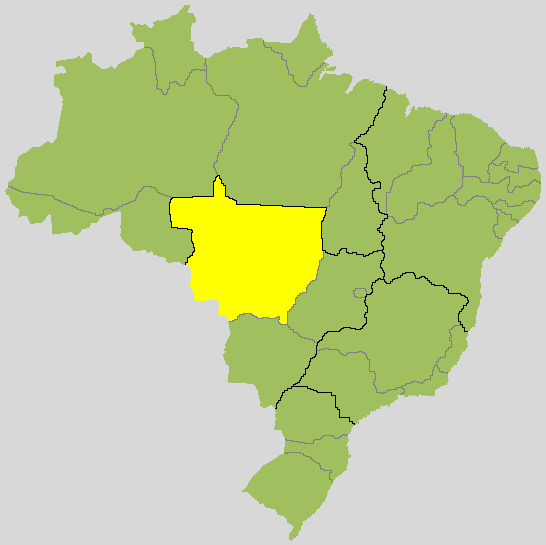
From there they traveled to Mato Grosso, a large state in west-central Brazil about three times the size of Texas. Few people live there; the land even today is mostly covered with Amazon rainforest, wetlands and plains. Hankins told a newspaper reporter that “because the area was almost inaccessible by road, it was a haven for criminals and revolutionaries.”


Rev. Hankins recalled that he arrived in Brazil with only $300 in his pocket, and a Portuguese-English dictionary. He practiced the language for three months before delivering his first sermon. His former congregation in Texas sent the family off with a “portable folding organ and a piano-accordion”, along with a pledge to pay half their living expenses.


Even so, they “became accustomed to a steady diet of fish, rice and black beans.” Despite the challenges, they established an orphanage and worked to convert the people of the area.

They remained in Brazil for twenty-five years, returning to the United States occasionally to speak at missionary events and to visit family. 


While in Brazil, they added two children to the family, son Jerry Otis Hankins, born in September, 1947, and daughter Nina Eunice Hankins, no birth date available. I am not sure if either of these children were adopted from the orphanage. Nina Eunice chose to marry and remain in Brazil. The other three children returned to the United States, settling down in Texas and Indiana.

Following their retirement from mission work in 1965, Rev. Hankins served as interim pastor back in Owensboro, Kentucky and later in Arkansas and Texas. Rev. Hankins died in 1999 and Nina died January 6, 1997 at the age of 88.


Nina and her husband did more than merely worship. They literally lived their faith, risking everything to travel to a remote area where they tried to share their beliefs with others.


Sources:

“Cleburne Pair to Go to Brazil”. Fort Worth Telegram, May 4, 1940. Newspapers.com.

“Just a Simple Preacher: Hankins, family spend 25 years as South America Missionaries.” Owensboro Messenger Inquirer, Owensboro, KY. Dec 8, 1975. Newspapers.com

Obituary for Clyde Hankins Sr., The Marshall News Messenger. Thursday, Nov 25, 1999. Newspapers.com.

Obituary for Nina Pearl Dodson Hankins. The Messenger Inquirer. Owensboro, KY. Tues., January 7, 1997. https://www.newspapers.com/image/380325933

Missionary Conference. The Southwest Wave. Los Angeles, CA. Oct. 31, 1946. Newspapers.com.

Sunday, March 17, 2024

Prolific Medical Crackpot: 52 Ancestors 2024 Prompt “Influencer”

Dr. Weir’s Crazy Theories: Social Influencing in the 1890s

James Weir, Jr., MD: 1855-1906 (Maternal Second Cousin 3x Removed)


James Weir, Jr. was named for his father, a published novelist and businessman. While James Jr. chose a very different profession than his father, medicine, he too had the writing bug, churning out books and articles on topics far beyond the field of medicine. His theories are jarring today, exhibiting misogyny and prejudice. Yet they seem to have received some measure of respect during Weir’s own lifetime. His articles were published in several journals and magazines, and his books sold well and were widely reviewed. This gave an air of legitimacy to his crackpot theories. He was, sadly, the 1890s version of a social influencer.  

James Weir, Jr. was born on October 17, 1855 in Owensboro, Kentucky to parents James Weir Sr. and Susan Charlotte Green. He grew up in material comfort with his nine siblings. His father’s wealth enabled him to attend college. James earned his bachelor’s degree at the University of Louisville, and was the 1878 valedictorian. He received his medical training at the University of Louisville and the University of Michigan’s medical schools. He did his residency at Bellevue Hospital and New York Polyclinic in New York City before setting up his medical practice in Owensboro. (see obituary)

The first mention of Dr. Weir’s articles and books appears in the Owensboro Messenger Inquirer’s October 24, 1897 edition. The article states that Dr. Weir had written a pamphlet entitled “The Psychical Correlation of Religious Emotion and Sexual Desire.” According to the newspaper, Weir had distributed the pamphlet “among the author’s scientific friends” and after it was reviewed in medical and scientific journals, there was such a demand for it that Weir was going to publish it as a book “with much new and valuable material”.  The book was published in 1897 by the Chicago Medical Book Co. with the more eye-catching, titillating title of Religion and Lust.


The book covers a wide range of subjects, from a colonial-centric “history” of religion among “primitive” peoples, to phallic symbolism in religion, to a horrible chapter entitled “Viraginity and Effemination”, which as you might guess, is a long diatribe against homosexuality and against women exercising any sort of control over their own lives (barefoot, pregnant and in the kitchen is where they belong, or they will become ugly and mannish).  It is interesting to note that Weir never married. I wonder if his misogyny and homophobia had anything to do with that choice.

Along the way, Weir presents wildly broad hypotheses as fact, such as “Young boys and girls are exceedingly impressionable at, or just before, puberty, and are apt to embrace religion with the utmost enthusiasm.” (Chapter 3) Older people are less likely to convert, he says. He suggests this is because religious fervor is replaced by sexual fervor post-puberty.

Later he made this amazing pronouncement:

“King Solomon, a man of pre-eminent genius, was mentally unbalanced. The “Song of Solomon” shows very clearly that he was a victim of some psychical disorder, sexual in its character and origin.”

Since the Song of Solomon is widely acknowledged as beautiful, sensual love poetry, I feel this says more about Weir’s psychical disorders than Solomon’s.

Weir followed this book with another, entitled The Dawn of Reason. This book is probably his most scientific work. He attempted to determine the development of the mind in animals, and from there, to the more complex mind and psyche of humans. He includes personal observations from nature to illustrate his points, some of which are quite charming.  Here is a brief example:

I once removed a ball of eggs from the web of a spider. The mother clung tenaciously to her treasure, and, when I tried to remove her with a pair of forceps, she bit fiercely at the steel blades of the instrument. In her great love for her offspring she lost all sense of fear.”


The Dawn of Reason closes with Weir’s conclusion that, “Judging wholly from the evidence, I think that it can be safely asserted and successfully maintained that mind in the lower animals is the same in kind as that of man; that, though instinct undoubtedly controls and directs many of the psychical and physical manifestations which are to be observed in the lower animals, intelligent ratiocination also performs an important rĂ´le in the drama of their lives.”

In addition to his books, Weir wrote several articles that were published in a variety of periodicals. Sadly, these were far less scientific than his book on reason. In 1894, he had a “letter” published in The Century Illustrated magazine entitled “The Methods of the Rioting Striker: An Evidence of Degeneration”. It was truly appalling. His opinions mirror those of the far-right today, evincing a hatred of immigrants, whom he calls “degenerate human beings”. Immigrants, he posits, are the cause of labor unrest due to their “congenital criminality”.  He ends the article with this truly vile passage:

“These people (immigrants) are savages, and should not be treated as civilized beings…When the Indians out West go on the war-path, we know how to control them. The psychologist (he is referring to himself!) considers the anarchist as being no better than the Indian.”

Reminder: he is proposing the genocide (that’s how the U.S. “controlled” the native tribes after all) of Scandinavians, Irish, Germans, and Central Europeans—the immigrants of the 1880s and 1890s. Ironically, their descendants number among today’s right-wingers who rail with equal hatred against the Southern Hemisphere immigrants of the 2020s.

Another article, “The Effect of Female Suffrage on Posterity”, was published in 1895 in the American Naturalist. Weir wrote, “I think I am perfectly safe in asserting that every woman who has been at all prominent in advancing the cause of equal rights…has either given evidences of masculo-feminity (viraginity), or has shown, conclusively, that she was the victim of psycho-sexual aberrancy.” He went on to claim that suffragettes desired social revolution leading to a matriarchy, and that there was an “alarming increase of suicide and insanity” among such women. He also predicted that suffrage would lead to moral decay and degeneracy, and that womankind would hurry “ever backward to the savage state of her barbarian ancestors.” Never once does he question why male suffrage produced none of these horrors.


James Weir Jr. died August 9, 1906 at the age of fifty. According to his obituary, he had been in poor health for quite some time, ill enough to interrupt his writing career. He had traveled to Virginia Beach, Virginia in the hope that the sea air would improve his health. According to one family historian, he died of abdominal dropsy, but as of yet I have found no records that would confirm this. Abdominal dropsy, now called ascites, is severe edema or build-up of fluid in the abdominal cavity. One of the most frequent causes is cirrhosis of the liver. Other causes include cancers, tuberculosis, inflammation of the colon, diverticulosis, or a perforated ulcer. His body was returned to Kentucky and he was buried near his parents’ graves in Owensboro.


So, what can we conclude about Dr. Weir and his literary output? He saw himself as a scientist and “psychologist” (I believe his definition was far different than our modern understanding of the word), but his writings often veer far from science into prejudice and irrational bias. I feel this quote from his first book, applied to himself, provides a good summation of James Weir:

“When we take an introspective view of our sane personality, we shudder to see how near it is to the borderlands of insanity and the bizarre and eccentric world of crankdom. There hardly lives a man who does not possess some eccentricity, or who does not cherish, hidden, perhaps, deep within himself, some small delusion, which he is ashamed to acknowledge to the outside world.”

Sources:

“Back Matter.” The Philosophical Review, vol. 8, no. 4, 1899. JSTOR, http://www.jstor.org/stable/2176213. Accessed 7 Mar. 2024. (description of Weir’s new book)

Obituary: “Dr. James Weir Dies Suddenly.” Owensboro Messenger, Owensboro KY. Aug. 10, 1906. Newspapers.com.

Religion and Lust, or The Psychical Correlation of Religious Emotion and Sexual Desire. James Weir, Jr. 1897. Chicago Medical Book Co., Chicago. 1905.  https://www.gutenberg.org/files/26071/26071-h/26071-h.htm

The Dawn of Reason, or Mental Traits in the Lower Animals. James Weir Jr.. The Macmillian Company, New York, NY. 1899. https://www.gutenberg.org/cache/epub/21608/pg21608-images.html

“The Methods of the Rioting Striker: An Evidence of Degeneration.” James Weir, Jr. The Century Illustrated monthly magazine v.48 (n.s.v.26) 1894 May-Oct., pgs 952-54. https://babel.hathitrust.org/cgi/pt?id=mdp.39015025903348&seq=968

“The Effect of Female Suffrage on Posterity.” James Weir, Jr. The American Naturalist, Sep. 1895, Vol. 29, No. 345 (Sep. 1895), pp. 815-825. https://www.jstor.org/stable/2452803

Obituary. “Dr. Weir Dead. Was a Prominent Owensboro Physician”. The Courier Journal. Louisville, KY. Friday Aug 10, 1906. https://www.newspapers.com/image/119157325/?terms=james%20weir&match=1

A Name That Captured My Imagination: 52 Ancestors Prompt “Free Space”

  A Man Named Newborn Faughn Newborn Faughn: 1900-1983 – Not Related   Interesting names always catch my eye, but some names are so sp...